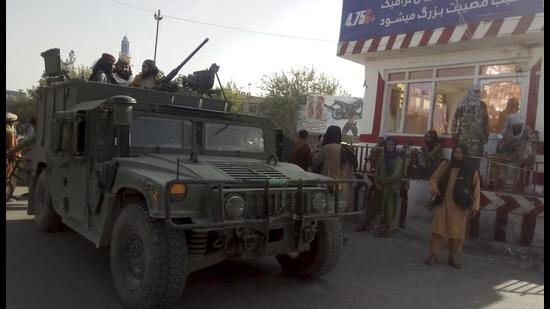
India on Tuesday began evacuating its diplomats and nationals from Mazar-e-Sharif in northern Afghanistan following reports of the advance of Taliban fighters amid a violent assault by the group on key cities and urban centres. India also advised all its nationals in Afghanistan to make immediate travel arrangements to return before commercial air services are discontinued.
All Indian diplomats and officials from the Indian consulate in Mazar-e-Sharif and Indian nationals living in and around the city are to be evacuated in Indian Air Force (IAF) aircraft by Tuesday evening, people familiar with the developments said on condition of anonymity.
The exact number of people being evacuated couldn’t immediately be ascertained. The move comes exactly a month after India evacuated some 50 officials and security personnel from the consulate in the southern city of Kandahar on July 10 following intense clashes between Afghan forces and Taliban fighters.
Also Read | After PM Modi, Jaishankar heads for UNSC with terrorism on agenda
The Indian consulate in Mazar-e-Sharif, which was the only fully functional consulate out of four such missions across Afghanistan, on Tuesday asked Indian nationals to take the special evacuation flight.
“A special flight is leaving from Mazar-e-Sharif to New Delhi. Any Indian nationals in and around Mazar-e-Sharif are requested to leave for India in the special flight scheduled to depart late today evening,” the consulate said in a tweet.
{{/usCountry}}“A special flight is leaving from Mazar-e-Sharif to New Delhi. Any Indian nationals in and around Mazar-e-Sharif are requested to leave for India in the special flight scheduled to depart late today evening,” the consulate said in a tweet.
{{/usCountry}}The consulate asked Indian citizens wishing to leave by the special flight to provide their names and passport numbers.
There was no official word on the development from the external affairs ministry.
The people cited above said the strength of the Indian consulate in Mazar-e-Sharif had been reduced recently in the wake of the Taliban intensifying its campaign to capture territory in rural areas and overrun provincial capitals and urban centres. The consulate has also been without a head since the last consul general, Vinesh Kalra, died of Covid-19 in a hospital in Kabul in May.
The Taliban have so far taken over Kunduz and Aibak cities in the north, triggering fears of an assault on Mazar-e-Sharif, the fourth-largest city in Afghanistan and the capital of Balkh province.
The officials and security personnel in the consulate in Kandahar were evacuated last month after the Taliban seized key areas near the city in southern Afghanistan. The Indian side has been closely tracking the deteriorating security situation across Afghanistan and officials had previously said all steps will be taken to ensure that Indian officials and nationals are not put in harm’s way.
According to information provided by the government in Parliament last week, there are currently some 1,500 Indian nationals in Afghanistan. A majority of them are workers and professionals engaged in the hundreds of development projects being implemented by the Indian government.
The presence of hundreds of terrorists from Pakistan-based Lashkar-e-Taiba (LeT) and Jaish-e-Mohammed in different parts of Afghanistan has also emerged as a key security concern for the Indian side.
New Delhi has been working on plans to ensure the safety of diplomats and all Indian nationals in Afghanistan in view of what officials have described as a “fluid and dynamic” situation because of the fierce fighting across the country.
In April last year, India shuttered its consulates in Herat and Jalalabad, ostensibly because of the spread of Covid-19, though some reports suggested security was a factor behind the decision.