
 E-Paper



'Crash blackouts’ during mock drills tomorrow: What can happen?
The Ministry of Home Affairs announced Civil Defence Exercise and Rehearsal across 244 categorised Civil Defence Districts of the country on May 7.

 Prefer HTon Google


India gears up for a nationwide civil defence mock drill scheduled for Wednesday (May 7), with one of the directives stating "provision for crash blackout measures." The exercise comes as the tensions with Pakistan rise following the deadly Pahalgam terror attack.
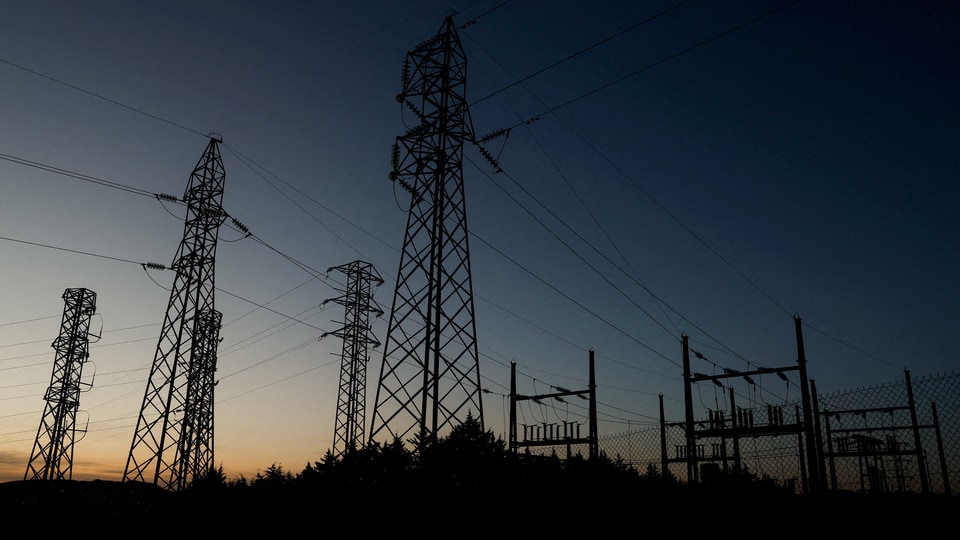
Among the key measures to be carried out during the mock drills is a ‘crash blackout’, which constitutes an emergency shutdown of lights and visible infrastructure designed to reduce the visibility of targets during potential air raids.
Blackouts are implemented during air raids by enemy planes to minimise casualties and damage, and are designed to act as a safeguard against sudden raids.
According to a 2003 document, General Principles of Civil Defence in India, lays down the dos and don'ts during air raids and details how blackouts must be implemented.
The Ministry of Home Affairs (MHA) has instructed states and union territories to conduct full-scale mock drills on May 7, citing the need to rehearse responses to “new and complex threats.” Check the full list of districts where the exercise will be conducted
Why are blackouts significant?
According to India's 2003 civil defence manual, blackouts serve a strategic purpose: to disorient enemy pilots and reduce the chances of successful aerial attacks.
Also Read | Nationwide civil defence mock drill tomorrow: Will daily services run as usual?
"The standard to be achieved is that no light shall be visible at a height of 5,000 ft. above ground level under normal visibility conditions," the document said.
How are blackouts implemented?
During the civil defence security drill, lighting restrictions will be implemented gradually and not all at once, and the curbs will apply to street lights, factories and also lights from vehicles.
All illuminated advertisements are prohibited in the vulnerable areas, as per the document.
According to the manual, streetlights must be dimmed to the equivalent of a 25-watt bulb from 20 feet or a hurricane lantern from 6 feet. Buildings will only be allowed to use light if it’s completely screened off from external view.
No lights should be used in any building unless it is screened by opaque material.
The instructions are: "(a) No ray, direct from the source of light, or reflected from a bright surface, is visible outside the roofed portion of the building: (b) No glare is thrown upwards outside the building or any part of it".
No light for decoration or advertisement will be allowed outside any building.
Will Daily Life Be Affected?
Despite the scale and seriousness of the drill, daily services such as banking, public transport, and essential utilities are expected to continue without disruption.
Local authorities may simulate parts of the blackout and alert system, particularly in vulnerable or urban areas, but these will be controlled and temporary.
Civil defence mock drills: What do we know?
The Ministry of Home Affairs on Monday announced Civil Defence Exercise and Rehearsal across 244 categorised Civil Defence Districts of the country on May 7, 2025.
Also Read | ‘Was Lashkar involved?’: Pakistan asked ‘tough questions’ by UNSC members over Pahalgam attack, say reports
The primary objectives of the mock drill include assessing the effectiveness of air raid warning systems, operationalisation of hotline, radio communication links with IAF, testing functionality of control rooms and shadow rooms, training of civilians including students on civil defence aspects to protect themselves in the event of hostile attack and provision of crash blackout measures.
The objectives also include the provision of early camouflaging of vital installations, to verify the activation and response of Civil Defence Services, including warden services, firefighting, rescue operations and depot management, assessing the implementation of crash blackout measures and evaluating the preparedness of evacuation plans and their execution.


