Cooperation between India and Central Asia has gained in importance for regional security and stability in the aftermath of developments in Afghanistan, Prime Minister Narendra Modi said while chairing India’s first summit with the five Central Asian states on Thursday.
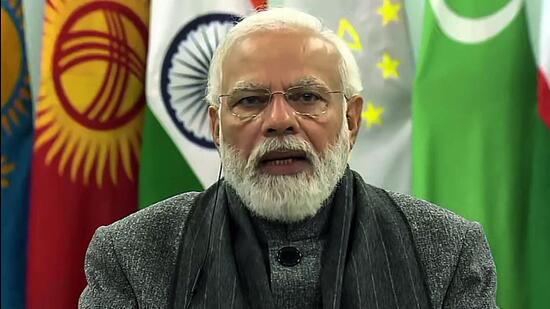
The summit will also create an effective structure for cooperation, Modi said in his opening remarks at the virtual summit that was joined by the presidents of Kazakhstan, Kyrgyzstan, Tajikistan, Turkmenistan and Uzbekistan. The summit will also forge an “ambitious roadmap” for cooperation, he said.
The virtual summit was organised as the leaders of the Central Asian states were unable to attend India’s Republic Day celebrations on Wednesday because of a surge in Covid-19 infections. The five leaders were invited to be chief guests at the event, though no formal announcement was made by any of the countries.
Connectivity, trade, forging an institutionalised framework for cooperation and the situation in Afghanistan were on the agenda for the summit, the first interaction of its kind between the leaders of the six countries.
The six countries currently have a mechanism at the level of foreign ministers, called the India-Central Asia Dialogue, and its third meeting was hosted by New Delhi in December. India has sharpened it focus on Central Asian both to counter China’s growing presence in the region and to strengthen cooperation on Afghanistan following the Taliban takeover of that country.
{{/usCountry}}The six countries currently have a mechanism at the level of foreign ministers, called the India-Central Asia Dialogue, and its third meeting was hosted by New Delhi in December. India has sharpened it focus on Central Asian both to counter China’s growing presence in the region and to strengthen cooperation on Afghanistan following the Taliban takeover of that country.
{{/usCountry}}“We are all concerned with the developments in Afghanistan,” Modi said, speaking in Hindi. “In this context, our mutual cooperation has become more important for regional security and stability.”
Modi listed the three main objectives of the summit – to make it clear that mutual cooperation between India and Central Asia is essential for regional security and prosperity, to create an effective structure for cooperation, and to create an ambitious roadmap for cooperation.
“On behalf of India, I would like to clarify that Central Asia is central to India’s vision of an integrated and stable extended neighbourhood,” he said.
An effective structure for cooperation will establish a framework of regular interactions at different levels and among various stakeholders, and the roadmap will enable the six countries to adopt an “integrated approach for regional connectivity and cooperation in the next thirty years”, he added.
As India and the Central Asian states mark 30 years of diplomatic ties, Modi noted that cooperation in the past led to many successes but the time had come to define an “ambitious vision for the years to come” that can fulfil the aspirations of the people, especially the younger generation.
Modi also referred to India’s close ties with all the Central Asian states at a bilateral level, and described Kazakhstan as an important partner for the country’s energy security. “I express my condolences for the recent loss of life and property in Kazakhstan,” he said, referring to violent protests over a rise in gas prices in that country.
India’s state governments are active partners in growing cooperation with Uzbekistan, while there is an active partnership with Kyrgyzstan in education and high-altitude research. “Thousands of Indian students are studying there,” Modi said.
“We have long-standing cooperation in the field of security with Tajikistan, and we are continuously strengthening it,” he said.
Modi described Turkmenistan as an important part of India’s vision for regional connectivity, and said this was evident from “our participation in the Ashgabat Agreement”.