The ministry of defence has a list of 209 items including cruise missiles, next generation corvettes, tank engines and towed artillery guns which have been placed under negative import list to boost Atmanirbhar Bharat programme of Prime Minister Narendra Modi.
Import restrictions on the second list of 108 items will progressively come into effect from December 2021 to December 2025. The first list of defence imports under negative category was issued in August 2020.
While both the Department of Military Affairs (DMA) and Department of Defence (DOD) are on the same page as far as indigenisation is concerned, the fact remains is that Indian military still imports clothing and equipment from abroad despite a thriving textile industry in the country.
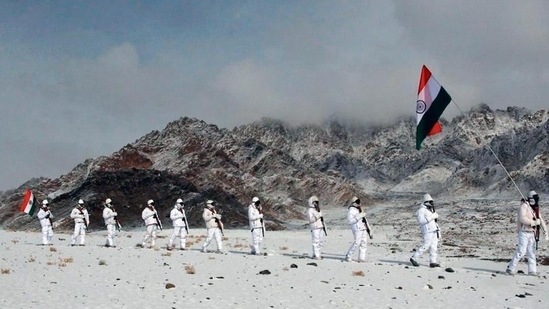
The unsavoury truth is that Indian gloves for Siachen front is imported from a company in Myanmar, while the sleeping bags for the glacier are manufactured by a company in Sri Lanka. While a Kanpur based company is supplying military boots to Israeli army, the Indian Army is getting specialized boots made in Italy. The list goes on.
During his tenure as secretary (defence production), the present defence secretary Ajay Kumar pushed for indigenisation of military clothing was back in 2018 but the Indian Army replied back with a long term indigenisation plan. Secretary Kumar told the military that since 100% FDI is allowed in defence sector, the companies from which the clothing and equipment was being imported should be asked to set up shop in India for impetus to the local textile and leather industry. He pushed for Indian shoe-makers for military as there was a thriving leather industry in Kanpur and Agra.
{{/usCountry}}During his tenure as secretary (defence production), the present defence secretary Ajay Kumar pushed for indigenisation of military clothing was back in 2018 but the Indian Army replied back with a long term indigenisation plan. Secretary Kumar told the military that since 100% FDI is allowed in defence sector, the companies from which the clothing and equipment was being imported should be asked to set up shop in India for impetus to the local textile and leather industry. He pushed for Indian shoe-makers for military as there was a thriving leather industry in Kanpur and Agra.
{{/usCountry}}With the military clothing now under department of military affairs (DMA), its secretary and present Chief of Defence Staff General Bipin Rawat is pushing for total indigenisation of clothing. In fact, recently the CDS visited a Bengaluru based clothing manufacturer to ask him whether he could supply sleeping bags, camouflage tents and jackets to the Indian military.
The answer was that the qualitative and quantitative requirements of the military were designed in such a way that the Indian manufacturers found difficult to compete in an unfavourable environment. For instance, the heavy snow parkas were tested for being rain proof despite the fact that it never rains in Siachen Glacier with temperatures way below zero.
“Even though military clothing budget would be between ₹200-400 crore for the Indian military, there is no reason for them to seek foreign manufacturers when the same quality is available with Indian textile manufacturers. Or, there is always an option of asking the company to set shop in India under the Atmanirbhar Bharat initiative,” said a senior defence ministry official.