India has made significant progress in closing gender gaps in education, but a stark rural-urban divide continues to leave girls substantially behind boys at the upper-secondary level, with only 59 girls completing school for every 100 boys in rural areas, according to a new UNESCO Global Education Monitoring (GEM) report released in Paris on Friday.
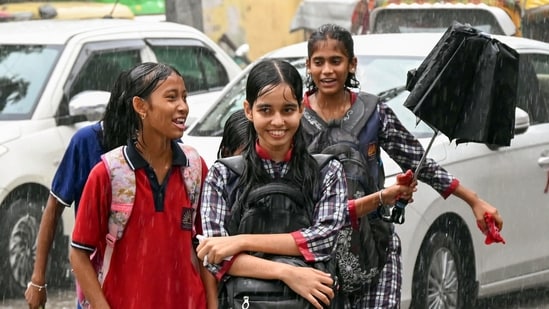
The report titled ‘Gender Equity in Access to Education,’ said girls remain disadvantaged in India overall, with an adjusted gender parity index of 0.89 for upper-secondary completion.
The Gender Parity Index (GPI) is a socio-economic metric used to measure the relative access to education of males and females, calculated by dividing the number of female students by the number of male students at a given education level. For example, a GPI of 1.00 indicates perfect equality between boys and girls, while a score of 0.89 means that for every 100 boys who complete upper-secondary education, only 89 girls do so.
According to the report, the disparity widens sharply in rural India, where the index falls to 0.59, while parity has been reached in urban areas.
“In rural India, only 59 girls completed upper secondary school for every 100 boys, while there is parity in urban areas,” the report said.
{{/usCountry}}“In rural India, only 59 girls completed upper secondary school for every 100 boys, while there is parity in urban areas,” the report said.
{{/usCountry}}India’s situation contrasts with the broader progress recorded across Central and Southern Asia. The region saw girls’ primary completion rate rise from 42% in 2000 to 90% in 2024, while lower-secondary completion increased from 30% to 83% and upper-secondary completion from 12% to 57%. The report, however, highlights that such regional progress does not necessarily translate into equal outcomes within countries.
Report flags the importance of school cost reduction
The report also flags the importance of interventions that reduce the direct and indirect costs of schooling. In India, evidence cited by the report shows that free school lunches had nearly twice the effect on primary enrolment for girls as for boys, effectively closing the gender gap in disadvantaged rural communities. Children, particularly girls, who received early and consistent school meal support also recorded lower dropout rates.
The report argues that fees are only one part of the cost of keeping children in school. Expenses on books, uniforms, transport, meals and accommodation, as well as the opportunity cost of children’s work, can influence whether girls remain in education. Infrastructure has also mattered. The report cites evidence that India’s national latrine construction initiative increased enrolment among pubescent girls, particularly where sex-specific toilets were provided.
It also cites a randomised trial in 121 villages in Karnataka, where local clubs aimed at building girls’ life skills and social networks modestly improved secondary completion, although many girls remained vulnerable to early marriage.
Turnaround in the neighbourhood
In Nepal, only 8% of girls completed lower secondary education in 1990, compared with 41% of boys. By 2024, the figure had reached 89% for both sexes. The report attributes the turnaround to constitutional recognition of education as a right, free and compulsory basic education, scholarships, expanded secondary provision, free textbooks and improved water and sanitation.
Cambodia offers another example of a rapid reversal: its 22-percentage-point disadvantage for girls in primary completion in 1981 had become an 11-percentage-point advantage by 2024. Bangladesh’s girls’ stipend programme, meanwhile, has been linked to higher attainment and delayed marriage, although early marriage continues to disrupt girls’ education.
The report also warns against interpreting gender parity simply through enrolment figures. Globally, women now outnumber men in tertiary education [Classes]: there were 88 young men for every 100 young women enrolled in 2024, while only 82 men graduated for every 100 women. In Central and Southern Asia, tertiary enrolment reached gender parity by 2024.
More broadly, the report argues that “gender parity does not mean gender equity and inclusion”, since curriculum, pedagogy, teacher attitudes, violence and other factors are not captured by parity indicators.
The report says education systems need coordinated measures that address affordability, school meals, proximity, sanitation, safety, counselling, and second-chance pathways, rather than isolated interventions.
“There are relatively few robust policy frameworks that tackle all those factors in a coherent and coordinated manner and are implemented with fidelity,” it said.