
 E-Paper



India-US dialogue revealed contrast between policy and public narrative
While the Biden administration played the god cop, it slipped badly when Secretary of State Antony Blinken decided to raise the issue of human rights in India despite the matter not being discussed at all during the April 11 meetings.

 Prefer HTon Google


The Indo-US two plus two dialogue concluded in Washington last week was a classical display of good cop, bad cop negotiating strategy--made globally familiar by umpteen US police TV dramas—with the Biden Administration playing the proverbial good cop and converging with India as opposed to Left-Liberal media who tried to pillory the Modi government over the Ukraine war.
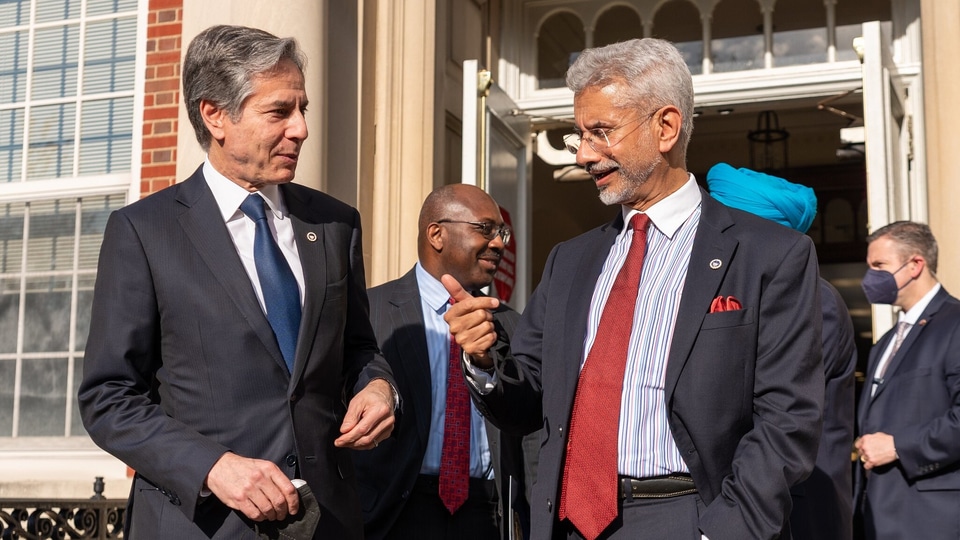
While the Biden administration played the god cop, it slipped badly when Secretary of State Antony Blinken decided to raise the issue of human rights in India despite the matter not being discussed at all during the April 11 meetings. Not the one to take things lying down, External Affairs Minister S Jaishankar submitted a riposte when he said that India was also watching human rights in the US. That Secretary Blinken chose to raise an issue outside the ambit of what was discussed, reveals that some overjealous State Department official inserted the unsaid and the US top diplomat read it out publicly without thinking of the consequences that followed. Time and again, India has told the US that there will be a public response if the US wants to conduct diplomacy in public.
According to diplomats based in Washington, the two plus two dialogue went off fine with the Biden administration understanding the reason behind why New Delhi took a particular line on the Russian invasion of Ukraine given India’s legacy issues with Moscow. The Biden administration also made it very clear that it was not a single agenda government and was totally committed to the Indo-Pacific despite the war in Ukraine showing no signs of ending. Discussions over the Ukraine war revealed that the Russian military objective was to capture Mariupol and link up the captured eastern Ukraine territory of Luhansk and Donbas with Crimean Peninsula, which was co-opted by Russia in 2014. As of now, the Russian forces have pulverized Mariupol but still have not been able to capture it.
The posture of the Biden administration during the two plus two dialogue was in sharp contrast to the posture adopted by self-appointed judges of US media, who criticized India for not only being on the side of America in the Ukraine crisis but was also taking advantage of the war situation by buying oil from Russia at discounted rates. With the Left-Liberal media playing the bad cop, EAM Jaishankar had to publicly come out with a statement on India’s oil imports from Russia, which are minuscule as compared to European Union oil and gas purchases from Moscow with Germany leading the show.
While India has made it clear that it takes foreign policy decisions based on enlightened national interest and the Biden administration understands it privately, evidently, there is a dichotomy between the policy and the public narrative. The good cop, bad cop strategy can only yield gains for the applicant of the skill if the opponent is not well versed with the negotiating tactics. Otherwise, it will be counter-productive. As it turned out in Washington last week.


