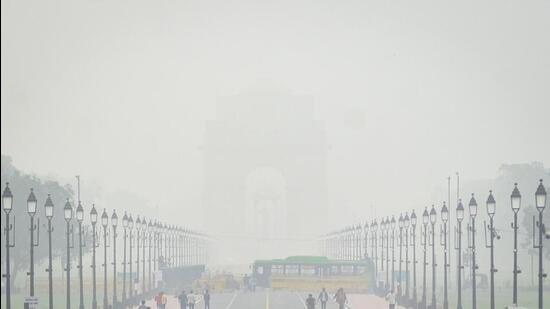
Delhi has experienced some rare days of good air this week. The air quality index (AQI) was 44 on October 10, the best since August 31, 2020, and followed another low AQI of 48 experienced on October 9 (AQI was ‘satisfactory’ at 66 on October 11, but rose to 143 on October 12). The good air on two days was the result of unprecedented rain – the fourth highest since 1901 for the first 11 days of October – but
Clean air in early October can mean more fires and worse air pollution later
Apart from cleaning the pollutants from year-round sources, the rain has also helped the air in Delhi in the past week in another way. Satellite data shows that this has prevented farmers in Punjab and Haryana from burning stubble in early October (it has been raining there too). Unfortunately, because this decision has been forced by the weather, it is not a sustainable one. Data from last year shows what this can mean later in October or in November. It rained on six days in the first half of October in both Punjab and Haryana last year, compared to four days on average in the 2018-2020 period. This led to a much cleaner air in October in 2021 than in 2018-20. However, this only meant that farm fires were concentrated in a few days in late October and early November (it rained on one and two days in Haryana and Punjab last year compared to around seven days in 2018-20 average). Moreover, their total count was also the highest in the five years up to 2021. This led to a bigger peak of air pollution than seen in the recent past. Given this trend, unless it continues to rain throughout the entire rabi season – which will have an adverse impact on crop output – a repeat of 2021 in terms of farm fires and air quality will not be surprising.
{{^htLoading}} {{/htLoading}} Where do these fires take place in Punjab and Haryana?
As is clear from the data above, Delhi cannot depend on the weather to keep its air clean in coming days and must tackle all sources of pollution to keep it clean year-round. However, knowing where farm fires take place can help in decreasing the peak of the worst AQI Delhi experiences this year. As Punjab has reported about seven times the number of fires Haryana has in the past decade in October and November, it is natural that the districts with the most fires are located in that state. The top five districts in terms of the October-November average of farm fires for 2012-2021 are Firozpur, Sangrur, Bathinda, Moga, and Ludhiana. In Haryana, most fires took place in Fatehabad, Sirsa, and Karnal, ranked 12th, 14th, and 20th among the 41 districts in the two states. With little reshuffling, these trends were also true last year. It might help the region’s air if the governments of these two states can focus their efforts in these districts.
{{^htLoading}} {{/htLoading}} Why we can’t wait for rain, and must take a different route to tackle farm fires
To be sure, both the Union government and the state governments involved do seem to be aware of the problem. For example, the Punjab government has been distributing machines for managing paddy straw for a few years now. Why this does not seem to show an impact on air quality is a question that researchers or government surveys can perhaps answer better. However, one reason that makes itself evident is that the pressure on farmers to clear stubble quickly might have become greater in recent years. Rainfall data from IMD shows that in Punjab and Haryana, either the total amount of rain or the number of days of rain in the first half of October has increased in 52% and 40% of the area respectively in the last decade. This is a situation when farmers are likely to resort to stubble burning more. At the very least, this data and last year’s example shows that future measures for reducing farm fires should also take into account the changing weather patterns post-monsoon, something that will become increasingly frequent because of the climate crisis.
{{^htLoading}} {{/htLoading}}