A recent study has revealed that the foodgrain being grown around rainy river Jojari in Rajasthan’s Jodhpur has presence of heavy metals like lead, cadmium etc. And the levels are much higher than the permissible limit prescribed by the World Health organisation (WHO).
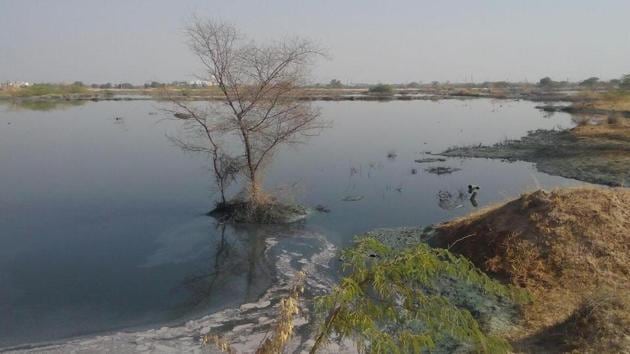
The study was carried out by the Department of Chemistry of Jai Narayan Vyas University with support from the University Grant Commission (UGC). The team of experts from the university analysed wheat, pearl millet, sorghum, barley, corn, moong, pigeon pea, red lentil and split chickpea lentil grown in the area with atomic absorption spectrophotometre. Due to water scarcity, many farmers are using industrial effluents from tie and dye printing, steel products manufacturing and textile industries for growing different foodgrain.
“We have reported an analysis of heavy metal contents in foodgrain grown in the agricultural fields of Jodhpur around the Jojari. We have collected samples from various sites around the river where industrial effluents are thrown without treatment and are readily used by the farmers,” university professor Pallavi Mishra, who led the study, said.
Jojari flows from the North-East to South-West, 83 km from the hills near Pondlu village in Nagaur district. Before it meets the Luni river near Khejalda Khurd in Jodhpur district, small streams join the Jojari in the upper part.
{{/usCountry}}Jojari flows from the North-East to South-West, 83 km from the hills near Pondlu village in Nagaur district. Before it meets the Luni river near Khejalda Khurd in Jodhpur district, small streams join the Jojari in the upper part.
{{/usCountry}}“Continuous effluent water irrigation of agricultural land has caused a large build-up of poisonous heavy metals in the effluent irrigated soil as well as in the foodgrain and vegetables grown here. The metal ion concentrations obtained in our samples were compared with the permissible limits as prescribed by WHO and FAO. After carrying out sample testing of different grains, we found alarmingly high concentrations of cadmium, lead, zinc, nickel, copper and chromium. The concentrations of six heavy metals in study were found to be well above the standards specified by the WHO and Indian Council of Medical Research (ICMR),” she added.
In Rajasthan, cereals and millets are the major source of nutrients and the most commonly consumed food. Approximately 85 per cent of the population is vegetarian and mainly survives on millets, cereals and pulses. Indira Gandhi canal water is the main source of potable water and agricultural produce in the area. Rain is observed only in the monsoon season; drought-like condition prevails in rest of the months. Due to water scarcity, industrial effluents and sewage water is used for irrigation in many areas of Jodhpur, especially around the Jojari River which has become a dumping ground for all kinds of waste water.
“Even a slightly high concentration of these metals is dangerous for human beings and animals. An increasing number of cancer cases, gastrointestinal problems, skin problems in people living in the areas from where samples were collected have also been reported,” said professor Mishra.
Consultant Physician Dr Sawai Jain said that heavy metals are harmful to human health. Such foodgrain, when consumed by people, may cause cancer, skin allergies, peptic ulcers and acidity.