
A Muslim party leader, Asaduddin Owaisi, on Friday described an ongoing agitation over the ban on Jallikattu as a “lesson for Hindutva forces”, linking the protests in Tamil Nadu to the Centre’s efforts to introduce a common civil code in the country.
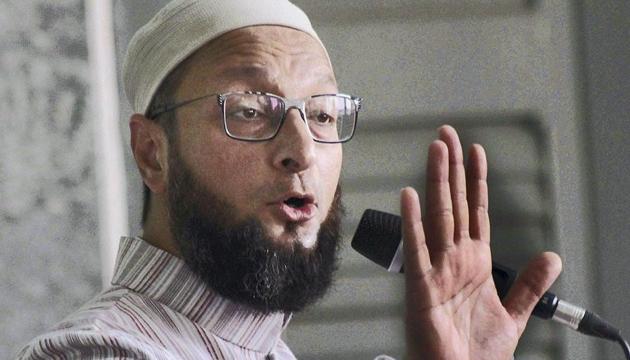
His comment is likely to fuel the debate over the proposed Uniform Civil Code which aims to review the Muslim community’s personal laws on divorce and polygamy, said to heavily loaded against women.
“Jallikattu protests, lesson for Hindutva forces,” Owaisi tweeted, adding that “Uniform Civil Code cannot be imposed”.
“This nation cannot have one culture, we celebrate all,” he said.
He, however, did not explain the link between the protests and the Hindu right-wing.
The Rashtriya Swayamsevak Sangh (RSS) and its affiliated organisation, the Vishwa Hindu Parishad (VHP), have backed the demand for lifting the ban on Jallikattu, a popular bull-taming of in Tamil Nadu.
Owaisi, who heads the All India Majlis-e-Ittehadul Muslimeen (AIMIM), has been at loggerheads with the RSS over its campaign for an uniform civil code. The RSS is the ideological mentor of the ruling party at the Centre, the BJP.
Owaisi’s party is also contesting several seats in Uttar Pradesh where assembly polls will be held in seven phases from next month.
{{/usCountry}}Owaisi’s party is also contesting several seats in Uttar Pradesh where assembly polls will be held in seven phases from next month.
{{/usCountry}}He is also highly critical of Prime Minister Narendra Modi and his alleged anti-Muslim policies.
On Thursday, Owaisi said Modi “would have claimed credit” for construction of the Red Fort and the Taj Mahal “had they not been built long ago”.
(With agency inputs)
ABOUT THE AUTHOR
Follow the latest breaking news, major developments and agenda-setting stories from India and around the world with the newsdesk at Hindustan Times. Operating round the clock, the desk brings together experienced editors, reporters and correspondents to deliver fast, accurate and contextual reporting across subjects that influence public policy, governance, business, society and international affairs. The HT News Desk covers politics, elections, government policies, the economy, business and markets, science and technology, the environment, law and order, infrastructure, education, climate issues and geopolitics, while closely tracking developments across states, institutions and global capitals. The team also leads coverage of major breaking news events, policy announcements, court proceedings, natural disasters, public emergencies and significant international developments. Reports published by the newsdesk are based on information gathered from reporters on the ground, official statements, government agencies, court records, regulatory filings, recognised institutions and other authoritative sources. Stories undergo editorial scrutiny and verification processes to ensure accuracy, fairness and relevance, and are updated as events evolve and additional information becomes available. Whether covering a key political decision in New Delhi, an economic policy shift affecting millions, a landmark court ruling or a major global event, the HT News Desk aims to provide readers with reliable, fact-based journalism that delivers not only the latest developments but also the context and analysis needed to understand their wider implications.