
 E-Paper



LeT chief Hafiz Saeed’s close aide Abu Saifullah shot dead in Pakistan
LeT terrorist Razaullah Nizamani alias Ghazi Abu Saifullah Khalid was killed by unidentified gunmen in Pakistan’s Sindh province on Sunday afternoon

 Prefer HTon Google


New Delhi: A Lashkar-e-Taiba (LeT) terrorist Razaullah Nizamani alias Ghazi Abu Saifullah Khalid, who was behind the failed 2006 attack on the Rashtriya Swayamsewak Sangh (RSS) headquarters, was killed by unidentified gunmen in Pakistan’s Sindh province on Sunday afternoon, according to officials in intelligence agencies.
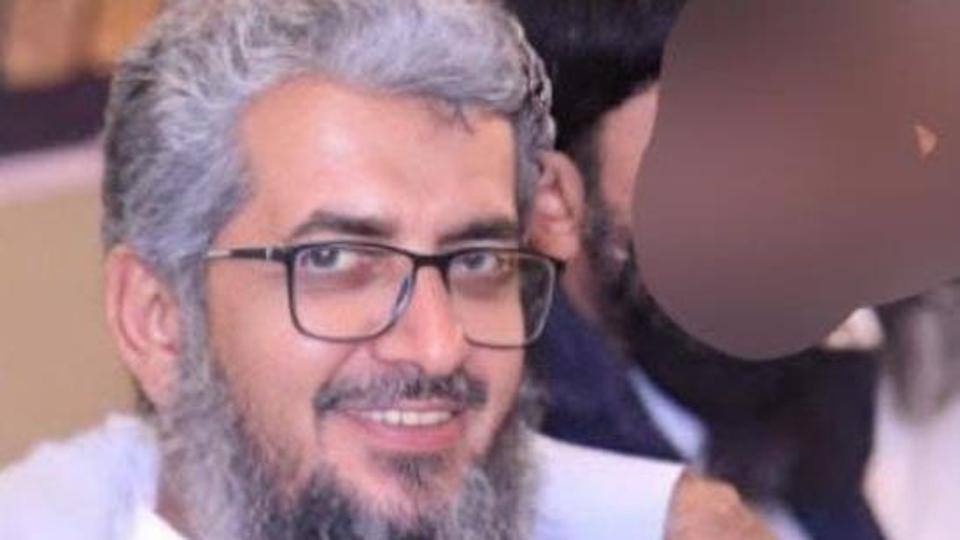
Saifullah Khalid was reportedly shot in Matli, in district Badin (Sindh) when he stepped out of his house, said an officer, while adding that Pakistan army and the Inter-Services Intelligence (ISI) had told all LeT leaders and senior members after the Pahalgam terror attack and subsequent Operation Sindoor not to move about in open.
An officer, who didn’t want to be named, said: “Saifullah Khalid is close to LeT chief Hafiz Saeed and had planned to attack RSS headquarters on June 1, 2006 (three LeT terrorists were killed by police after they rammed their car through a barrier outside the RSS HQ in Nagpur). We have information that he has been shot dead by unidentified men in Pakistan’s Sindh”.
Pakistan media outlets also reported on Sunday that Saifullah Khalid had been shot dead by unknown persons.
Apart from RSS HQ attack, he was also involved in an attack at Indian Institute of Science in Bengaluru in 2005 as well as a terror strike on a Central Reserve Police Force (CRPF) camp in Rampur.
Saifullah Khalid, according to a second officer, previously reported to Abdul Rehman Makki (now dead) - former deputy chief and brother-in-law of Hafiz Saeed, and Azam Cheema. While Makki died of a heart attack in December last year, Cheema died in March 2024 – also reportedly due to heart attack. Lately, he was under the direct command of Abu Anas - one of the operational commanders of LeT, this officer added.
“Khalid used to head LeT’s operations in Nepal in the early 2000 and had many aliases including Vinode Kumar, Mohammed Salim and Razaullah. He recruited new cadres, arranged financial and logistic support and facilitated the movement of LeT operatives across the Indo-Nepal border. He worked closely with the so-called launching commanders - Azam Cheema alias Babaji (now dead) and Yaqoob (LeT’s chief accountant),” said the first officer.
An important person in Let, Khalid, returned to Pakistan after Indian agencies busted his operations there, said the first officer, without divulging details.
In Pakistan, he was working closely with LeT and Jamaat-ud-Dawah leaders including Yusuf Muzammil, LeT commander for Jammu and Kashmir, Muzammil Iqbal Hashmi and Muhammad Yusuf Taibi, the first officer said.
“He had been tasked by the LeT and JuD leadership in Pakistan to undertake the recruitment of fresh cadres from the areas of Badin and Hyderabad districts of Sindh and collect funds for the organisation,” he said.
Following the Pahalgam attack on April 26, in which 26 civilians were killed, Indian military launched Operation Sindoor in Pakistan.
Indian forces launched the operation in the early hours of May 7, bombing nine terror camps in Pakistan and Pakistan-occupied Kashmir (PoK). The pre-dawn strikes on May 7 --- in which at least 100 terrorists were killed according to political leaders briefed about the attack by the defence minister --- sparked a series of attacks and counterattacks across the western border, involving fighter jets, missiles, armed drones, and fierce artillery and rocket duels.
In one such counterattack on the night of May 9-10, the Indian Air Force struck targets at 13 Pakistani air bases and military installations. After four days of fighting, military hostilities were stopped on Saturday evening as the two nations reached an understanding.


