
 E-Paper



Mahanadi tribunal urges Odisha–Chhattisgarh to pursue settlement talks
The Mahanadi River Water Disputes Tribunal has urged both Odisha and Chhattisgarh to use the next few weeks to build on new political outreach to resolve the issue

 Prefer HTon Google


Bhubaneswar: The nine-year deadlock over sharing waters of Mahanadi river between Odisha and Chhatisgarh moved a little closer towards resolution on Saturday, with the Mahanadi River Water Disputes Tribunal deferring substantive arguments and urging both Odisha and Chhattisgarh to use the “next few weeks” to build on new political outreach.
Hearing the matter in New Delhi, the three-member Tribunal headed by Justice Bela M. Trivedi recorded the recent exchange of letters between the two chief ministers and noted “statements at the Bar from senior counsel of both States” that an amicable settlement was under active consideration. The bench fixed October 11 as the next date of hearing and directed the Water Resources Secretaries of both States to be present and apprise it of progress.
“Taking the correspondence and statements on record, we deem it appropriate to give some more time to explore settlement,” the tribunal said in its order, signalling a rare pause in adversarial proceedings that have stretched since 2018.
Appearing for Odisha, Advocate General Pitambar Acharya presented a status update and acknowledged that “for seven long years the case lacked focus”. “We have re-oriented our approach. The Tribunal appreciated that we are looking beyond litigation. Weekly technical meetings, continuous dialogue and leadership-level engagement are key if we are to close this chapter,” he said, but added that about 40 “core issues” on flows, storages and barrages remain in dispute. “The Mahanadi issue is fundamentally about trust between two riparian States. Without political will, no decree or directive can build that trust,” he submitted.
The advocate general placed on record chief minister Mohan Charan Majhi’s July 25 letter to his Chhattisgarh counterpart proposing “a joint committee under the guidance of the Union Ministry of Jal Shakti and leadership of the Central Water Commission” to facilitate sustained dialogue.
Chhattisgarh, represented by senior advocate, confirmed that chief minister Vishnu Deo Sai had responded positively. In a September 5 communication, Sai said the Odisha proposal “is under active consideration” and his government “values the spirit of cooperative federalism.”
The tribunal’s order records this assurance. “The senior advocate for Chhattisgarh has also stated that settlement is being examined at the highest level,” Justice Trivedi noted, adding that “additional time to pursue a negotiated path is justified.”
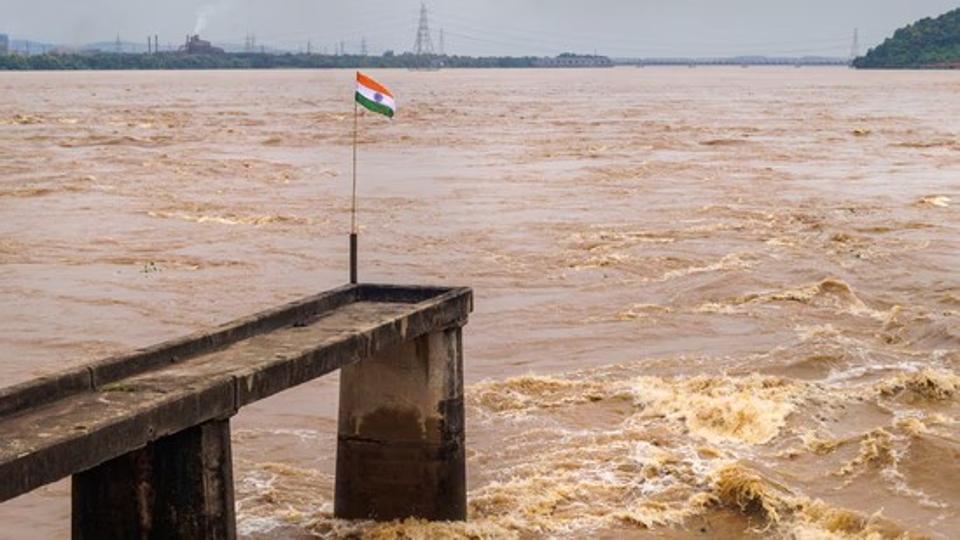
The Mahanadi, originating in Chhattisgarh, flows 857 km before entering Odisha, sustaining irrigation, hydropower and fisheries across at least 20 of Odisha’s 30 districts. After Odisha built the Hirakud dam in the 1950s, the river has irrigated 2.35 lakh hectares and produces 347.5 MW of hydropower. Six biodiversity hotspots—including Bhitarkanika, Chilika and Tikarpada—depend on its flows.
Odisha moved the Supreme Court in 2016 after objecting to what it called “illegal” upstream barrages by Chhattisgarh. The Court directed the Centre to constitute a tribunal, which was notified on March 12, 2018 under the Inter-State River Water Disputes Act. The panel was tasked with quantifying availability, current utilisation and future potential in the basin. Members inspected major reservoirs in 2023 but progress since has been slow.
The move towards a political resolution came after Union home minister Amit Shah, at the July 10 Eastern Zonal Council meeting, urged both States to “resolve through constructive dialogue.” In February Odisha and Chhattisgarh ministers exchanged views at the All-India State Water Ministers’ Conference in Udaipur.
Majhi in July 23 convened a high-level review where he pressed for “moving beyond litigation.” The outcome was the July 25 letter proposing the CWC-led committee. “With collective effort and cooperation of both States, we can achieve a fair, timely resolution that fosters goodwill and future collaboration,” Majhi wrote.



