Senior Aam Aadmi Party (AAP) leader and former Delhi deputy chief minister Manish Sisodia on Monday skipped interrogation by the Delhi government’s Anti-Corruption Branch (ACB) investigators, citing a pre-planned engagement, officials aware of the matter said.
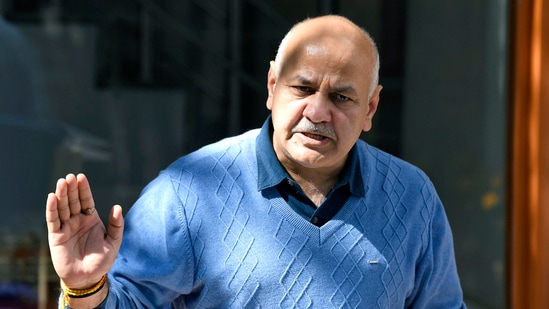
A senior ACB officer said that, in an e-mail sent to the bureau, Sisodia had informed them that, due to a pre-scheduled engagement, he wouldn’t be able to physically join the investigation on Monday.
“He will soon be given a fresh date to appear before the investigators. The exact date has not yet been finalised,” he said, asking not to be named.
The officer further said that Sisodia’s interrogation had become more important after former PWD minister Satyendar Jain, during his interrogation on Friday, put the blame on the education department—which was under Sisodia’s ministerial domain at the time of the alleged ₹2,000-crore scam in the construction of school classrooms across the national capital.
“Jain was asked as many as 28 main questions by our investigators related to the alleged scam, of which the former PWD minister could give valid answers to hardly six. For the others, he either adopted evasive tactics or blamed the education department and the Arvind Kejriwal-led cabinet. As a basic principle of investigation, we’ll ask Sisodia questions related to the allegations made by his cabinet colleague. Since Jain could not provide satisfactory answers to our questions, he will very soon be called again to join the investigation,” the officer said, adding that, if needed, Jain and Sisodia will be asked to join the investigation on the same date so they can be cross-questioned about the allegations.
As per the summons, both Jain and Sisodia were asked to join the investigation of the case registered at the ACB police station in connection with alleged irregularities and financial improprieties in the construction of semi-permanent school rooms/buildings by the then executive of the Delhi government at inflated costs.
{{/usCountry}}As per the summons, both Jain and Sisodia were asked to join the investigation of the case registered at the ACB police station in connection with alleged irregularities and financial improprieties in the construction of semi-permanent school rooms/buildings by the then executive of the Delhi government at inflated costs.
{{/usCountry}}“Allegations have been levelled against several of the then government functionaries, including you by name, in the case FIR. Accordingly, your presence is required for the purpose of your examination, including recording of your statement and clarification on certain material facts relevant to the investigation of the case… You are also directed to submit your written submission along with supporting documents, if any, pertaining to the matter. Non-compliance with this notice may attract legal proceedings against you as per law,” it reads.
The ACB, on April 30, registered a criminal case against former deputy chief minister and education minister Sisodia and ex-PWD minister Satyendar Jain in connection with an alleged ₹2,000-crore scam in the construction of school classrooms across the national capital.
According to ACB officials, the scam, which dates back to the AAP’s tenure in the Delhi government, involves alleged irregularities in the construction of 12,748 classrooms at government schools. The enquiry was initiated after several complaints in this connection were filed by BJP leaders.
“The case pertains to awarding contracts at inflated costs, procedural violations, and cost escalations that were allegedly engineered to benefit contractors linked to the party. The construction was ostensibly aimed at expanding classroom capacity in government-run schools, but our investigations revealed that each classroom was constructed at an average cost of ₹24.86 lakh—nearly five times the market rate of around ₹5 lakh per room. Though the classrooms were built as semi-permanent structures (SPS), which typically have a 30-year lifespan, the cost was nearly equivalent to that of fully reinforced concrete (RCC) structures with a 75-year lifespan. Surprisingly, no financial justification was given for opting for SPS over permanent structures,” said joint commissioner of police Madhur Verma, who is also the ACB chief.
It was also revealed during the investigation that consultants and architects were appointed without following due procedures and that cost escalations were carried out through them without seeking new tenders, in violation of guidelines of the Central Vigilance Commission (CVC) and the CPWD Works Manual.
“Contracts initially worth ₹860 crore were inflated by up to 90%, eventually touching ₹2,892 crore. A staggering ₹205 crore of this escalation was due to ‘richer specifications’—a term the agency has used to describe upgrades that lacked transparent financial rationale. A critical report by the Chief Technical Examiner (CTE) of the CVC was also kept hidden for nearly three years. Issued in February 2020, the report flagged multiple violations of procurement norms and highlighted how changes made post-tender awards led to massive cost escalation and financial loss,” Verma said.
The CVC found that the cost per square foot for SPS classrooms was ₹2,292—comparable to ₹2,044 to ₹2,416 per square foot for permanent model schools. This nullified any cost advantage of using SPS and hinted at intentional manipulation. The contracts were awarded to 34 firms, a majority of which allegedly had links to the AAP. The ACB also found that work amounting to ₹42.5 crore was executed in five schools without floating fresh tenders, further raising eyebrows about transparency.
During verification, it was revealed that, in the meetings of the Expenditure Finance Committee for the financial year 2015-16, it was decided that the project would be completed by June 2016 at the sanctioned cost, without any scope for future cost escalations. However, despite these directions, not a single work item was completed within the prescribed time period, and significant deviations and cost escalations were observed.
“Following approval under Section 17-A of the Prevention of Corruption (POC) Act from the competent authority, the ACB has filed an FIR (No. 31/2025) under Section 13(1) of the POC Act, read with IPC Sections 409 (criminal breach of trust) and 120-B (criminal conspiracy). A comprehensive investigation is now underway to determine the culpability of the ministers, government officials, and contractors involved in the project,” added the ACB chief.