The Ministry of Home Affairs (MHA) will propose a Census 2027 tableau for the Republic Day parade next year as part of its public outreach campaign for the largest administrative exercise in the world, according to an official circular issued by the registrar general of India (RGI Mritunjay Kumar Narayan.
The proposed tableau will have to be approved by the Ministry of Defence, which oversees the selection of tableaux for the January 26 event.
In a circular issued last week as part of “national and state publicity and hyperlocal outreach strategy for phase-II of Census 2027”, the RGI outlined a multi-tier campaign involving its office, state governments, and directorates of census operations (DCOs).
Narayan’s office will directly launch nationwide advertising campaigns through the Central Bureau of Communication, spanning newspapers, television spots, digital cinema ads, transit audio announcements at airports and train stations, and video guides on self-enumeration. The “Republic Day tableau 2027 (subject to approval of the ministry of defence)”, is part of this exercise.
“Having a Census 2027 tableau is part of a wider publicity strategy prepared by the office of RGI (ORGI). Millions of people watch the Republic Day parade at Kartavya Path, and there is no better occasion to publicise the Census 2027 exercise. Not only will it create awareness at the national level, but it will also help address any concerns,” said a government official who asked not to be named.
“The tableau will be important for generating awareness in those states and union territories where the exercise takes place from February,” the officer cited above said.
{{/usCountry}}“The tableau will be important for generating awareness in those states and union territories where the exercise takes place from February,” the officer cited above said.
{{/usCountry}}The RGI’s office has also proposed launching a commemorative postage stamp for Census 2027 in Delhi as part of the campaign.
The first phase of house-listing operations, which covered the housing conditions, assets, and amenities of each household, was completed earlier this year. The second phase was conducted in August in Ladakh and the snow-bound, non-synchronous areas of Jammu and Kashmir, Himachal Pradesh and Uttarakhand, and will be held from December 1, 2026 to January 4, 2027 for poll-bound Goa, Uttar Pradesh and Punjab.
For the rest of the country, it will be held in February.
The home ministry has notified 40 questions that every household must answer, 11 more than in 2011. These questions seek parental details, employment details, and personal details such as passport, Aadhaar, voter ID, driving licence and mobile numbers.
To be sure, a key feature of Census 2027 is an open-ended question on caste. Until the 2011 Census, the Census systematically enumerated only SCs and STs. Question 10 asks respondents to declare caste in an open-ended format. This means enumerators must record what respondents say without matching it to a prepared list.
Originally scheduled for 2021, the Census was initially postponed due to the Covid-19 pandemic. Data collection is targeted to conclude by March 1, 2027, but officials say collating and publicating the results will take two to three years. The exercise is likely to stamp India’s status as the world’s most populous nation.
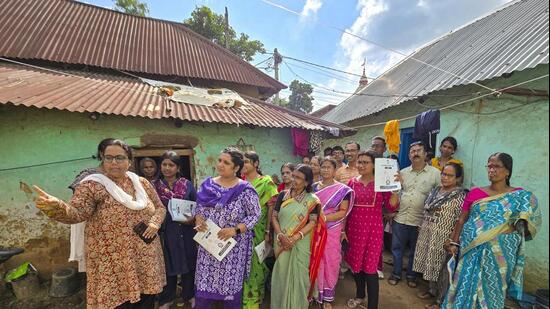
Census officials at the state and district level have also been asked to organise region-specific campaigns such as school and college competitions, rallies, marathons and performances by folk artists, and campaigns at government offices, hospitals, bus terminals and railway stations. Local officials have also been asked to use wall paintings in local languages, arrange announcements through municipal waste-collection vehicles and paste Census stickers carrying enumeration dates on household LPG cylinders and utility bills.
Significantly, RGI has directed that 24/7 social media monitoring cells be put in place “to track digital narratives around-the-clock for any adverse comments, false narratives, or local misinterpretations, so that authoritative rebuttals and fact-checks can be published in real time through state/UT machinery”.