E-Paper



Missing additional copies of chargesheet no ticket to default bail: SC
The ruling came on an appeal filed by Shaurya Sunil Kumar Singh, an accused in a CBI case involving an alleged cyber fraud and mule account racket.

 Prefer HTon Google


The Supreme Court has held that an accused cannot claim the benefit of statutory or default bail merely because the investigating agency failed to file additional copies of the chargesheet for supply to the accused, as long as the chargesheet itself was filed before the court within the prescribed 60- or 90-day period.
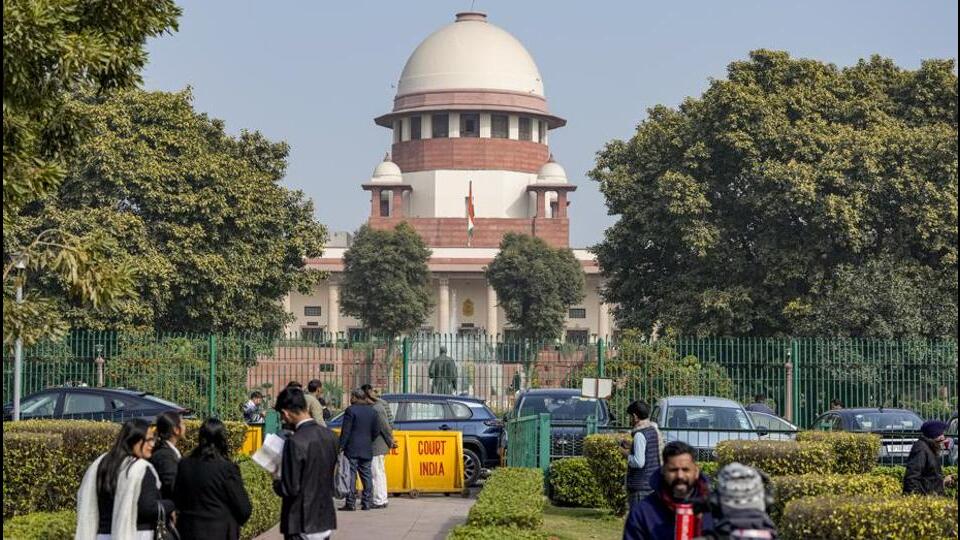
In a ruling on Wednesday, a bench of justices Sanjay Karol and N Kotiswar Singh said that the right to default bail flows from the investigating agency’s failure to complete the investigation and file the police report within the statutory period, and not from subsequent procedural lapses in supplying copies of the chargesheet.
“The non-filing of additional copies of the charge-sheet…would not vitiate the chargesheet/police report itself,” held the bench, adding that “the right to default bail arises when the chargesheet is not filed within a period of sixty or ninety days, as applicable.”
The judgment settles an important issue arising under the Bharatiya Nagarik Suraksha Sanhita (BNSS), which, unlike the erstwhile Code of Criminal Procedure (CrPC), specifically requires investigating officers to submit sufficient copies of the police report and accompanying documents to enable their supply to the accused. The court was called upon to decide whether failure to comply with this newly introduced requirement would entitle an accused to default bail.
Answering the question in the negative, the bench said that the additional obligation created under the BNSS cannot be equated with the consequence envisaged under the default bail provision.
“Once the chargesheet is filed, in compliance with the form prescribed under Section 193(3) BNSS, within the aforesaid period, the right to default bail ceases. Non-compliance with Section 193(8) of the BNSS (regarding supply of additional copies) cannot be construed to give the same result as Section 187(3),” said the judgment.
The ruling came on an appeal filed by Shaurya Sunil Kumar Singh, an accused in a CBI case involving an alleged cyber fraud and mule account racket. Singh was arrested on July 13, 2025, and the CBI filed its chargesheet before the expiry of the statutory period on September 2, 2025. However, copies of the chargesheet were supplied to him only on September 23. Claiming that the investigating agency had neither filed nor supplied the additional copies within time, Singh sought default bail under Section 187(3) of the BNSS.
Both the trial court and the Bombay high court rejected his plea, holding that default bail is available only where the chargesheet itself is not filed within the prescribed time. The Supreme Court affirmed those findings.
Examining the scheme of the BNSS, the court noted that while Section 230 now requires the magistrate to furnish copies of the police report and related documents to the accused within 14 days of production or appearance, that provision operates independently of the statutory right to default bail.
The bench observed that the provisions governing default bail under the BNSS remain substantially identical to those under the CrPC, despite changes in phraseology. It also noted that while BNSS introduces an additional requirement of filing spare copies of the police report, it does not alter the legislative scheme governing default bail.
Reiterating settled principles, the court said default bail is an “indefeasible right” flowing from Article 21 of the Constitution, but one that exists only until the investigation culminates in the filing of a valid police report.
Relying on earlier decisions and legal principles, the bench held that the CBI had filed a valid police report in compliance with Section 193(3) of the BNSS on September 2, 2025, within the prescribed statutory period. Consequently, the appellant’s right to default bail stood extinguished on that date, and Singh’s remedy thereafter lay in seeking regular bail on merits rather than invoking statutory bail.