
 E-Paper



Modi launches ₹1L-cr scheme for private sector job seekers
The Pradhan Mantri Viksit Bharat Rojgar Yojana will provide a one-time incentive of ₹15,000 to first-time private-sector job seekers, targeting approximately 35 million beneficiaries, Modi said.

 Prefer HTon Google


Prime Minister Narendra Modi on Friday announced the roll-out of a ₹1 lakh-crore scheme for new job seekers in an Independence speech that focused squarely on the need for more self-reliance and local manufacturing to cope with “rising economic selfishness” in the world.
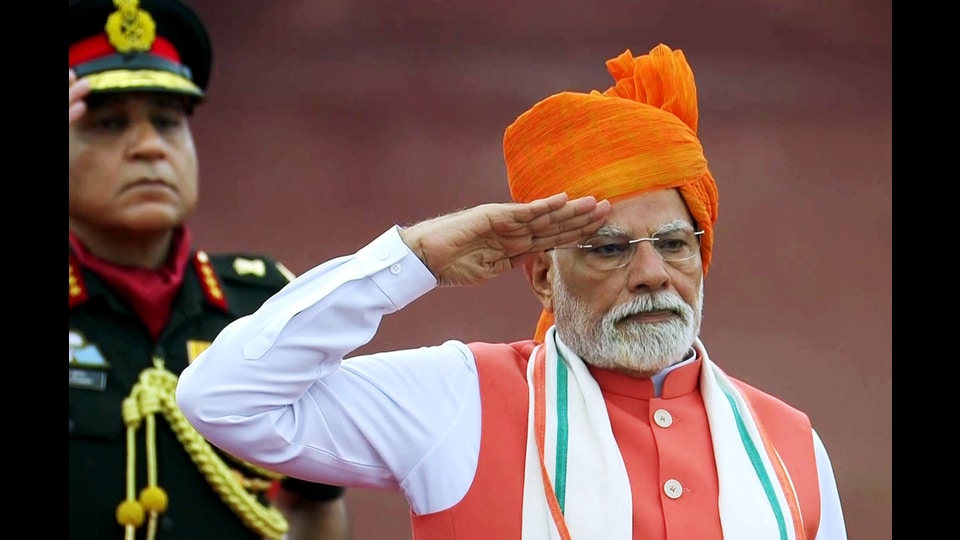
The Pradhan Mantri Viksit Bharat Rojgar Yojana will provide a one-time incentive of ₹15,000 to first-time private-sector job seekers, targeting approximately 35 million beneficiaries, Modi said.
The stress on the economy comes against the backdrop of US President Donald Trump’s decision to impose a 50% tariff rate on India, much higher than its neighbours and peers, which disadvantages exports and could hurt nearly one per cent of the nation’s gross domestic product, according to some analysts.
Local manufacturing will add jobs to the economy, he said, urging a boost to building everything, from fertilisers and jets to EV batteries. “Today, I bring good news for the youth of our country. From today, under the PM Viksit Bharat Rozgar Yojana, our sons and daughters getting their first job in the private sector will be given ₹15,000,” he said.
The PM stressed that this initiative would transform India’s demographic potential into real economic and social prosperity, strengthening the bridge from “Swatantra Bharat to Samriddha Bharat (free India to a prosperous one)” and empowering the youth to “actively contribute to the nation’s progress and development”.
In his 12th consecutive Independence Day address from the Red Fort, Modi outlined new economic and security initiatives, including a GST overhaul, indigenous semiconductor production and Mission Sudarshan Chakra, which is aimed at safeguarding strategic and public sites.
On July 1, the Union Cabinet chaired by Prime Minister Narendra Modi on Tuesday approved the much-awaited employment-linked incentive (ELI) scheme proposed in the 2024-25 Budget, which will offer fresh recruits in private-sector jobs a month’s wages, while firms hiring them will get financial incentives -- steps aimed at boosting job opportunities and enhancing skills of working-age people.
The sops, aimed at creating 35 million new jobs in two years, will provide direct financial benefits up to ₹15,000 in two instalments to 19.2 million first-time employees.
According to the government’s Economic Survey 2024, India needs to create 7.85 million non-farm jobs every year until 2030 to absorb its expanding labour force, way higher than the current rate of employment.
While one part of the scheme deals with one-off payments of a month’s wages as direct benefit transfer to all first-time employees entering the workforce in formal sectors, up to a salary ceiling of ₹1 lakh, the second component is aimed at contributing a share of salaries.
The scheme has been designed to calculate a baseline of employee strength and firms with less than 50 employees will need to hire two additional staffers to be eligible for the incentives.
Employers with more than 50 workers will need to add five new employees to the payrolls. All employees need to be registered with the Employees’ Provident Fund Organisation, the state-backed retirement-income manager, according to the statement.
According to the details of the scheme, for new employees with a provident-fund base wage of ₹10,000, the incentive for hirers will be ₹1000 and for those who fall in the base wage slab of between ₹10,000 and ₹20,000, the incentive will be ₹2000. For salaries of between ₹20,000 and ₹1 lakh, the benefit will be ₹3000.
The scheme therefore will offer incentives tied to EPFO contributions to both employers and first-time employees in the manufacturing sector in the form of funds linked to a specified pay scale for the period during which the plan will be in force. The benefits would be applicable for jobs created between 1 August 2025 and 31 July 2027.


