The brutality of the Mughal state against the Sikh Gurus had “few comparisons in history” and was rooted in “rigid religious and discriminatory practices”, according to the National Council of Educational Research and Training (NCERT) Class 9 Social Science textbook, part 2, Understanding Society: India and Beyond, released on Tuesday.
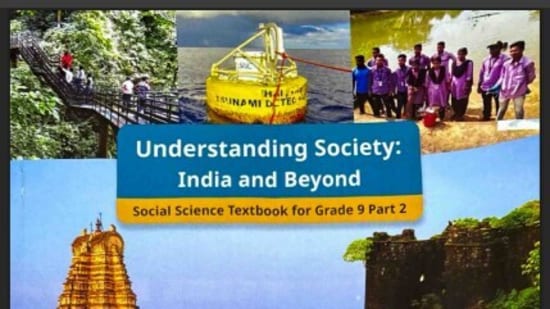
The previous textbook, first published in 2007 and continued till 2025-26 academic year, followed different progressions of historical chapters and did not contain the above mentioned instance.
DUSU VP submits representation to DU VC on student safety, accommodation
The history chapter, “Resistance and Resilience (1000–1700 CE)”, says the “valour and sacrifice” of the Sikh Gurus “for the cause of the faith” became defining features of Sikhism. It says their martyrdom strengthened the community’s conviction that persecution had to be met with “firm resistance and resilience”.
“The brutality of the Mughal state against the Sikh Gurus, particularly Guru Arjan Dev, Guru Tegh Bahadur, and the tenth Guru, Guru Gobind Singh, has few comparisons in history,” the textbook says. “The valor and sacrifices of the Gurus for the cause of the faith became the defining features of Sikhism. Beyond political motivations, the act [execution of Sikh Gurus by Mughals] was also deeply rooted in the rigid religious and discriminatory practices of the Mughals,” it adds.
Degree not enough, Maharashtra youth must acquire new skills to enter global job markets: CM
{{/usCountry}}Degree not enough, Maharashtra youth must acquire new skills to enter global job markets: CM
{{/usCountry}}The textbook says the Mughal state began to intervene more and more in the affairs of the Sikh Gurus from the beginning of the 17th century as their “socio-cultural influence” grew.
It says, “Due to the growing socio-cultural influence of the Sikh Gurus, the Mughal state increasingly intervened in their affairs from the beginning of the 17th century. As the Guru’s influence was increasing, Jahangir ordered the execution of Guru Arjan Dev (the fifth Sikh guru) on the pretext of the Guru’s alleged support to Jahängīr’s rebellious son, Khusrau Mirza.”
It describes the martyrdom as a “significant turning point” in Sikh history.
Farmers' outfit calls 12-hour Odisha bandh today over school textbook errors
The book also records Guru Hargobind’s detention by Jahangir at Gwalior Fort and the establishment of the Akal Takht as a seat of temporal authority, along with the concept of miri-piri, representing spiritual and worldly authority.
On Guru Tegh Bahadur, it says: “In 1675 Aurangzeb ordered the execution of Guru Tegh Bahadur, the ninth Sikh Guru. The martyrdom proved a turning point in Indian history.” It links the martyrdoms to the rise of organised resistance, saying persecution and political pressure could be countered through collective organisation and armed resistance “as and when required”.
On Guru Gobind Singh, the textbook says, “In 1699, Guru Gobind Singh established and developed a Sikh order known as the Khalsa. The Khalsa adopted a distinct martial code in response to the changing socio-political environment. Through this process, spiritual identity became closely intertwined with the pursuit of political identity.”
The framing is also sharper than that of older NCERT history textbooks. An older Class 11 history textbook by late historian Satish Chandra, first published in 1978, described the conflicts between the Sikh Gurus and the Mughals under Jahangir and Shah Jahan as “political and personal rather than religious”. The older textbook was in use till 2006.
On Guru Tegh Bahadur’s execution in 1675, Chandra’s book presented several accounts and said the causes were unclear. It cited Persian accounts alleging that the Guru had joined the Pathan leader Hafiz Adam and created disturbances in Punjab, while Sikh tradition attributed the execution to intrigues by members of his family. It also recorded an account that Aurangzeb was angered by the Guru’s conversion of some Muslims to Sikhism and his protest against religious persecution in Kashmir, before stating: “It is difficult to sift the truth of these allegations.”
An older Class 7 NCERT textbook, first published in 2007, also framed Guru Arjan’s execution mainly around the Mughal state’s view of the growing Sikh community as a political threat. This textbook was replaced by a new Class 7 textbook released in May 2025 and has been in use since 2025-26 academic year.
Its chapter “Devotional Paths to the Divine” says Ramdaspur (Amritsar), which had developed around the Harmandar Sahib, was “virtually self-governing”, and that modern historians referred to the Sikh community as “a state within the state”. It then says: “The Mughal emperor Jahangir looked upon them as a potential threat and he ordered the execution of Guru Arjan in 1606.”
The book says the Sikh movement then became politicised, culminating in Guru Gobind Singh’s institution of the Khalsa in 1699, after which the Khalsa Panth became a political entity.
Historian Ruchika Sharma, who specialises in medieval Indian history and is a former fellow at the University of Essex, said the new textbook was reviving what she described as a “massively debunked” interpretation of the Sikh-Mughal conflict as primarily religious. “The conflict was 100% political,” she said. She argued that the relationship was cordial at first and changed after Guru Arjan Dev supported Khusrau, including by putting a tilak on him, which she described as an act of political opposition to Jahangir.
“Guru Arjan Dev was executed for the same — the fact that he had supported Khusrau against Jahangir. The subsequent establishment of the Akal Takht, the Gurus’ military activities, collection of taxes from Mughal-controlled areas and construction of forts without imperial permission increasingly represented challenges to Mughal authority,” she added.
The Sikh account is part of a wider chapter on resistance between 1000 and 1700 CE. It also details uprisings against the Mughals by the Jats, a farming community from the Ganga-Yamuna Doab region, attributing their resentment to heavy taxation. It says Mughal forces struggled for several months to suppress the 1669 uprising, and that the Jats kept up their resistance, taking advantage of Aurangzeb’s long military campaigns in the Deccan to rebel again in 1686.
The chapter highlights resistance across regions, including by lesser-known women rulers such as Naiki Devi of the Chaulukya kingdom and Rani Abbakka Chowta of Ullal. It credits Naiki Devi with defeating Muhammad Ghuri at Kasahrada near Mount Abu in 1178. It credits Abbakka with defeating Portuguese naval forces during her reign from 1525 to 1570. It also mentions resistance by the Hindu Shahis, Chandellas, Solankis, Chauhans and the Kakatiya ruler Rudrama Devi against Turkic invaders and the Delhi Sultanate. The chapter also covers Maharana Pratap’s resistance and the Ahom victory over the Mughals at Saraighat.
Part 1 of the textbook, released in June 2026, had nine chapters: one on social science as a subject and two each on history, political science, economics and geography. Part 2 has six chapters: one each on history and political science, and two each on geography and economics.
NCERT did not respond to HT’s queries. In the foreword, NCERT director Dinesh Prasad Saklani wrote: “The content has been carefully selected to engage students with questions related to society, governance, environment, culture, economy, and human relationships. This approach aims to encourage learners to think critically and empathetically about the world they inhabit.”
NCERT is rolling out new textbooks under the National Education Policy (NEP) 2020 and the National Curriculum Framework for School Education (NCF-SE) 2023. It has so far released new textbooks for Classes 1 to 9.