Residents of a town in Nagaland have adopted a resolution to restrict entry of illegal Bangladeshi immigrants (IBIs).
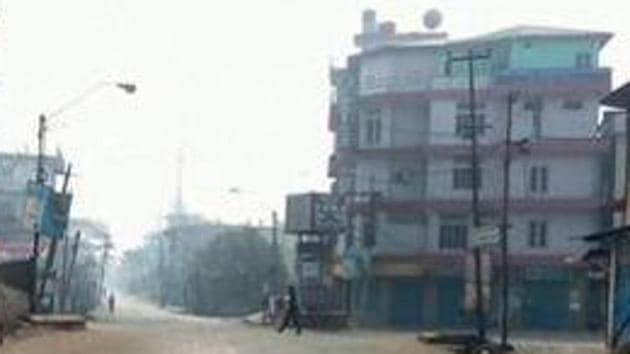
The resolution was adopted at Chumukedima, located 14km from Nagaland’s commercial hub Dimapur, on Thursday following a public rally to “create awareness” on alleged influx of IBIs.
An enumeration drive, between October 9 and October 31, is also being planned in the town in order to find out the number of non-Nagas and IBIs residing in the town.
Thursday’s resolution follows an attack on a Naga family allegedly by a group of non-Nagas in the town on September 21.
The resolution adopted after the rally organised by the Tribal Union Chumukedima Town (TUCT) felt the IBIs posed serious threat as they controlled “several vital economic activities” and posed danger to “peaceful coexistence of the public”.
Speakers at the rally insisted that the resolution wasn’t aimed at Indians from other states but only directed at detecting and deporting IBIs who might be staying in the area using fake or forged papers.
Among the steps suggested, the resolution stated no new or existing trade licences should be issued to IBIs and restrictions imposed on their businesses including sale and purchase of poultry, fishes, vegetables etc.
{{/usCountry}}Among the steps suggested, the resolution stated no new or existing trade licences should be issued to IBIs and restrictions imposed on their businesses including sale and purchase of poultry, fishes, vegetables etc.
{{/usCountry}}The so-called IBIs would not be allowed to rent out or take on rent both commercial and non-commercial vehicles and Nagas and other Indians shouldn’t buy or sale anything to them.
The resolution urged the state government to strictly implement the inner line permit (ILP) system all over Nagaland and warned land/house owners not to give their places on rent or lease to the suspected foreigners.
Earlier this week, the head ‘gaon bura’ (chief village elder) of Chumukidema town announced an enumeration drive and asked all non-Nagas to produce identification documents like passports, voter identity cards, Aadhar cards etc. during the process.
“Any non-Naga failing to produce their identification proof as required shall be compelled to leave Chumukidema town and the expelled members (if any) shall not be allowed to dwell in and around Chumukidema,” a release stated.
In Nagaland, ‘gaon buras’ are important functionaries responsible for administration in villages. The posts, usually permanent, are filled by members elected by villagers or nominated by clans.
“The enumeration drive is being carried out on directions of the district administration to find out presence, if any, of illegal immigrants and those without valid documents,” said a senior government official on condition of anonymity.
There is growing concern in Nagaland about influx of illegal immigrants from Bangladesh.
On Wednesday, Naga Students Federation issued a copy of memorandum addressed to the chief secretary urging the government to check influx of illegal immigrants and implement the inner line permit (ILP) system effectively within a month.
Inner line permits are required by Indians from other states to enter Nagaland, Arunachal Pradesh and Mizoram. The practice started by British to protect their business interests in the region was continued after Independence with a view to safeguard the customary tribal practices of the region.
In Nagaland, Dimapur, the largest town and commercial hub, doesn’t come under purview of the ILP system.