The new Agnipath framework announced on Wednesday will apply only to existing Agniveers, and the scheme is expected to undergo further changes for recruits inducted into the three services after December 31, senior officials aware of the matter said on Thursday.
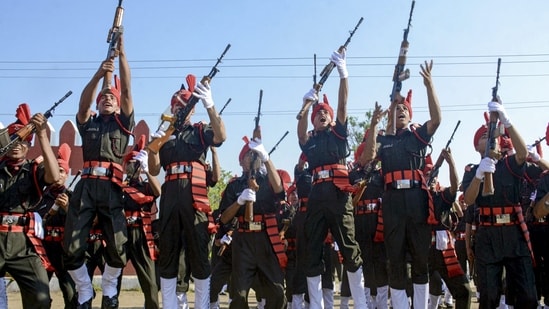
The scheme, cleared by the Cabinet was unveiled by the Chief of Defence Staff (CDS) on Wednesday. “The revamped scheme will apply exclusively to the 300,000 Agniveers currently in service. Its provisions will be reviewed before being extended to future batches,” said one of the officials cited above. The next batch of Agniveers, set to begin training early next year, will complete its four-year tenure in 2031.
The Agnipath reboot was announced by CDS General NS Raja Subramani weeks before the three services were set to release 75% of Agniveers from their first batch after four years of service, retaining only the 25% selected on merit for another 15 years under the scheme’s earlier provisions. Now, the remaining 75% will serve two more years as Agniveers, and will then be absorbed as regular soldiers.
Deep Dive
Who is covered by the revised Agnipath framework?
What happens to Agniveers who are not selected for regular service after four years?
Will the revised Agnipath rules apply to recruits joining after December 31?
The scheme will undergo periodic reviews and refinements to keep pace with the military’s needs, a second official said. “The existing model is seen as the best fit at this stage.”
{{/usCountry}}The scheme will undergo periodic reviews and refinements to keep pace with the military’s needs, a second official said. “The existing model is seen as the best fit at this stage.”
{{/usCountry}}Also Read | 2-year service extension to 75% Agniveers after tenure ends | Decoding new rules
By extending their service and subsequently opening up a military career for these Agniveers, the government has effectively rolled back the contentious scheme that was first announced in June 2022 and immediately sparked protests. These changes also put under pressure the two defining features of the scheme – short-term service intended to maintain a youthful military profile, and checking a burgeoning wages and pension bill.
The CDS earlier said the introduction of the additional two-year engagement period followed a deliberate, reasoned and elaborate evaluation and feedback process, fundamentally aiming to align Agniveers’ aspirations with organisational efficiency. The three services were satisfied with the performance of Agniveers across roles.The armed forces have addressed seniority concerns arising from the different timelines for permanent induction: 75% of Agniveers will be retained only after two years of additional service under the revised arrangement, while the remaining 25% of their batch will become permanent right away.
“Their seniority is protected. On becoming regular, the 75% will be placed immediately after their own batchmates who joined the regular cadre after four years. They will therefore not become junior to any subsequent batch,” another official said.
A four-year review of the performance of Agniveers highlighted their skills, motivation, physical fitness and technological capabilities, prompting the government to revisit the terms of their service, Subramani said.