India has decided to go ahead with a truncated parade to mark Republic Day (January 26) without a chief guest, people familiar with the matter said. The decision was taken after British Prime Minister Boris Johnson’s last-minute decision to cancel his visit due to the spread of a mutant strain of the virus that causes Covid-19 in the UK.
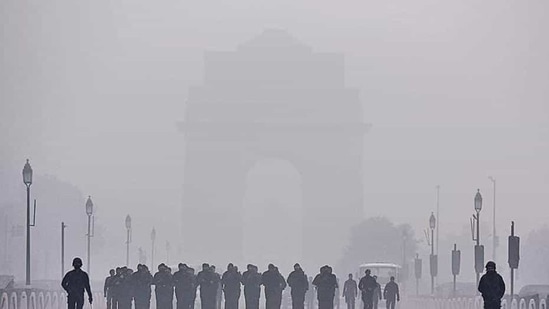
This will be the first time in at least five decades that the Republic Day celebrations, seen as a high point in India’s diplomatic calendar, will not have a chief guest. The last time the parade did not have a chief guest was In 1966 when Indira Gandhi was sworn in as prime minister on January 24 after the demise of Prime Minister Lal Bahadur Shastri on January 11. There were two other years when the parade did not have a chief guest: 1952 and 1953.
One official said the decision was taken on account of multiple reasons. “We did not want to put any foreign dignitary in an awkward situation,” the official said, underscoring that a last-minute acceptance of India’s invitation could be potentially embarrassing for the invitee back home as the head of state would be seen as a replacement. Since 1950, India has twice identified replacements after guests cancelled at the last moment.
Although PM Boris Johnson publicly accepted India’s invitation, Downing Street later indicated his inability to attend the annual event marking the adoption of the Indian Constitution due to the rapid rise in Covid cases in the country.
{{/usCountry}}Although PM Boris Johnson publicly accepted India’s invitation, Downing Street later indicated his inability to attend the annual event marking the adoption of the Indian Constitution due to the rapid rise in Covid cases in the country.
{{/usCountry}}India was also aware that given the mutant virus’ impact on the UK, and elsewhere, there would be continued uncertainty about the visit right till the end. Since then, there have been reports of new strains that have been spotted in other countries such as South Africa and Japan. The South African variant, like the UK strain, is driving a surge of infections in the country. And the Narendra Modi government also did not want to take any risks, this official explained.
Social distancing protocols due to the Covid-19 pandemic have already forced the government to opt for a truncated version of the parade, the highlight of the Republic Day celebrations that showcases India’s military might and cultural diversity.
The parade will be shorter and end at National Stadium in the national capital Delhi rather than the Red Fort. The marching contingents will also be smaller, with 96 participants in each squad that was earlier made up of 144. Also, the number of spectators along Rajpath have been capped at one-fourth of the 100,000 in previous years. Children below the age of 15 will not be permitted at the parade.
The plan to have a marching contingent of the Bangladesh army participate in the parade as part of the 50th-anniversary celebrations of the 1971 liberation war of Bangladesh is so far intact. This is only the second time that foreign soldiers will be marching down Rajpath as part of India’s biggest ceremonial event -- the first was the French in 2016. Fifty years ago, the Pakistan Army surrendered to the Indian Army paving the way for the formation of Bangladesh.