The beginning of lunar night between Friday and Saturday at the landing site of Vikram lander marked the end of Indian Space Research Organization’s (Isro’s) hope of re-establishing communication with it.
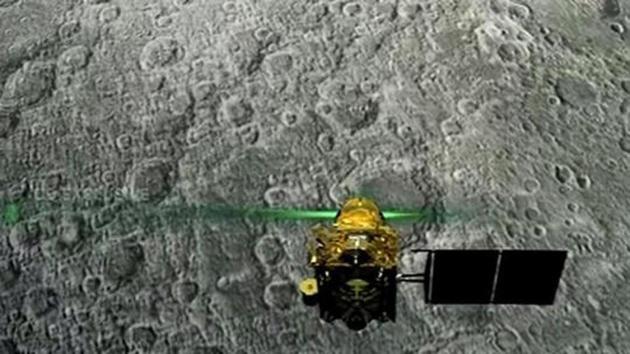
Vikram is not designed to withstand temperatures of -180 degrees C and the electronics onboard will become unviable after the lunar night, equivalent to fourteen days on Earth. It will also run out of charge if the solar panels were not deployed after the ‘hard-landing’.
The temperature is about 130 degrees C during the day.
Isro scientists have been trying to communicate with the lander since September 7, when the last phase of the 15-minute powered descent did not go as planned. Scientists lost communication with the lander when it was just 2.1 km above the lunar surface.
“We can now say that there is no hope of Isro communicating with the lander, the mission life of the lander-rover is over. The mission was designed to conduct experiments during the lunar day and does not have the kind of shielding that can keep the electronics warm and functioning,” said Nirupam Roy, assistant professor of Physics at the Indian Institute of Science (IISc), Bangalore.
“And, it was unnecessary too. The fourteen days were sufficient for the lander-rover to conduct all the experiments and send back the data. The shielding would have just added weight and cost to the mission,” he added.
{{/usCountry}}“And, it was unnecessary too. The fourteen days were sufficient for the lander-rover to conduct all the experiments and send back the data. The shielding would have just added weight and cost to the mission,” he added.
{{/usCountry}}For the Vikram lander to be able to communicate, it should have enough power and the antenna should be properly oriented. There are two ways that the Vikram could communicate either with the Orbiter going around the moon or directly with the Earth.
“The Vikram lander communicates in two frequencies – the X band that is high bandwidth (better quality) but very focused, which could be picked by the orbiter when it is over the landing site. The other S-band, which has lower bandwidth, but is omnidirectional can be used to communicate with the Earth, but even the antenna should be facing the Earth without anything in between. However, with the lunar night setting in, there is no possibility of communicating with the lander, even if it had survived the landing,” said Jatan Mehta, former science officer of TeamIndus, a Bangalore-based private company that aims to send a lander-rover to the moon.