India has made it clear to China that bilateral ties could only resume after the present stage of emergency management of the border in East Ladakh was replaced by normalized border management by the PLA after removing friction points at Depsang Plains in Daulet Beg Oldi (DBO) sector and Demchok area including Charding Ninglung Nullah (CNN) sector.
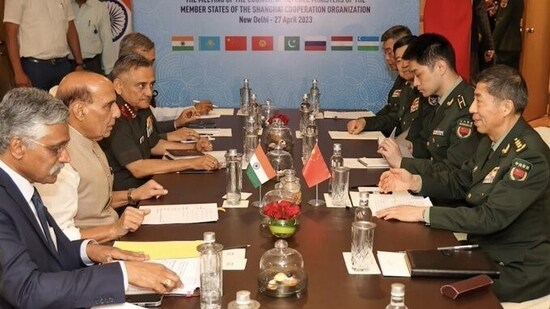
During the meeting of India-China defence ministers and the 18th round of military dialogue this week Beijing has conveyed to New Delhi that the border has normalized in East Ladakh, and hence bilateral relations should be restored to pre May 2020 level. But this position is contrary to the Chinese statement after the 26th meeting of the Working Mechanism for Consultation and Coordination on China-India Border Affairs on February 22, 2023. The press release on the meeting shared by the Chinese Embassy in Beijing stated: “The two sides discussed other measures to further ease the border situation and agreed to make efforts in promoting the border situation to the phase of normalized management and control.” This means that the border management in East Ladakh was still in a transitional stage and the situation could only normalize after the PLA restored the status quo in Depsang and Demchok.
While the PLA in the past have maintained that Depsang and Demchok are legacy issues that pre-date May 2020 Chinese Army transgressions in Galwan, Khugrang, Gogra-Hot Springs and Pangong Tso, fact is that the Western Theatre Command have beefed up their positions on ground in the two areas. India has made it clear that till such time the two issues are not resolved, it cannot be business as usual with China. Both the countries have deployed no less than 50,000 troops with missiles, rockets, and artillery along the 1597 km Line of Actual Control in East Ladakh with fighters on a standby since PLA aggression of May 2020.
{{/usCountry}}While the PLA in the past have maintained that Depsang and Demchok are legacy issues that pre-date May 2020 Chinese Army transgressions in Galwan, Khugrang, Gogra-Hot Springs and Pangong Tso, fact is that the Western Theatre Command have beefed up their positions on ground in the two areas. India has made it clear that till such time the two issues are not resolved, it cannot be business as usual with China. Both the countries have deployed no less than 50,000 troops with missiles, rockets, and artillery along the 1597 km Line of Actual Control in East Ladakh with fighters on a standby since PLA aggression of May 2020.
{{/usCountry}}Unlike in the past decade, the Narendra Modi government is firm on its position vis-à-vis the LAC in western, middle, and eastern sectors and has no intentions of budging on the steps that are needed to restore peace and tranquility on the 3488 km LAC. In fact, Indian diplomacy mirrors that of China with both sides reading from written statements and fixed positions as determined by the political leadership of the country so that there is no scope of any tactical mistake.
Defence Minister Rajnath Singh amplified the Indian position to his Chinese counterpart Gen Li Shangfu by stating that the road to normalization goes through a peace and tranquil LAC with disengagement, de-escalation and de-induction of deployed troops and reserves the requisite steps. As of now, the PLA have deployed two divisions on East Ladakh LAC with three combined armed brigades to back them up. These troops are backed by rocket, missile and artillery regiments in Sinkiang military district and Shiquanhe (Gar-Gunsa) area of western Tibet.