The monsoon season this year is likely to be in the normal category, private forecaster Skymet Weather said on Tuesday, an early projection that augurs well for India’s agrarian heartland and broader macroeconomic stability—both inextricably tethered to the four-month seasonal rainfall that serves as the lifeblood for millions of rural livelihoods.
The season is expected to lead to 103% (±5%) of the long period average (LPA) amount of rain. Last year’s monsoon was above normal at 108% of the LPA, though the nationwide figure typically mask significant regional variations with some areas experiencing flooding and others facing deficits.
The LPA for the 1971-2020 period is 87 cm, with a “normal” monsoon range defined as 96-104% of LPA. According to Skymet, there is a 40% chance of normal monsoon, 30% chance of above normal, 15% chance of below normal, and 5% chance of drought.
The agency’s experts pointed to a favourable convergence of global climate indicators that typically influence India’s monsoon patterns: The absence of El Niño—often associated with deficient rainfall—combined with neutral conditions in the Pacific Ocean and a potentially positive phase in what is known as the Indian Ocean dipole create optimal conditions for normal to above-normal precipitation.
“ENSO-neutral is likely to be the most dominant category during the Indian Summer Monsoon. The remnants of La Niña and ENSO-neutral together will shield the monsoon from any egregious outcome,” said Jatin Singh, managing director, Skymet Weather. Remnants of La Nina refer to the effects from a Pacific Ocean cooling that occurred last year, which typically helps India’s monsoon/
{{/usCountry}}“ENSO-neutral is likely to be the most dominant category during the Indian Summer Monsoon. The remnants of La Niña and ENSO-neutral together will shield the monsoon from any egregious outcome,” said Jatin Singh, managing director, Skymet Weather. Remnants of La Nina refer to the effects from a Pacific Ocean cooling that occurred last year, which typically helps India’s monsoon/
{{/usCountry}}Singh noted that a preliminary forecast of positive Indian Ocean Dipole (IOD) will work in tandem with ENSO for better monsoon prospects. “Historically, ENSO-neutral coupled with positive IOD tended to produce a worthy monsoon”.
The second half of the season is expected to be better than the first phase, he added. “The Monsoon may have a quiet start on account of quick transition from La Niña to ENSO-neutral and gain enough pace half way through the season,” Singh explained.
The weak and brief La Niña is now fading, and El Niño—which typically disrupts monsoon patterns—has been ruled out for this season. IOD is currently neutral but is likely to turn positive before the onset of monsoon.
Regionally, Skymet expects good rainfall over Western and South India, with adequate precipitation in the core monsoon rainfed zones of Maharashtra and Madhya Pradesh. Excess rainfall is predicted along the Western Ghats, particularly in Kerala, Coastal Karnataka, and Goa.
However, the Northeast region and hilly states of North India are expected to receive below normal rainfall.
“We are expecting near normal rainfall over northern plains including Punjab and Haryana. But northeast India may record below normal rains. It’s also imp to consider that monsoon arrives over NW India only around July,” said Mahesh Palawat, vice president, climate and met, Skymet weather
India Meteorological Department (IMD) officials plan to release their initial monsoon forecast by mid-April. They have also indicated that ENSO-neutral conditions are likely to persist during the monsoon season.
The latest forecast comes after the National Oceanic and Atmospheric Administration’s Climate Prediction Center last month projected ENSO-neutral conditions from April to August 2025. The El Niño pattern that began in May 2023 and ended in May 2024 had caused extreme heat globally. Despite the subsequent La Niña phase that emerged in December, which typically brings cooler temperatures, many countries including India recorded unusually high temperatures.
The World Meteorological Organisation has warned that these naturally occurring climate events are now taking place within the context of human-induced climate crisis, which is dialling up global temperatures, exacerbating extreme weather and climate, and impacting seasonal rainfall and temperature patterns.
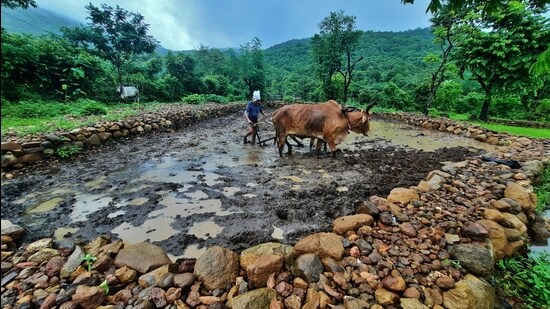
Monsoon delivers nearly 70% of India’s annual rainfall and remains vital for the economy. About 51% of India’s farmed area, accounting for 40% of agricultural production, is rain-fed, with 47% of the population dependent on agriculture for livelihood. Consistent and moderate amounts of rain – as opposed to heavy or very heavy rainfall days – is thus crucial for the country’s agriculture and rural sector. Such balanced rainfall helps control prices of staples such as sugar, pulses, rice, and vegetables, potentially easing inflation concerns.
In 2023, an El Nino year, IMD had predicted “normal” monsoon at 96% of LPA, but actual rainfall was below normal at 94%—still within the agency’s error margin.
India received 820 mm of rainfall compared to the LPA of 868.6 mm in 2023, an El Niño year. Prior to that, the country had recorded normal or above-normal rainfall for four consecutive years.