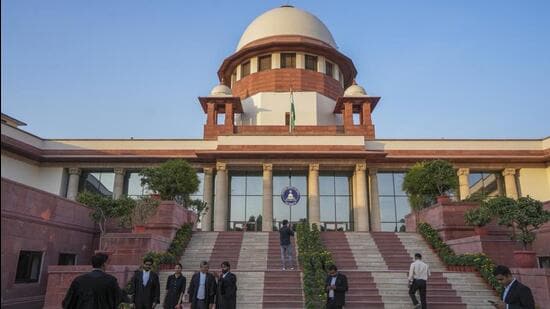
The Supreme Court on Thursday dismissed a public interest litigation (PIL) calling it “not practical” after it sought to establish a regulatory framework that would mandate doctors to inform patients about the contraindications of prescribed medications.
Contraindications refer to specific situations or conditions where a particular medication, treatment, or procedure should not be used because it may cause harm to the patient. For example, if a person has an allergy to a certain drug, that drug would be contraindicated for them, meaning it should be avoided to prevent adverse effects.
Expressing doubts about the feasibility of implementing such a system, a bench comprising justices Bhushan R Gavai and KV Viswanathan opined that the proposition is not workable given the variety of medicines and their varied impact on patients.
“It cannot be individually informed. You may perhaps have such information displayed at pharmacies but there again, how many such boards and information you can have... Also, a medicine will have different effect on different people. How do you standardise it? It is very difficult to implement. It’s not practical,” the bench said.
The PIL in the matter was filed by Jacob Vadakkanchery, a naturopathy therapist and social worker from Kerala, and was argued by advocate Prashant Bhushan.
{{/usCountry}}The PIL in the matter was filed by Jacob Vadakkanchery, a naturopathy therapist and social worker from Kerala, and was argued by advocate Prashant Bhushan.
{{/usCountry}}Bhushan argued that there is no current obligation for doctors to inform patients about the potential adverse effects or contraindications of prescribed medicines, and he suggested that this gap leaves patients at risk. The proposal aimed to reduce cases of negligence and promote accountability among healthcare providers. Bhushan suggested that doctors could provide printed inserts to patients detailing possible contraindications, which he argued would ultimately reduce legal issues related to medical negligence.
“Such a mechanism will have salutary effect and doctors will have accountability. The World Health Organization (WHO) has come out with a report that severe harm is being caused to patients because of the medicines being prescribed to them without information about contraindications,” the lawyer added.
The bench, however, raised significant practical concerns, pointing out the challenges of standardising such warnings, as different medicines can have varied effects on different patients. While displaying information at pharmacies might be possible, it added, the volume and complexity of such information would be difficult to manage effectively.
The bench also noted that making such disclosures mandatory might lead to an increase in consumer complaints and lawsuits against doctors and pharmacists, potentially creating additional legal and administrative burdens.
Highlighting that doctors are already under the purview of the Consumer Protection Act, the bench ultimately concluded that the proposed mandate would be impractical to enforce.
“As it is doctors are not happy with the judgment of this court by keeping them under the ambit of the consumer law, enforcement of such directives will lead to more consumer cases,” commented the bench, as it refused to admit the PIL.
Notably, on November 7, a three-judge bench that included justices Gavai and Viswanathan had dismissed a request to revisit the Supreme Court’s 1995 judgment, which had classified medical services under the CPA and held that healthcare providers, including doctors and hospitals, could be held accountable under the Act for service deficiencies.
To be sure, the Bolam Test — a standard that has long been recognised in medical negligence cases — has been consistently reaffirmed by the Supreme Court of India. Originating from the 1957 English case ‘Bolam Vs Friern Hospital Management Committee’, this test states that a doctor is not negligent if they act in accordance with a practice accepted by a responsible body of medical professionals.
In the Indian context, the Supreme Court endorsed the Bolam Test in the case of ‘Jacob Mathews Vs State of Punjab’ (2005), holding that only if a doctor lacks requisite skills or fails to exercise reasonable competence should liability be imposed.
Through a judgment on October 24, the Supreme Court further emphasised that medical professionals cannot be held liable for negligence solely because a surgery or treatment does not produce the expected results, asserting that culpability of doctors must stem from clear evidence pointing to a deviation from accepted medical practices.