The Supreme Court on Tuesday condemned the expansion of the non-resident Indian (NRI) quota in Punjab’s medical colleges, calling it a “fraud” that forces more meritorious students out of the admission process.
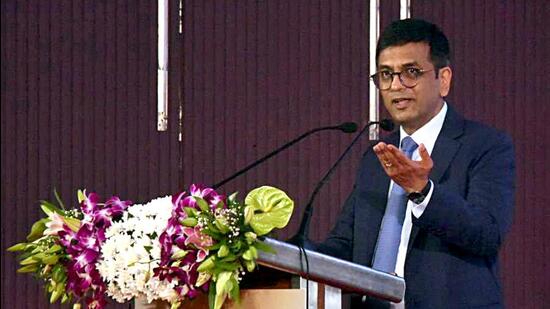
A bench led by Chief Justice of India (CJI) Dhananjaya Y Chandrachud dismissed a set of petitions challenging a Punjab and Haryana high court order that had quashed the Punjab government’s move to broaden the NRI quota criteria, including distant relatives of NRIs.
“We must stop this NRI quota business now! This is complete fraud, and this is what we are doing to our education system,” remarked the bench, which included Justices JB Pardiwala and Manoj Misra, emphasising that the NRI quota was being exploited to sidestep merit-based admissions.
The bench said that such a broad interpretation of NRI eligibility, which even allowed distant relatives to qualify, amounted to a “money-spinning tactic” that undermines the integrity of the education system.
“All three petitions are dismissed. Let us put a lid on this. This fraud has to come to an end. This NRI business is nothing but a fraud. This comes to an end now. What is ward? You just have to say ‘I am looking after X’. See the students who got three times high scores have lost out. We cannot lend our authority to something which is blatantly illegal,” observed the bench.
{{/usCountry}}“All three petitions are dismissed. Let us put a lid on this. This fraud has to come to an end. This NRI business is nothing but a fraud. This comes to an end now. What is ward? You just have to say ‘I am looking after X’. See the students who got three times high scores have lost out. We cannot lend our authority to something which is blatantly illegal,” observed the bench.
{{/usCountry}}The top court’s stern comments came against the backdrop of a Punjab government notification issued on August 20, which redefined “NRI candidates” to include relatives like uncles, aunts, grandparents and cousins. This expansion was quashed by the Punjab and Haryana high court on September 11, which found the move “unjustified” and contrary to the original purpose of the NRI quota – meant to provide genuine NRIs an opportunity to study in India.
During the hearing, senior advocate Shadan Farasat argued that the broader interpretation of the NRI quota was already being used in other states, including Himachal Pradesh and Uttar Pradesh. The Supreme Court, however, firmly rejected these arguments, reiterating that the broader definition diluted merit and allowed less deserving candidates to gain admission based on financial power and connections rather than academic performance.
Senior advocate Abhimanyu Bhandari, representing the original petitioner who had challenged the notification before the high court, pointed out that a constitution bench in the PA Inamdar judgment (2005) frowned upon the fact that the NRI quota cannot be a way for the people to use money power to get in.
Agreeing with Bhandari, the bench underscored that NRI quotas should only be reserved for genuine NRIs and that merit should not be sidelined.
A senior official in the Punjab medical education department said the government is yet to study the Supreme Court’s order. “A statement can be made only after studying the full judgment,” the official said, seeking anonymity.