Chhattisgarh was just a name on the map for Dr Arun Chaudhry, 28, till he first visited Maoist-affected Bijapur district three months ago. “He loved the forests and the streams,” recalls his wife Pratibha, 26. “He WhatsApped so many photos that it ate up all my data and my phone stopped downloading.”
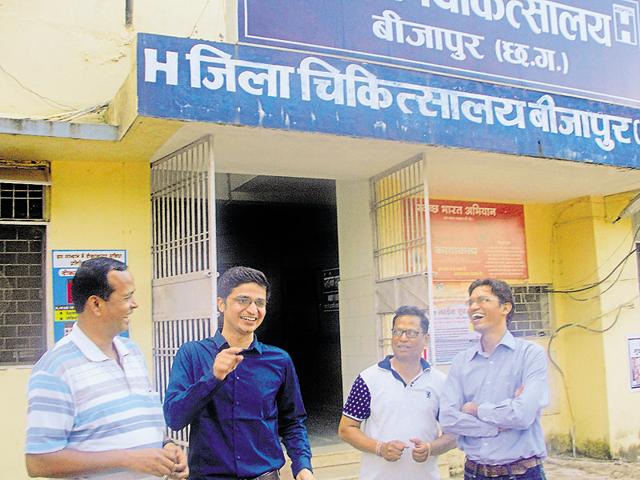
Shortly, the woman, along with Dr Chaudhary, moved from Aligarh in western Uttar Pradesh to a new one-bedroom apartment in the transit hostel in the Bijapur District Hospital complex, courtesy the state government’s new set of initiatives to bring doctors into its traditionally backward tribal belts.
Read | Why doctors are choosing to work in Chhattisgarh’s Maoist-affected areas
“My mother wept at our decision,” says the doctor, who moved in to the southern Chhattisgarh pocket on August 25. “But I was excited about the challenges and opportunity to get the gynaecological ward up and running.”
Apart from the high salary — the doctor won’t disclose his, but a paediatric and general surgeon is being offered Rs 2.6 lakh a month — what helped make up Chaudhry’s mind was the hospital infrastructure and social support. What’s more, his wife got a government job, teaching science and English at the Girls Senior Secondary School in Bijapur.
The couple can use for free the city’s only club that has a swimming pool, and tennis and badminton courts. The district’s only cinema hall runs films for them on call. “We called and said we wanted to watch a film yesterday and they screened the Dhoni biopic for us,” says Pratibha. “The attention takes getting used to.”
{{/usCountry}}The couple can use for free the city’s only club that has a swimming pool, and tennis and badminton courts. The district’s only cinema hall runs films for them on call. “We called and said we wanted to watch a film yesterday and they screened the Dhoni biopic for us,” says Pratibha. “The attention takes getting used to.”
{{/usCountry}}Then, there’s the opportunity for career growth. “The OT (operating theatre) in Bijapur is better than the one at JN Medical College in Aligarh,” says Dr Chaudhry, who delivered a 24-week-old premature baby boy last week. “Also, a new modular OT is being constructed with 10 ICU beds and six ventilators is coming up. The blood bank is just awaiting drug controller’s nod and the new 50-bed gynae wing will be ready by next month.”
Oddly, he’s as excited about the common launderette shared by 10 residents in their transit hostel complex. “We have a washing machine and modern laundry facilities in the hostel. Tell me, do doctors in Delhi have it this good?”