NEW DELHI: External affairs minister S Jaishankar on Friday rejected suggestions from the West that India’s purchases of Russian oil is helping fund the war in Ukraine, saying New Delhi is only working to get the best deal for its citizens amid intense volatility in global energy markets.
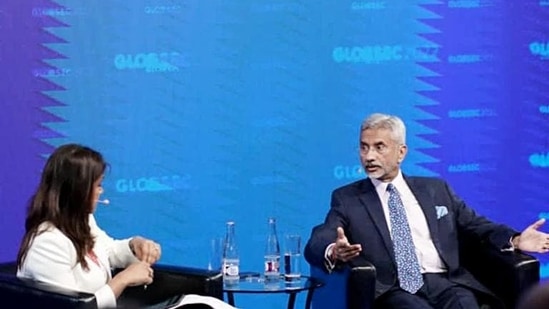
He noted while participating in an interaction session at the annual Bratislava Forum, organised by the think tank GLOBSEC in the Slovakian capital, that European countries have included carve-outs in sanctions imposed on Russia that allow them to access Russian gas.
“I don’t want to sound argumentative but then tell me if buying Russian gas is not funding the war [in Ukraine]. It’s only Indian money and oil coming to India which funds [the war] but it’s not gas coming to Europe which funds [it],” he said, brushing aside suggestions by the moderator that India’s oil purchases are helping fund the Russian campaign in Ukraine.
Russian crude flows to India were set to touch 3.36 million tonnes in May, nearly nine times higher than the 2021 monthly average of 382,500 tonnes, CNN reported recently, citing data from Refinitiv. India has procured 4.8 million tonnes of discounted Russian oil since the Ukraine war began in February.
The Indian side has maintained that there are no government-to-government deals for energy with Russia, which is a “marginal supplier” of crude oil and not among the top 10 sources.
Jaishankar said the narrative about the volume of purchases increasing nine times should factor in the fact that was “from a very low base at a time when markets were more open”.
{{/usCountry}}Jaishankar said the narrative about the volume of purchases increasing nine times should factor in the fact that was “from a very low base at a time when markets were more open”.
{{/usCountry}}“If countries in Europe and the West and the US are so concerned, why don’t they allow Iranian [and] Venezuelan oil to come into the market? They’ve squeezed every other source of oil we have, and then say, okay guys you must not go into the market and get the best deal for your people. I don’t think that’s a very fair approach,” he said.
Jaishankar noted that European countries were continuing to buy Russian oil and gas, and the latest package of sanctions included a carve-out for pipelines and timelines reducing energy imports. If European states manage energy deals in a way that the impact on their economy is “not traumatic, that freedom or choice should exist for other people as well”, he said.
India is only buying the “best oil in the market” and “no political messaging should be attached to this”, he added.
Asked about India’s ban on wheat exports, he said this was done to prevent speculation by international traders in centres such as Singapore and Dubai. India remains committed to providing wheat to developing countries that have a genuine need for food grains, he said.
There was “a kind of run on our wheat” by international traders, and the result was low income countries such as Bangladesh, Sri Lanka, Nepal, Yemen and Sudan “were being squeezed out”, Jaishankar said.
India has usually exported two to three million tonnes of wheat a year, and the figure touched seven million tonnes last year before this year’s heat wave affected crops “very badly”, and New Delhi acted to prevent the diversion of wheat to high income countries, as had happened in the case of Covid-19 vaccines, he said.