Pakistan Prime Minister Muhammed Shehbaz Sharif has chosen to chart a different path from his two predecessors, Imran Niazi and his elder brother Nawaz Sharif, while engaging India under Prime Minister Narendra Modi. Rather than use uncouth language of Imran Niazi against PM Modi, Shehbaz has sought meaningful engagement with India and is committed to maintenance of regional peace and security.
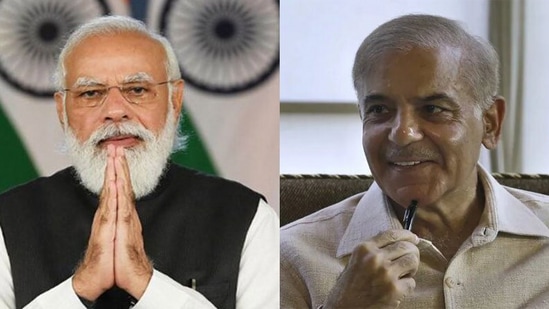
However, Shehbaz apparently has also learnt a lesson from the defeat of his elder brother Nawaz by raising the so-called core issue of Kashmir while at the same time talking about eliminating terrorism. After being sworn as PM, Shehbaz talked about the never implemented 1948 UNSC resolution on Jammu and Kashmir and raised the issue of Kashmir in his letter to PM Modi.
His supercilious predecessor Niazi also was focused on Kashmir and decided to call PM Modi’s names in desperation as the latter did not engage the former swing bowler during his entire term. A die-hard opportunist, Niazi changed tactics towards the end of his truncated tenure and used India as a tactic to criticise the Pakistan Army by calling the Indian Army honest and praising India’s foreign policy over Ukraine to pin-prick the Biden administration. But without the support of his mentors in Rawalpindi GHQ, Niazi failed in both Afghanistan and India and created a new adversary in the US by cozying up to Russian President Vladimir Putin on the day he invaded Ukraine.
Pakistan watchers believe that Shehbaz raised the Kashmir issue publicly for domestic audiences as political troubles of Nawaz started after the so-called core word was omitted from the Ufa summit statement between India-Pakistan PMs on July 10, 2015. The statement read out by the then foreign secretaries of India and Pakistan said: “They (the two PMs) agreed that India and Pakistan have a collective responsibility to ensure peace and promote development. To do so, they are prepared to discuss all outstanding issues.” As the word Kashmir, which has been used by Pakistan to incite masses against India for the past 75 years, was not there in the readout, then PM Nawaz Sharif was castigated by the domestic audience as they suffered from withdrawal symptoms of the Jammu and Kashmir drug. Then a foreign secretary, S Jaishankar is now the external affairs minister of India with National Security Advisor Ajit Doval still watching Islamabad.
{{/usCountry}}Pakistan watchers believe that Shehbaz raised the Kashmir issue publicly for domestic audiences as political troubles of Nawaz started after the so-called core word was omitted from the Ufa summit statement between India-Pakistan PMs on July 10, 2015. The statement read out by the then foreign secretaries of India and Pakistan said: “They (the two PMs) agreed that India and Pakistan have a collective responsibility to ensure peace and promote development. To do so, they are prepared to discuss all outstanding issues.” As the word Kashmir, which has been used by Pakistan to incite masses against India for the past 75 years, was not there in the readout, then PM Nawaz Sharif was castigated by the domestic audience as they suffered from withdrawal symptoms of the Jammu and Kashmir drug. Then a foreign secretary, S Jaishankar is now the external affairs minister of India with National Security Advisor Ajit Doval still watching Islamabad.
{{/usCountry}}It was due to the trust between PM Modi and then PM Nawaz Sharif that the former chose to land in Pakistan on December 25, 2015 to attend a family wedding of the then Pak PM. The bonhomie between the two PMs was short-lived as Pakistan based Jaish-e-Mohammed (JeM) decided to attack Pathankot air base as evident from the note recovered from the vehicle used by terrorists. Despite India warning Pakistan about the impending terror attack, the Pak NSA could not prevent it and the Pathankot air base was attacked in the wee hours of January 2, 2016. The entire attack was orchestrated by family terror empire run by globally designated jihadi Masood Azhar from Bahawalpur in Punjab. The bilateral relations took a deep dive thereafter with PM Sharif losing power to the then Pak Army protégé Imran Niazi in 2018. The Pak Army under General Qamar Jawed Bajwa is a practical force that realises there is no rate of return from the Jammu and Kashmir issue and meddling in Afghanistan will turn Pakistan into an Emirate.
While India’s reciprocal steps towards normalization of bilateral ties with Pakistan depends on the moves by PM Shehbaz Sharif, the matters have complicated further with Islamabad reduced to a tributary state to the middle kingdom in Beijing. Shehbaz Sharif's maneuverability is further reduced by the economic mess in Pakistan with very high external debt, double digit inflation and very weak Pakistani rupee. By merely raising Kashmir in the UN, Shehbaz Sharif cannot stem the rot in Pakistan.