E-Paper



Parl committee raises concern over proposed higher education regulator
The parliamentary standing committee recommended that a simplified hierarchy of regulatory bodies would be more effective

 Prefer HTon Google


A parliamentary committee has raised concerns over the proposed Higher Education Commission of India (HECI) which seeks to replace the University Grants Commission (UGC) as the principal regulator of higher education, warning that centralisation could lead to closure of institutions in rural areas and indirectly fuel privatisation.
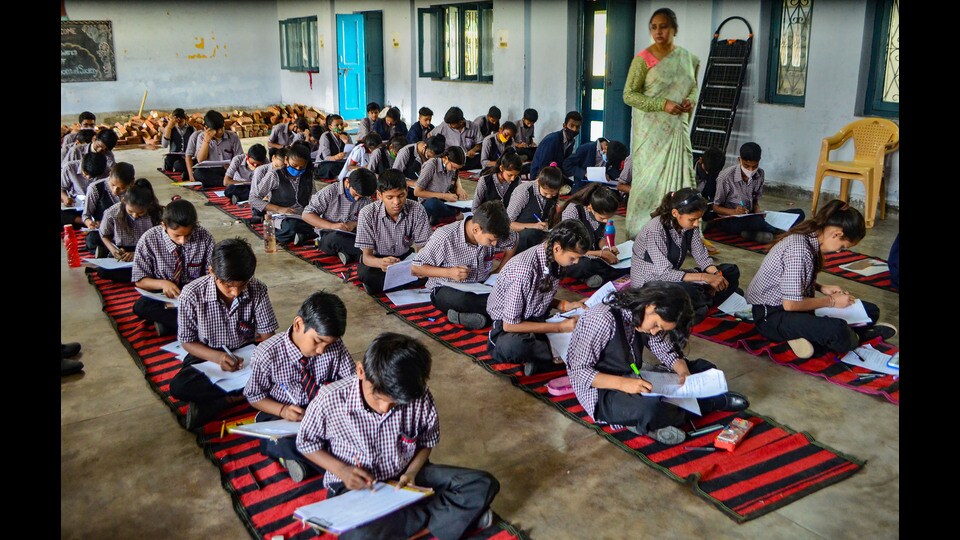
In a report tabled in Rajya Sabha, the parliamentary standing committee on education, women, children, youth, and sports, led by Congress MP Digvijaya Singh recommended that a simplified hierarchy of regulatory bodies would be more effective.
The panel found that state universities, which educate over 90% of the student population, are caught in between national and state-level regulations due to multiplicity of regulators which leads to inconsistency in standards and monitoring, making it difficult for institutions to function effectively.
The committee said that the draft HECI bill “appears to perpetuate many of these same issues by maintaining a central government- heavy composition and insufficient state representation”.
“The proposed HECI Bill will hold significant power, including the ability to grant degree-awarding authority and close institutions failing to meet standards. This removes state control and could lead to the closure of institutions in rural areas that suffer from infrastructure or faculty shortages. It would indirectly fuel privatization, especially in rural areas,” the panel said.
The National Education Policy, 2020 envisages the creation of HECI as the principal regulator for higher education, with four verticals for regulation, accreditation, funding, and academic standards.
The HECI, which was proposed in the new National Education Policy (NEP), looks to replace the UGC, the All India Council for Technical Education (AICTE) and the National Council for Teacher Education (NCTE).
While the UGC oversees non-technical higher education, the AICTE oversees technical education and the NCTE is the regulatory body for teachers’ education.
The concept of HECI has been discussed before in the form of a draft Bill.
A draft Higher Education Commission of India (Repeal of University Grants Commission Act) Bill, 2018, which seeks to repeal the UGC Act and provides for setting up of the Higher Education Commission of India, was put in public domain in 2018 for feedback and consultation with stakeholders.
Renewed efforts to make the HECI a reality were then initiated under Dharmendra Pradhan, who took over as Union Education Minister in July 2021.
Underlining the relevance of a single higher education regulator, the NEP 2020 document says that “the regulatory system is in need of a complete overhaul in order to re-energise the higher education sector and enable it to thrive”.
It further adds that the new system should ensure that the distinct functions of regulation, accreditation, funding, and academic standard setting are performed by distinct, independent, and empowered bodies.
The parliamentary panel also asked the higher education department of the education ministry to ensure that “any such unified regulatory body must have adequate representation for all states and there should not be excess centralization.”
Additionally, the panel highlighted the plight of contractual teachers in universities, citing a lack of job security, salary increments, and social security benefits. The panel suggested the department regularize jobs to ensure security, fair conditions, and capacity building, motivating faculty to enhance research and teaching.