From revisiting the differential pricing of tickets for foreigners and Indians at monuments to creating a Yoga Certification Board and getting recognition abroad for Ayurveda as a system of medicine, these are among a parliamentary panel’s recommendations for bolstering India’s soft power and cultural diplomacy.
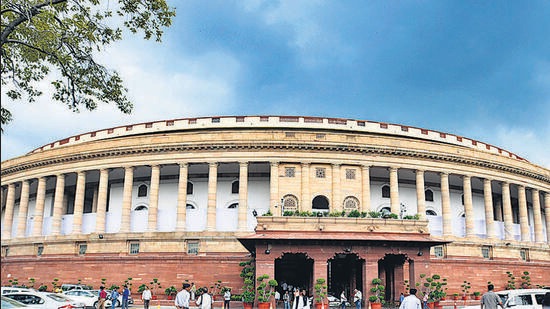
The report of Lok Sabha’s standing committee on external affairs, presented to both houses of Parliament on Monday, further recommended that the external affairs ministry should facilitate the opening of more AYUSH (Ayurveda, Yoga, Naturopathy, Unani, Siddha, Sowa-Rigpa and Homeopathy) centres overseas in a “strategic and planned manner”.
In the context of the government’s push to popularise yoga through initiatives such as International Day of Yoga and setting up of facilities such as the Indo-Turkmenistan Centre for Yoga and Traditional Medicine in Ashgabat and India-China Yoga College at China’s Yunnan Minzu University, the panel recommended that the ministries of AYUSH and external affairs should set up a ‘Yoga Certification Board for certifying Indian yogic practices and therapies’.
This suggestion was made in view of the surge in yoga teaching and centres around the world, the committee said. “Collaboration with the Indian diaspora should also be encouraged to disseminate yoga training abroad, in regions where it is not yet popular,” the report added.
Noting that India exports AYUSH and herbal products to about 100 countries and that a majority of these exports are value-added extracts of medicinal plants, dietary supplements and nutraceuticals, the committee recommended the government “should make concerted efforts to get recognition of Ayurveda as a system of medicine and adopting pharmacopeia of India so that [the products] can be exported as medicine”.
{{/usCountry}}Noting that India exports AYUSH and herbal products to about 100 countries and that a majority of these exports are value-added extracts of medicinal plants, dietary supplements and nutraceuticals, the committee recommended the government “should make concerted efforts to get recognition of Ayurveda as a system of medicine and adopting pharmacopeia of India so that [the products] can be exported as medicine”.
{{/usCountry}}Also Read:Environment to yoga: UGC lists ‘value added courses’ for undergraduates
The panel noted it was informed by the external affairs ministry that Ayurveda “does not have a recognised pharmacopeia”, which is why such products are being exported as dietary supplements and nutraceuticals. It pointed out that Ayurvedic products are still not recognised in foreign countries and that Ayurveda is recognised in only 11 countries, including Nepal, Bangladesh, Pakistan, Sri Lanka, the United Arab Emirates, Colombia and Malaysia.
“The Committee are of the firm view that Ayurveda...has the power to become a prominent tool of soft power across the world. Taking cues from yoga, the Committee desire that the government should give diplomatic push to Ayurveda in getting global recognition,” the report said.
On the issue of the differential pricing of tickets to monuments for foreigners and Indians, the panel suggested that the pricing system “may be revisited” since such a policy is unnecessary in a globalised world.
“While understanding that the earnings from foreign tourists is a major source of revenue for the government, [the committee is] of the view that such differential pricing leads to a loss of large segment of foreign travelers,” the report said.
The committee also called for a system of common tourist passes for entry to multiple heritage sites, as is prevalent in most European countries, to streamline the process and avoid long queues at sites.
Referring to public broadcaster Prasar Bharati’s efforts to develop a global outreach through the re-oriented ‘DD India’ channel, the committee said there is an “urgent need of reorienting DD India further so as to make it globally relevant and influential”. It suggested the government come up with a plan for revamping the focus, structure and functioning of DD India to enhance its global reach.
The panel sought an enhanced annual budgetary allocation of ₹500 crore for the Indian Council For Cultural Relations (ICCR) for “conducting India’s soft power and cultural diplomacy in a robust and extensive manner”, and also called for the speedy creation of a coordination committee consisting of representatives from the ministries of external affairs, culture, youth and sports affairs, AYUSH and science and technology to overcome the lack of coordination among multiple institutions in projecting India’s soft power and cultural diplomacy.
The external affairs ministry should also prepare a policy document on “India’s soft power projections, delineating India’s soft power toolbox and manner in which it is being projected abroad along a vision statement for the future”, the panel said.