E-Paper



Sparks fly over ‘water’: Covaxin hits out at critics, says trials 200% honest
Experts pointed out that the government may have acted in haste, and the sentiment was echoed by some Opposition politicians who suggested that the Union government ignored scientific protocols to give the nod to a fully indigenous vaccine because it tied in with the Atmanirbhar Bharat slogan.

 Prefer HTon Google


Bharat Biotech chairman and managing director, Krishna Ella, on Monday hit out at comments suggesting that its anti-coronavirus disease (Covid-19) vaccine, Covaxin, was “safe like water”, and said that their Phase 3 efficacy data, likely to be out by February or March, will silence all critics.
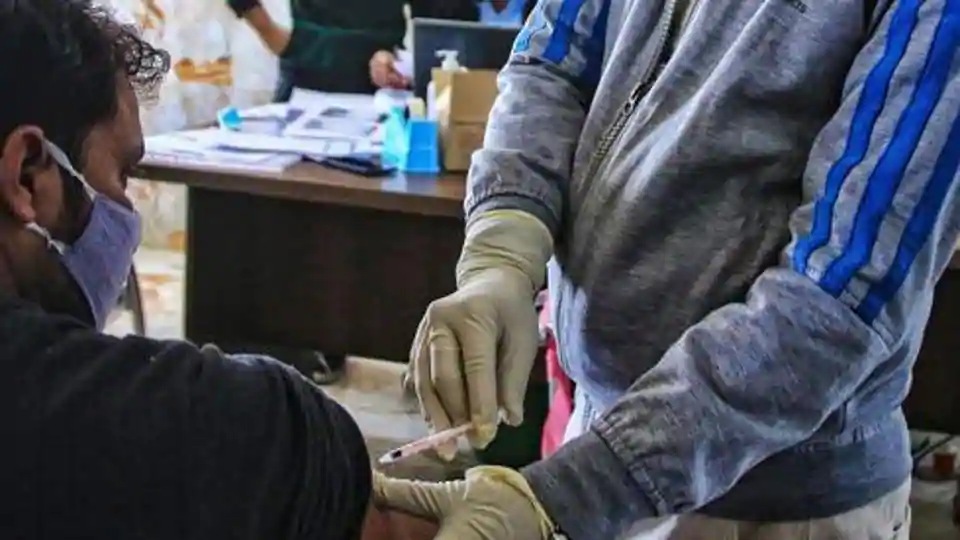
Though he did not take any names, Ella’s remarks appear to have sparked a rare war of words between vaccine-makers a day after Serum Institute of India’s (SII) CEO, Adar Poonawalla, told NDTV that only three vaccines had passed all the scientific evaluations -- Pfizer-BioNTech, Modera and Oxford-AstraZeneca -- and that while the others were safe, “safe like water”, their effectiveness had not yet been evaluated.
“It is easy to target Indian scientists. I had to tell this because some other company has branded my product as ‘safe like water’. Some local company in press yesterday said that safety is like water of other companies. Only three companies have done efficacy, and other vaccine is like water. I want to deny that. It hurts us as scientists; we work 24 hours and don’t deserve this type of bashing from people,” Ella told a media briefing.
Read more| ‘Give me one week’s time’: Bharat Biotech chief on questions about Covaxin efficacy
He then appeared to question the results of the Oxford-AstraZeneca vaccine that is being manufactured by SII.
“You ask a question on the UK Astra-Zeneca clinical trial; whether 60%, 70% or 90% which one is the clinical efficacy? Nobody knows. One says high dose, high dose, low dose or high dose. If I had done that type of clinical trial in India, the drugs controller of India would have shut down the company on quality issues,” he said.
SII declined to comment on the matter.
It also asked for a weeks’ time to prove with evidence that his vaccine also worked against the new UK variant of Sars-Cov-2 virus as 90% of the vaccines targeted just the spike protein of the virus but Covaxin was an inactivated whole virion vaccine.
The company is in the eye of a storm after Covaxin was granted “restricted use in emergency situation” approval, leading to many experts questioning the decision because of the shorter duration of human trials and relatively lower data published for the candidate, which is still in the process of its Phase 3 checks.
The Oxford vaccine, called Covishield, got the Drug Control General of India nod based on the safety, immunogenicity and efficacy data generated on 23,745 participants from overseas studies, as well as interim data from Phase 2/3 trials on 1,600 people in India. What boosted its case was that it was granted approval last week by the Medicine and Healthcare products Regulatory Authority in the UK.
Experts pointed out that the government may have acted in haste, and the sentiment was echoed by some Opposition politicians who suggested that the Union government ignored scientific protocols to give the nod to a fully indigenous vaccine because it tied in with the Atmanirbhar Bharat slogan.
Read more| Bharat Biotech vaccine more likely to work against newer strains like UK variant: Vardhan
Ella contended that the criticism his company has faced since Sunday was unwarranted.
“We are not a company without a vaccine experience; we have produced 16 vaccines, and are catering to 123 countries. We are conducting clinical trials not just in India but in more than 12 countries, including UK where we have conducted two clinical trials. WHO has said for typhoid vaccine that it’s a breakthrough vaccine for typhoid control,” he said.
He also said that there was a 2019 Central Drugs Standard Control Organisation (CDSCO) notification that allowed grant of emergency use authorisation without efficacy data.
Covaxin is a 2 dose Covid-19 vaccine to be given 28 days apart, and only vaccine allowed to be tested on children of 12 years and above. Ella said company currently has 20 million doses pre-produced at risk, of which five million doses are undergoing quality testing in a government lab. There are four dedicated facilities that can produce about 700 million doses in Hyderabad and Bengaluru, he added.
The DCGI clearance to Covaxin also triggered a political slugfest between the Opposition and ruling party leaders.
“But it is typical of a govt that prefers slogans over substance. Chest-thumping ‘vaccine nationalism’, combined with the PM’s “atmanirbhar Bharat” campaign, has trumped common sense and a generation of established scientific protocols,” Congress leader Shashi Tharoor said in a tweet on Sunday.
BJP president JP Nadda and aviation minister Hardeep Puri led a counter-attack, saying the Opposition was questioning the competence of Indian scientists just as it had doubted Indian soldiers during the Balakot operation.