
Prime Minister Narendra Modi will on Sunday inaugurate the first phase of the Ghogha-Dahej Ro-Ro ferry service between Saurashtra and the South Gujarat region of his home state.
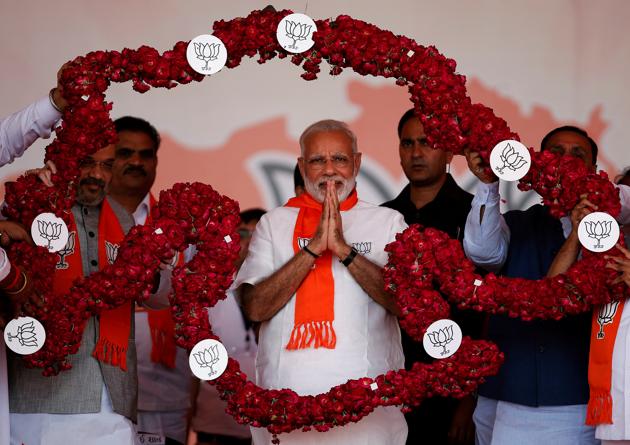
This is Modi’s third visit to Gujarat, where assembly elections are to be called in coming days.
A few things to know about the “roll-on, roll-off” (Ro-Ro) ferry service described by Modi as his dream project:
1 The Rs 615 crore Ro-Ro ferry service will connect Ghogha in Saurashtra’s Bhavnagar district with Dahej in Bharuch district across the Gulf of Khambhat, also known as the Gulf of Cambay, along the Arabian sea coast.
2 The service is expected to reduce the distance between the two coastal towns from 310km by road to 30 km, saving time and money. The travel time will be cut by at least five hours.
3 The service will come particularly handy for those working in the diamond cutting and polishing hub of Surat in South Gujarat, as most of these workers belong to the Saurashtra region in the western part of the state.
4 The first phase to be inaugurated on Sunday would be a passenger-only service, Ajay Bhadoo, the chief executive officer of Gujarat Maritime Board that is executing the Ro-Ro project, said.
{{/usCountry}}4 The first phase to be inaugurated on Sunday would be a passenger-only service, Ajay Bhadoo, the chief executive officer of Gujarat Maritime Board that is executing the Ro-Ro project, said.
{{/usCountry}}5 In the second phase, which would be ready in two months, cars, too, would be carried between the two towns.
6 In the final phase, ferries would be able to carry trucks as well.
7 The service was thought of in early 1960s but the foundation stone was laid in 2012 by Modi when he was the chief minister of Gujarat.
ABOUT THE AUTHOR
Follow the latest breaking news, major developments and agenda-setting stories from India and around the world with the newsdesk at Hindustan Times. Operating round the clock, the desk brings together experienced editors, reporters and correspondents to deliver fast, accurate and contextual reporting across subjects that influence public policy, governance, business, society and international affairs. The HT News Desk covers politics, elections, government policies, the economy, business and markets, science and technology, the environment, law and order, infrastructure, education, climate issues and geopolitics, while closely tracking developments across states, institutions and global capitals. The team also leads coverage of major breaking news events, policy announcements, court proceedings, natural disasters, public emergencies and significant international developments. Reports published by the newsdesk are based on information gathered from reporters on the ground, official statements, government agencies, court records, regulatory filings, recognised institutions and other authoritative sources. Stories undergo editorial scrutiny and verification processes to ensure accuracy, fairness and relevance, and are updated as events evolve and additional information becomes available. Whether covering a key political decision in New Delhi, an economic policy shift affecting millions, a landmark court ruling or a major global event, the HT News Desk aims to provide readers with reliable, fact-based journalism that delivers not only the latest developments but also the context and analysis needed to understand their wider implications.