E-Paper



Pradhan lauds NCERT for publishing special modules on partition, Op Sindoor
Pradhan also praised NCERT for publishing modules on ‘India: A Rising Space Power’

 Prefer HTon Google


Union education minister Dharmendra Pradhan on Monday praised National Council of Education Research and Training (NCERT) for releasing special modules on India’s partition, Operation Sindoor and India’s space journey, describing them as a step towards presenting the nation’s history and achievements in the right perspective.
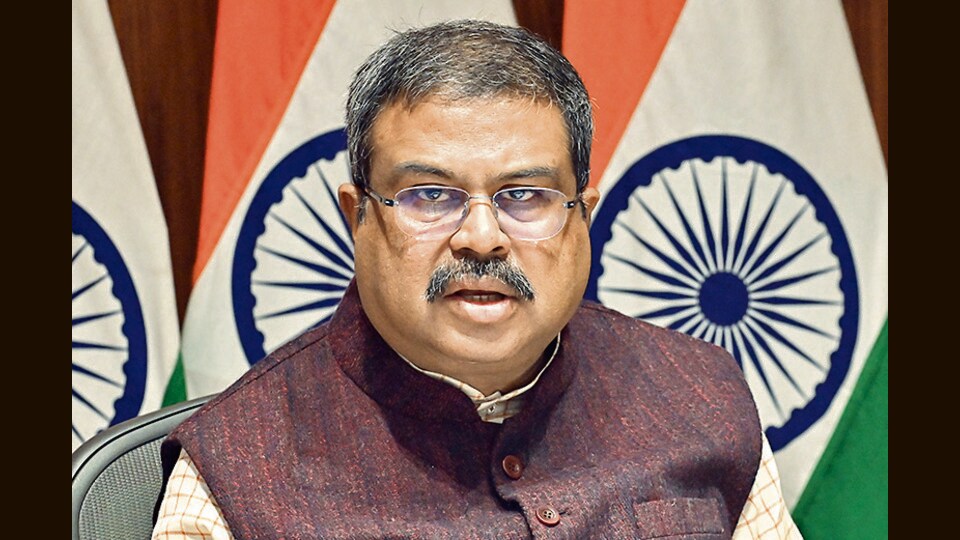
Addressing NCERT’s 65th Foundation Day, Pradhan said the council is restoring the right perspective, adding that “a few intolerant people, bound by a colonial mindset and viewing India through a Western lens, are naturally uncomfortable with this.”
Lauding the council’s recent works, the minister said NCERT has done “extremely commendable” work by including the saga of Operation Sindoor in school curricula and developing modules on the horrors of India’s Partition. “We should never forget the tragedy of Partition. If we don’t understand our history in the context of the present, the future generations will be misguided,” he remarked.
NCERT’s modules for classes 6 to 8 (middle stage), and another for classes 9 to 12 (secondary stage) on India’s partition released on August which holds three people responsible: “Jinnah, who demanded it; second, the Congress, which accepted it; and third, Mountbatten, who implemented it,” sparked controversy with Congress leaders demanding that the module be scrapped for “distorting history” and BJP leaders accusing the grand old party of repeating its ‘appeasement politics’ and refusing to confront historical truth.
Later, Indian History Congress (IHC) on August 25 in its resolution criticised the modules stating that “tender minds” were being fed “distorted, polarising history.” On August 28. NCERT dismissed IHC criticism of its partition modules as “unfounded and false.”
Pradhan also praised NCERT for publishing modules on ‘India: A Rising Space Power’ which showcases the country’s growing scientific strength. He praised NCERT for publishing 19 special modules so far on various contemporary issues including G20, Asian Games etc.
NCERT modules are supplementary resources in English and Hindi that cover contemporary and culturally significant topics. They are separate short publications on specific topics that are not part of the textbooks but taught through projects, posters, discussions, and debates.
Pradhan described NCERT as an iconic institution at the heart of India’s educational system stating that it has been a pillar of the nation’s educational landscape, shaping the destinies of generations of students with unparalleled commitment and dedication. He urged NCERT to embrace its role as a change leader by adopting a reform-oriented, tech-driven work culture, and focused on global best practices.
Pradhan also launched a series of initiatives aligned with NEP 2020, including primers in Hindi, Sanskrit, Ho and Koya to enable learning-teaching in the mother tongue; PM eVidya mobile app for quality digital education; DTH channel for building strong Foundational Literacy and Numeracy (FLN) skills among early learners, virtual reality labs in Regional Institute of Education (RIE) schools of NCERT, DIKSHA 2.0 platform with AI-enabled learning, PRASHAST 2.0 for education of children with disabilities, inclusive textbooks for Classes 1 and 2, a book on Odisha’s 100 eminent personalities, and a vocational education handbook.
NCERT said these initiatives “reaffirm the commitment to inclusive and future-ready education” for developed India by 2047.