The National Disaster Response Force (NDRF) has said that they are preparing for worst as ‘very severe’ cyclonic storm Nivar is hurtling towards the Tamil Nadu coast.
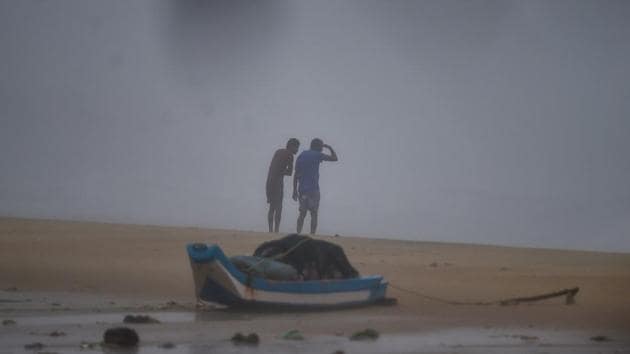
“Cyclone Nivar is categorised as ‘very severe’. With this perspective, we’re preparing for worst. Our teams have been on the ground for last twodays. Till now, 25 teams been deployed through Tamil Nadu, Puducherry and Andhra Pradesh,” NDRF director general SN Pradhan said, according to news agency ANI.
“More than 30,000 people have been evacuated from Tamil Nadu and 7,000 from Puducherry. Central, state and local governments are working in tandem. All efforts are being made to minimise damage,” he added.
the Puducherry government said the administrative machinery is fully geared up to meet any exigency arising out of the situation.
Also Watch l Watch: Tamil Nadu, Puducherry brace for Cyclone Nivar with Covid protocols
Since Tuesday night, the union territory has been experiencing intermittent moderate rain due to the influence of the cyclonic storm, which is 250 km off Chennai, according to India Meteorological Department (IMD).
The cyclone is expected to make landfall between Mamallapuram and Karaikal in Tamil Nadu late on Wednesday night or early Thursday, according to IMD.
Tamil Nadu chief minister K Palaniswami has declared Thursday a public holiday for 13 districts including Chennai, Vellore, Cuddalore, Villupuram, Nagapattinam, Tiruvarur, Chengelpet and Kancheepuram considering the safety of people.
Wednesday has already been declared a holiday.
In its latest weather bulletin, the IMD said that the storm, 190 km from Puducherry is very likely to move northwestwards and cross coasts as a “very severe cyclonic storm with a wind speed of 120-130 kmph gusting to 145 kmph.”
South coastal Andhra Pradesh is also likely to witness showers at most places today.
{{/usCountry}}South coastal Andhra Pradesh is also likely to witness showers at most places today.
{{/usCountry}}The Tamil Nadu government appealed to people living in coastal districts to not venture out of their homes and requested those living in low lying areas to reach the cyclone shelters in their respective regions.