President Droupadi Murmu will visit Fiji, New Zealand and Timor-Leste next week to take forward bilateral ties with the three countries in areas such as defence and security, trade, education and people-to-people contacts.
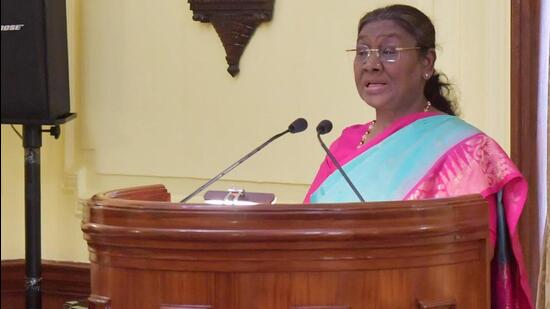
Murmu will meet the top leadership of the three countries and interact with the Indian diaspora on all legs of her tour during August 5-10, secretary (East) Jaideep Mazumdar of the external affairs ministry told a media briefing on Friday. The visit is in keeping with India’s special focus on Southeast Asia and the Pacific under its Act East policy, he said.
This will be first visit by an Indian president to Fiji and Timor-Leste, which is set to become the 11th member of the Association of Southeast Asian Nations (Asean).
Also Read: Governors should act as ‘effective bridges’ between Centre and states: PM Modi
While in Fiji during August 5-6, Murmu will meet President Wiliame Katonivere and Prime Minister Sitiveni Rabuka. She will address Fiji’s Parliament and interact with the Indian diaspora.
India has had a diplomatic presence in Fiji since 1948, and people of Indian origin arrived in the country as indentured labour in 1857. People of Indian ancestry now make up more than a third of Fiji’s population and the visit reflects India’s commitment to further strengthen bilateral ties, Mazumdar said.
{{/usCountry}}India has had a diplomatic presence in Fiji since 1948, and people of Indian origin arrived in the country as indentured labour in 1857. People of Indian ancestry now make up more than a third of Fiji’s population and the visit reflects India’s commitment to further strengthen bilateral ties, Mazumdar said.
{{/usCountry}}India has been a strong development partner for Fiji, implementing several projects, such as setting up a 100-bed hospital in Suva, and offering credit lines.
Murmu will next travel to New Zealand during August 8-9 for the first presidential visit from the Indian side after eight years. She will meet Governor General Cindy Kiro, Prime Minister Christopher Luxon and deputy prime minister Winston Peters.
New Zealand has identified India as a special focus country for bilateral relations and as a key partner for defence, security, trade and investment. Education is a key aspect of bilateral relations, and there are 8,000 Indian students in New Zealand, the second largest group of foreign students.
Murmu will also address an international education conference in Wellington, at which India is the guest of honour, and interact with the Indian diaspora.
While in Timor-Leste on August 10, Murmu will meet President José Ramos-Horta and Prime Minister Kay Rala Gusmão, and interact with the Indian community. India is looking to bolster cooperation with Timor-Lester in areas such as IT, digitalisation, healthcare and agriculture. Murmu’s visit comes about seven months after Ramos-Horta’s trip to India.
India has announced that it will open a mission in Timor-Leste, and a team will travel to Dili shortly to complete the formalities. India is also in the process of appointing an ambassador and the process is expected to be completed in the next couple of months, Mazumdar said. Timor-Leste too will open a mission in New Delhi.
India has strong and historic connections with all three countries and all the sides can do more in terms of defence and security and development cooperation, Mazumdar said. Defence and security is an important aspect of discussions with New Zealand in the Indo-Pacific region, he said.