E-Paper



On Odisha visit, President Murmu urges lawyers to work for speedier justice
President Droupadi Murmu asked law students to set apart some part of their professional time to serving the under-privileged and vulnerable citizens


BHUBANESWAR: President Droupadi Murmu on Wednesday urged lawyers to work towards expeditious trial and speedy dispensation of justice as it sets free innocents who are languishing in jail on trivial charges.
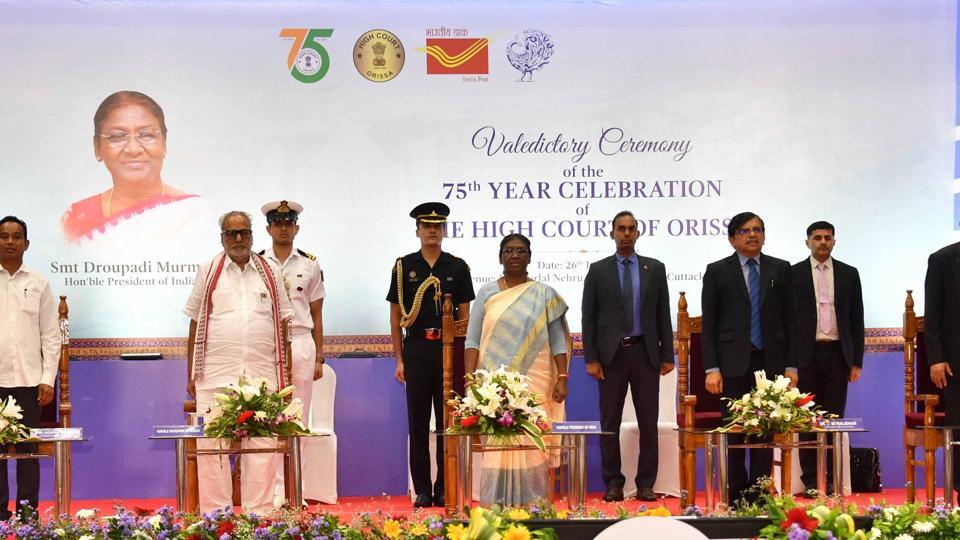
Murmu, who is on a three-day visit to Odisha coinciding with the completion of one year in office, attended the valedictory function of 75 years of completion of Orissa high court in Cuttack. In her speech, Murmu said in the years that she had spent in public life, she had come across instances of people incarcerated for periods longer than the punishment stipulated for the crime of which they are accused.
“The legal profession in India has stood the test of time. It has earned the trust and respect of the citizenry. But delays in courts are a major concern. Due to this, innocent persons lose the prime period of their lives. This is a subject close to my heart and I have spoken about it on previous occasions also,” she said.
President Murmu sought priority for the delivery of justice to the socially and economically underprivileged sections of society. “People from the deprived sections of the society neither have much knowledge nor have resources to access justice. Therefore, it is a question before us ‘how would they get justice?’ There is a need for deep churning on this question,” she said.
She said the high court was established nearly 12 years after the formation of the state in 1948. “The establishment of this high court reflected the long-standing aspirations of the people of Odisha. Any institution which does not change with time lags behind. The High Court of Orissa has endeavoured to incorporate technological advancement in the justice delivery system,” she said.
Later addressing the convocation of National Law School India University in Cuttack, President Murmu asked law students to set apart some part of their professional time to serving the under-privileged and vulnerable citizens since they don’t know about their rights and entitlements and don’t have the means to move the courts to seek relief or justice.
“Students should use at least a small part of their professional activities to help the poor and the weak with a sense of genuine compassion. It is rightly said that law is not just a career, it is a calling,” she said.