An estimated 190 million people could benefit from the EWS (economically weaker sections) reservation.
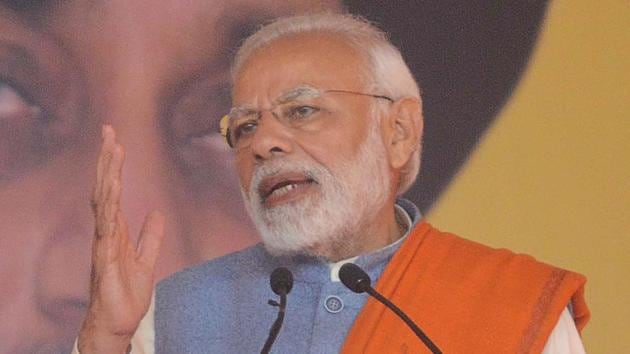
As many as 190 million people could benefit from the 10% reservation the NDA government wants to put in place for Economically Weaker sections.
Here’s how HT arrived at the number. India’s estimated population in 2108 is around 1.35 billion. According to estimates by the 2015-16 National Family and Health Survey, around 26% of the population does not belong to the Other Backward Class (OBC), Scheduled Caste (SC) and Scheduled Tribe (ST) category. This number can be used to estimate the total upper caste population at around 350 million. Since reservations will only benefit those seeking admission into educational institutions, and government jobs, it makes sense to remove those who are more than 35 years old. According to the 2011 census, the share of population up to 35 years of age in India’s total population was 68%.
Applying this ratio to the estimated upper caste population gives a figure of 239 million potential beneficiaries. It has been reported that households earning more than ₹8 lakh per year will not be eligible for the proposed reservation for economically weaker upper castes. Since India does not have official income data, it is difficult to give the exact number of such households.
However, the income tax returns (ITR) data for Assessment Year (AY) 2017-18 can be used to estimate the share of such households. Out of total 49.9 millions ITRs filed in AY 2017-18, 35.5 million reported an annual income of up to ₹5.5 lakh. Another 9 million reported an annual income between ₹5.5 lakh and 9.5 lakh. Since the average income under this category is ₹7.4 lakh, half of the ITR filers under this category can be assumed to have an annual income of ₹8 lakh in the current year. This gives the share of income tax returns filers with an annual income of up to ₹8 lakh to be around 80%.
{{/usCountry}}However, the income tax returns (ITR) data for Assessment Year (AY) 2017-18 can be used to estimate the share of such households. Out of total 49.9 millions ITRs filed in AY 2017-18, 35.5 million reported an annual income of up to ₹5.5 lakh. Another 9 million reported an annual income between ₹5.5 lakh and 9.5 lakh. Since the average income under this category is ₹7.4 lakh, half of the ITR filers under this category can be assumed to have an annual income of ₹8 lakh in the current year. This gives the share of income tax returns filers with an annual income of up to ₹8 lakh to be around 80%.
{{/usCountry}}If one assumes that the income distribution is the same for various caste groups, the potential beneficiaries of the newly announced reservation policy is 80% of 239 million, or around 190 million.