
 E-Paper



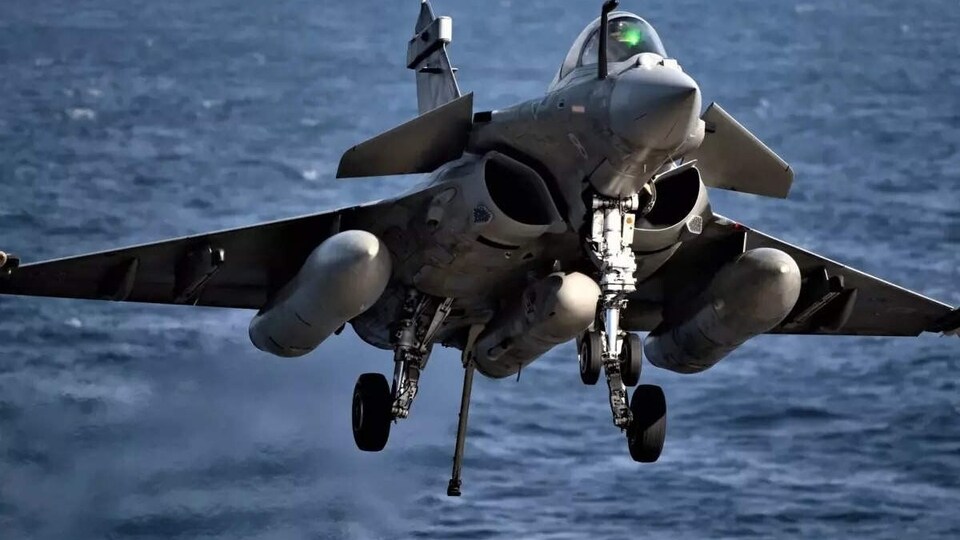
Rafale-M acquisition to clear final hurdle at DAC today
The Defence Acquisition Council is also expected to clear seven heavy stealth frigates for the Indian Navy at the cost of RS 70,000 crore.

 Prefer HTon Google


New Delhi: The Defence Acquisition Council (DAC) chaired by Defence Minister Rajnath Singh is on Tuesday expected to pave the way for the acquisition of 26 Rafale-Maritime strike aircraft for aircraft carrier INS Vikrant with the cost negotiating committee to be convened soon after the final amendment is adopted, people familiar with the matter said.
While the government is tight-lipped over the DAC meeting, HT learns that Singh will also take a call on approving the construction of seven more Project 17 B stealth frigates at a cost of ₹70,000 crore. The new frigates will weigh around 8000 tonnes each and are expected to have significant strike capability.
HT also learns that DAC will drop the amendment for integrating the DRDO’s experimental AESA radar on Rafale-M fighters as the cost of integration of a new radar is prohibitively expensive and will further delay the project. The Indian Navy requires Rafale-M fighters for its latest aircraft carrier INS Vikrant as the MiG-29K fighters onboard INS Vikramaditya are limited in numbers and need upgrades.
In the coming three months the capability of Indian armed forces, particularly the Indian Navy will get a big boost as the deal for the acquisition of 41 MQ 9B Predator armed drones will be signed before October 31, and the acquisition of Rafale-M fighters as well as indigenous construction of three additional Kalvari class submarines will be approved by the end of the year. The acquisition of the Predator drones was discussed during Singh’s visit to the US this month with the manufacturer General Atomics making a presentation to him in the Pentagon.
The Biden administration has made it clear that it was ready to supply any hardware to India for its military requirement and the Emmanuel Macron government is ready to boost India’s indigenous capability for manufacturing fighters, underwater drones and long range missile systems.
Even though the Indian Navy was expected to be a 200 warship force by 2027 as per long term prospective plans, there is a time lag on the count of resources and procedure. India has no options but to boost its maritime capability as the PLA Navy is expected to send long range patrols in the Indian Ocean in the next two years with turn around bases in Pakistan, Sri Lanka, Djibouti, Cambodia and an eye on Bangladesh. The PLA Navy is already showing belligerence against Japan and Philippines by sending ships and aircraft into Japan’s EEZ and taking muscular action against the Philippines Navy.
Given the deteriorating strategic environment in the Indo-Pacific, the Indian Navy will have to approach DAC soon for building of 10-12000 ton destroyers of advanced Project 15 class equipped with anti-ballistic missile systems and drone launch capability.


