
Given a high possibility of home-bound Bihar migrant workers, travelling ahead of ‘Chhath’, being drugged and robbed, the Government Railway Police (GRP) have deployed special teams at Delhi, Kanpur and Mughalsarai to guard them against ‘nasha-khurani (drugging) gangs, an official said.
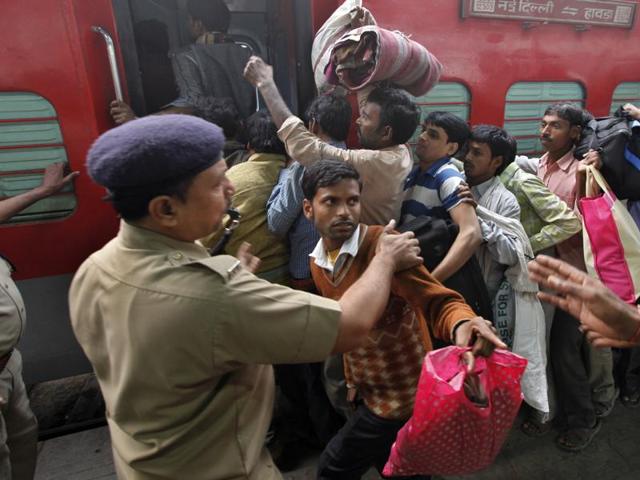
GRP Patna Superintendent Jitender Mishra said: “Special railway police teams have been sent toAnand Vihar Railway Station in Delhi, and Kanpur and Mughalsarai stations to act against nasha-khurani gangs, which have been targeting migrant workers on way home to celebrate Chhath.”
Teams of Government Railway Police in uniform as well as in plainclothes will provide security cover to passengers and look out for gangs, he added.
A senior GRP official of East Central Railway (ECR) told IANS that migrant workers are soft targets for gangs that drug and loot the migrant workers returning home during the festival season. During Bihar’s most popular Chhath festival, lakhs of workers travel back home in Bihar-bound trains from Delhi and other distant places.
Mishra said the railway police teams will alert passengers and advise them what to do and what not to during the journey to protect them and their belongings from such gangs, which are active during the festive season.
“Railway police teams have been cautioning passengers before boarding and giving tips on how toalert police if they suspect anything wrong during their journey,” he said.
{{/usCountry}}“Railway police teams have been cautioning passengers before boarding and giving tips on how toalert police if they suspect anything wrong during their journey,” he said.
{{/usCountry}}According to railway police officials, the gang members first befriend the passengers on long distance trains. They offer tea, coffee, biscuits, khaini (dry tobacco) or other eatables laced with sedatives or intoxicants. When their prey becomes drowsy and unconscious, they steal all the valuables. The gangs also change their modus operandi to target passengers from time to time.
Most of the migrant workers returning home with hard earned money, new clothes and other items are vulnerable to these gangs that work in teams from one railway station to another.
“Gang members travel with migrant workers as one of them, which poses real danger, as they also speak the same language, including Bhojpuri, Maithili and Magahi, and interact with them as natives of same district or same block, if not same village,” another railway police official said.
“This way, they win over the confidence of fellow passengers and mix intoxicants tea, snacks and tobacco and serve them. The moment the passenger becomes unconscious, they rob him,” he added.
Drug menace has become rampant during festivals, particularly on Bihar-bound trains from Delhi, Punjab, Gujarat and Mumbai.
“We have directed railway police teams to monitor each coach of trains, keep close watch at platforms before trains depart and check suspected people to minimise the incidents of drugging on trains,” he said.
According to ECR officials, most of the Bihar-bound trains from Delhi and other places are already witnessing a huge rush of passengers.
This year, Chhath is being celebrated across Bihar and among Biharis from November 4 to 7.
ABOUT THE AUTHOR
Follow the latest breaking news, major developments and agenda-setting stories from India and around the world with the newsdesk at Hindustan Times. Operating round the clock, the desk brings together experienced editors, reporters and correspondents to deliver fast, accurate and contextual reporting across subjects that influence public policy, governance, business, society and international affairs. The HT News Desk covers politics, elections, government policies, the economy, business and markets, science and technology, the environment, law and order, infrastructure, education, climate issues and geopolitics, while closely tracking developments across states, institutions and global capitals. The team also leads coverage of major breaking news events, policy announcements, court proceedings, natural disasters, public emergencies and significant international developments. Reports published by the newsdesk are based on information gathered from reporters on the ground, official statements, government agencies, court records, regulatory filings, recognised institutions and other authoritative sources. Stories undergo editorial scrutiny and verification processes to ensure accuracy, fairness and relevance, and are updated as events evolve and additional information becomes available. Whether covering a key political decision in New Delhi, an economic policy shift affecting millions, a landmark court ruling or a major global event, the HT News Desk aims to provide readers with reliable, fact-based journalism that delivers not only the latest developments but also the context and analysis needed to understand their wider implications.