
Cellular companies and internet service providers (ISPs) should maintain call data records (CDR) and other relevant data in a segregated and secure manner if a particular CDR or other record is seized during the investigation of a criminal case, the Supreme Court ordered on Tuesday in an order aimed at obviating difficulties arising due to non-availability of CDR and other data in criminal trials.
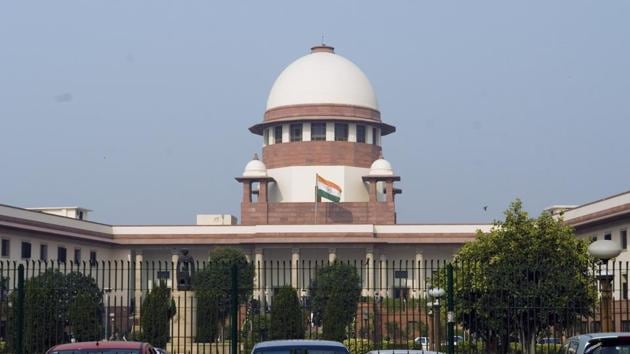
Parties to the criminal case can then summon such record at the stage of presenting defence evidence, or in the event such data is required to cross-examine a particular witness, the top court said.
“This direction shall be applied, in criminal trials, till appropriate directions are issued under relevant terms of the applicable licenses (under which mobile companies operate), or under Section 67C of the Information Technology Act (which mandate central government to issue such directions)”, the bench headed by justice Rohinton Nariman said.
The court noted that the Department of Telecommunication’s license conditions generally oblige internet service providers and providers of mobile telephony to preserve and maintain electronic call records and records of logs of internet users for a limited duration of one year.
But, if the police or other interested individuals fail to secure those records or secure the records but fail to secure the certificate (validating its authenticity) within the period of one year, the production of a post-dated certificate (i.e. one issued after commencement of the trial) would in all probability render the data unverifiable, the court said.
{{/usCountry}}But, if the police or other interested individuals fail to secure those records or secure the records but fail to secure the certificate (validating its authenticity) within the period of one year, the production of a post-dated certificate (i.e. one issued after commencement of the trial) would in all probability render the data unverifiable, the court said.
{{/usCountry}}Therefore, the court ruled that it was necessary to issue general directions to mobile companies till appropriate rules are framed by the centre.
“General directions are issued to cellular companies and internet service providers to maintain CDRs and other relevant records for the concerned period in a segregated and secure manner if a particular CDR or other record is seized during investigation in the said period”, the judgment said.
The court was hearing a case from Maharashtra relating to admissibility of electronic evidence which itself stemmed from an election petition challenging the election of Shiv Sena candidate Arjun Panditrao Khotkar to
the Maharashtra assembly from the Jalna constituency in 2014.
The election petition was filed before the Bombay high court in 2014 by the defeated Congress candidate Kailash Kishanrao Gorantyal. The case set up by Gorantyal was that Khotkar had filed his nomination papers after the stipulated time of 3 pm on September 27, 2014.
In order to buttress this argument, Gorantyal had sought to rely upon video-camera arrangements that were made both inside and outside the office of the returning officer (RO).
The High Court, in March 2016, ordered the Election Commission and the concerned officers to produce the entire record of the election including the original video recordings. A specific order was made that this electronic record needs to be produced along with the ‘necessary certificates’.
As per section 65B of Indian Evidence Act, such certificates from the concerned authorities are required, if secondary evidence like CDs, VCDs, chips etc are sought to be produced as evidence.
But such certificates were not produced before the Bombay high court in this case. Despite that, the high court relied upon the statement made by the returning officer who admitted that the video cameras were regularly used in her office for recording incidents and daily VCDs were collected of the recording by her office.
Based on the same, the video evidence was accepted and Khotkar’s election was declared invalid.
The Supreme Court ruled that a certificate from the relevant authority is a condition precedent for admissibility of electronic evidence.
“Oral evidence in the place of such certificate cannot possibly suffice as Section 65B(4) is a mandatory requirement of the law”, the court held.
But in the current case, the court noted that Gorantyal had done everything in his power to obtain the requisite certificate from the appropriate authorities, that is Election Commission, including directions from the court to produce the requisite certificate, but no such certificate was forthcoming.
Hence the high court judgment cannot be faulted, the Supreme Court ruled while also imposing a fine of Rs. 2 lakh on Khotkar.
“It is clear that apart from the evidence in the form of electronic record, other evidence was also relied upon (by the high court)”, the Supreme Court added.
ABOUT THE AUTHOR
Follow the latest breaking news, major developments and agenda-setting stories from India and around the world with the newsdesk at Hindustan Times. Operating round the clock, the desk brings together experienced editors, reporters and correspondents to deliver fast, accurate and contextual reporting across subjects that influence public policy, governance, business, society and international affairs. The HT News Desk covers politics, elections, government policies, the economy, business and markets, science and technology, the environment, law and order, infrastructure, education, climate issues and geopolitics, while closely tracking developments across states, institutions and global capitals. The team also leads coverage of major breaking news events, policy announcements, court proceedings, natural disasters, public emergencies and significant international developments. Reports published by the newsdesk are based on information gathered from reporters on the ground, official statements, government agencies, court records, regulatory filings, recognised institutions and other authoritative sources. Stories undergo editorial scrutiny and verification processes to ensure accuracy, fairness and relevance, and are updated as events evolve and additional information becomes available. Whether covering a key political decision in New Delhi, an economic policy shift affecting millions, a landmark court ruling or a major global event, the HT News Desk aims to provide readers with reliable, fact-based journalism that delivers not only the latest developments but also the context and analysis needed to understand their wider implications.