The Supreme Court has directed the University Grants Commission (UGC) and other regulatory authorities to issue public advisories to ensure persons do not fall prey to fake institutions
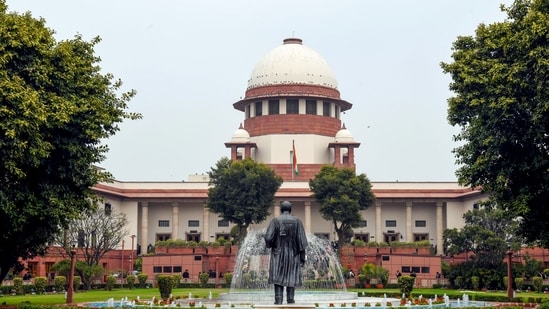
This comes after a case surfaced in Uttar Pradesh’s Etah district, where a fake medical college was found operating from a dilapidated building in a field, with an illiterate tea seller as its chairman.
A bench of justices Ahsanuddin Amanullah and NV Anjaria in its order passed on Friday said, “Having come to know of such activity happening on the ground, a suggestion has come from additional solicitor general (ASG) KM Natarj (appearing for UP government) that UGC may issue an advisory to all authorities/institutions, and especially to the public at large, not to take admission in or deal with institutions without first verifying the authenticity of such institutions. We find the suggestion to be useful, and accordingly, a direction is issued to the UGC and all the regulatory authorities to issue such a public advisory to act accordingly.”
Fake medical college in Etah
The fake medical college, styled as BS Medical College, operated from an old, dilapidated farmhouse and offered various courses, including D.Pharma, B.Pharma, and B.Sc. Nursing, DMLT, BMLT, BAMS, GNM and ANM. The structure had just two or three rooms and was in disrepair. No other structure appeared to be around it.
These facts were brought to the court's attention by former Indian Legal Service (ILS) officer RM Sharma, who is assisting the court in a matter concerning the audit of all private universities. Sharma informed the court about a report published in a national daily regarding the fake medical college pursuant to which the police have taken action against one Satender Kumar, who is said to be running the said institution, and three other persons.
{{/usCountry}}These facts were brought to the court's attention by former Indian Legal Service (ILS) officer RM Sharma, who is assisting the court in a matter concerning the audit of all private universities. Sharma informed the court about a report published in a national daily regarding the fake medical college pursuant to which the police have taken action against one Satender Kumar, who is said to be running the said institution, and three other persons.
{{/usCountry}}During investigations, it came to light that one Bhagwan Das Singh Baghel, an illiterate tea seller, is the Chairman of the institution. When questioned, he feigned ignorance of his position. However, he admitted that he regularly signed the college documents provided by Satender Kumar.
ASG Nataraj informed the court that the UP chief secretary has also ordered an independent inquiry.
“We find that the same was required and that the steps taken are in the public interest so that the entire fraud on society is exposed, and based on the said inquiry, future guidelines can be issued by the UGC and all the regulatory bodies to prevent such incidents,” the court said.
Even the Centre, represented by ASG Archana Pathak Dave, stated that the UGC has written to UP’s additional chief secretary, who handles the affairs of the Higher Education department, to look into the matter.
The court directed the Centre to communicate its order to all regulatory bodies and monitor compliance with these directions.
How the Apex Court got into the audit of private universities
The issue of auditing private universities was raised in a matter where the court was considering a case filed by a student alleging that a private university harassed her when she sought to change her name in the university records.
The court had appointed Sharma to examine all affidavits filed by states and union territories and make recommendations. Last month, the court directed all regulatory authorities such as the National Medical Council, National Dental Council, Indian Nursing Council, Commission for Allied and Healthcare Providers, Bar Council of India, Pharmacy Council, Veterinary Council, and National Commission for Indian System of Medicine, among others, to furnish details of their inspection of colleges relating to affiliation along with database of entire faculty and supporting staff.
The bench had observed that no private university should be run as an institution for profit but rather to serve the larger public purpose of education. It sought audited accounts from every private university in the country to determine how they use their surplus income, the amounts paid to employees, and the fees collected from students under various heads.
Limiting not just to finance, the court directed the universities to provide information about their admission procedure, recruitment process, actual work performed by teachers in the last year, among a host of other details that will be sent to the respective states and union territories, who will file affidavits in the top court in six weeks.
The court also focused on the admission procedure and the academic quality imparted in these universities, seeking details of the person responsible for admissions, the setting of question papers, the evaluation of answer sheets, and the role of management in these functions. The order further required details of the past year's teaching hours assigned to teachers and the actual classes they taught.
The matter will be heard next on November 19.