
 E-Paper



SC judges not super experts: CJI on construction around Taj Mahal
CJI Bhushan R Gavai stated Supreme Court judges aren't "super experts," emphasizing the need for balance in development near the Taj Mahal amid pollution concerns.


Supreme Court judges are not “super experts,” Chief Justice of India (CJI) Bhushan R Gavai remarked on Wednesday, as a bench led by him heard a clutch of petitions on construction and other activities in the vicinity of the Taj Mahal.
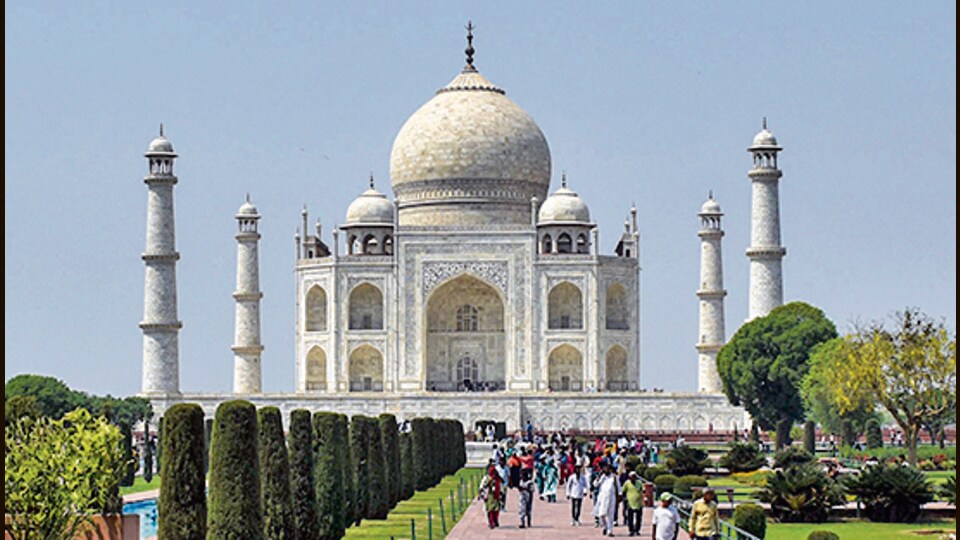
The bench, which also comprised justice K Vinod Chandran, observed that not all developmental activities around the monument can be halted and that a balance must be maintained. “We are not super experts…we cannot know and decide everything. There have to be some experts to look into many of these issues,” the CJI said as the court took up several applications related to the moratorium on construction in the Taj Trapezium Zone (TTZ) and requests for exemption to certain industrial and commercial units operating within the protected area.
The court was assisted by senior advocates ADN Rao and Liz Mathew, who appeared as amici curiae. They pointed out that the National Environmental Engineering Research Institute (NEERI) has been tasked with framing sector-specific guidelines for industries operating in TTZ to control air pollution, particularly those with a moderate pollution index (between 11 and 20) and for more sensitive sectors such as glassmaking and mining.
Rao underscored the importance of conducting a cumulative impact assessment before granting permissions to industries in TTZ. He noted that the TTZ Pollution Prevention and Control Authority is headed by the commissioner of the Agra division and suggested that an independent evaluation may be required before allowing any new industrial units. He also drew attention to a pending application seeking to lift the moratorium on industrial activity within TTZ.
Responding to these submissions, the bench remarked that imposing a complete moratorium on all activities around the 17th-century monument may not be a viable solution. “How can there be a complete ban on activities? There has to be a balance between environmental protection and the livelihood of people engaged in industrial and commercial pursuits in that region. Sustainable development has to be the guiding principle,” the court observed.
The bench further directed the TTZ Authority and the Central Empowered Committee (CEC) — the expert statutory panel -- to examine the pending applications seeking permissions for industrial operations and tree felling, and to submit their reports to the court before the next date of hearing on November 12.
Following a public interest litigation by environmentalist MC Mehta in 1984, the apex court has been monitoring developments in the area to protect the Taj Mahal, built by Mughal emperor Shah Jahan in the memory of his wife Mumtaz Mahal in 1631. The mausoleum is also a UNESCO World Heritage Site.
Under the orders of the Supreme Court, TTZ , which is an area of about 10,400 sq kms spread over the districts of Agra, Firozabad, Mathura, Hathras and Etah in Uttar Pradesh and Bharatpur in Rajasthan, was earmarked to protect the monument from environmental pollution.



