...
...
Next Story

SC junks NCPCR plea against HC rulings on Muslim girls’ marriage at puberty

With the dismissal, a January 2023 order of the top court that the high court ruling should not be treated as precedent also came to an end

Updated on: Aug 19, 2025, 14:50:14 IST
Advertisement

The Supreme Court on Tuesday dismissed petitions by the National Commission for Protection of Child Rights (NCPCR) and the National Commission for Women (NCW) challenging Punjab and Haryana high court orders that recognised the validity of marriages of Muslim girls after attaining puberty.
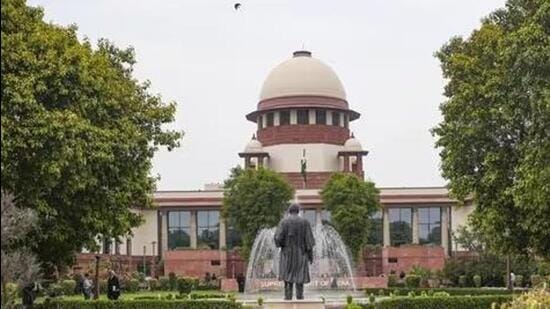
The high court had earlier held that Muslim girls can marry on their own volition once they reach puberty, usually at 15. (HT file photo)

A bench of justices BV Nagarathna and R Mahadevan said the commissions had “no locus standi” in such personal matters, remarking: “It is strange that NCPCR, which is for protecting children, has challenged an order protecting two children… Leave these couples alone.”

With the dismissal, a January 2023 order of the top court that the high court ruling should not be treated as precedent also came to an end. The high court had earlier held that Muslim girls can marry on their own volition once they reach puberty, usually at 15.

During the hearing of connected petitions seeking safeguards against misuse of the Protection of Children from Sexual Offences (POCSO) Act in cases of consensual adolescent relationships, the bench underlined that criminal law cannot intrude upon genuine teenage bonds. “Love is not penal, and it cannot become one,” said the bench, adding that prosecuting adolescents in such cases inflicted lasting trauma.

The bench stressed that misuse of POCSO often arises when parents invoke the law to punish eloping couples in the name of “honour.” “Many such cases are filed by parents. If we start treating all such cases as crimes, there will be honour killings,” the bench cautioned.

At the same time, the court clarified that each case must be assessed on its own facts: “Why do you want to prosecute everyone? Police must investigate, apply their mind, and segregate genuine cases from those that should be prosecuted.”

The proceedings form part of a wider debate over whether the statutory age of consent under POCSO, currently fixed at 18, needs reconsideration. The Union government, in separate proceedings before the top court, has opposed any dilution, arguing that exceptions for adolescent relationships could weaken child protection laws and embolden abusers.

 
ABOUT THE AUTHOR
Utkarsh Anand

Utkarsh Anand is the National Legal Editor at Hindustan Times, where he leads the newspaper's coverage of the Supreme Court, constitutional law, the judiciary and the Union law ministry. He joined Hindustan Times in 2020 after stints at Press Trust of India (PTI), The Indian Express and CNN-News18, and has over two decades of experience reporting on law, governance and public policy. His work has focussed on some of India's most consequential constitutional and legal developments, including the Supreme Court's judgments on Article 370, marriage equality, decriminalisation of homosexuality, the Babri Masjid dispute, electoral reforms and judicial appointments. He specialises in making complex legal proceedings and judgments accessible to readers while examining their wider social and political impact. Beyond daily reportage, Utkarsh has led investigative projects and enterprise reporting that have shaped public debate and prompted institutional responses. His work has received several journalism awards, including the Ramnath Goenka Excellence in Journalism Award. As National Legal Editor, he has also played a key role in expanding Hindustan Times' legal journalism footprint, mentoring reporters and strengthening coverage across platforms. A Chevening South Asia Journalism Programme Fellow, Utkarsh regularly writes analyses on the judiciary and constitutional issues, and his reporting is widely followed by lawyers, judges, policymakers, academics and readers seeking clarity on India's evolving legal landscape.

Get the latest India News, breaking headlines and real-time updates from across the country. Stay informed about politics, government policies, crime, weather major national developments and Karnataka Bandh LIVE.
SHARE THIS ARTICLE ON
Hindustantimes wants to start sending you push notifications. Click allow to subscribe