The Supreme Court on Thursday directed the Union government to form an expert committee to consider a statutory mechanism to curb unethical pharmaceutical marketing and return with concrete recommendations, ensuring that the regulatory review does not remain an open-ended exercise.
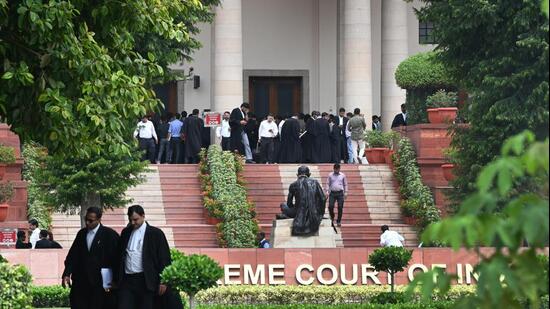
A bench of justices Vikram Nath and Sandeep Mehta directed the Centre to constitute the committee in line with the court’s earlier directions and observations. “We have directed the Union of India to constitute the committee and give its recommendations in terms of our previous directives and observations. The matter will be placed before the court on January 29, 2027 to show compliance with the orders of the court,” justice Mehta said, reading out the operative part for the bench.
The direction is significant because the question of giving statutory backing to the regulation of pharmaceutical companies’ marketing practices has remained unresolved for years, with the Centre itself acknowledging difficulties in using existing drug and essential commodities laws for this purpose.
The issue arose on a petition by the Federation of Medical and Sales Representatives’ Associations of India (FMRAI), seeking a legally binding mechanism to regulate pharmaceutical marketing practices and alleged unethical conduct involving medical professionals.
{{/usCountry}}The issue arose on a petition by the Federation of Medical and Sales Representatives’ Associations of India (FMRAI), seeking a legally binding mechanism to regulate pharmaceutical marketing practices and alleged unethical conduct involving medical professionals.
{{/usCountry}}The petition highlighted the use of expensive gifts, foreign trips, other freebies and high-pressure marketing tactics to influence doctors to prescribe particular medicines.
The Centre told the court last month that while the Uniform Code for Pharmaceutical Marketing Practices (UCPMP), 2024 was functioning satisfactorily, there was a need to separately examine whether pharmaceutical companies should be brought within a statutory regime and, if so, what form such a framework should take.
The government has previously explored giving legal backing to the pharma marketing code under the Essential Commodities Act, 1955 and later, the Drugs and Cosmetics Act, 1940. Both routes, however, raised questions over jurisdiction, implementation and legal tenability. While the Drugs and Cosmetics Act principally deals with the manufacture, quality, and sale of medicines, the Essential Commodities Act addresses their supply, distribution, and prices, leaving a regulatory gap in how pharmaceutical companies interact with medical practitioners.
The Centre subsequently constituted a high-level committee headed by Dr VK Paul in September 2022 to examine the need for a legally enforceable mechanism and global practices. The panel had concluded that the UCPMP need not immediately be made statutory and instead recommended strengthening the voluntary framework through greater transparency, independent scrutiny, improved complaint monitoring and disclosure mechanisms.
These recommendations led to the UCPMP, 2024, which introduced an Ethics Committee for Pharma Marketing Practice, CEO self-declarations and expenditure disclosures, besides tighter provisions governing gifts, brand reminders, physician samples and continuing medical education. It also provided for complaint timelines, audit and referral mechanisms and an Apex Committee for Pharma Marketing Practice (ACPMP).
The Centre had told the Supreme Court that the ACPMP had received three complaints so far, including one alleging that a pharmaceutical company had provided extravagant trips to around 30 doctors. The company was reprimanded for violating the UCPMP and the list of doctors was forwarded to the National Medical Commission for appropriate action.
But the government also acknowledged that the existing framework primarily addressed the conduct of medical practitioners through statutory and professional regulations governing doctors, while regulating pharmaceutical companies required separate consideration.
The latest direction, therefore, puts the onus squarely on the Centre to move beyond the existing voluntary framework and place before the Supreme Court a concrete recommendation on whether a statutory regime is required and, if so, the form it should take. The matter will return to the bench on January 29, 2027, for a compliance report.