The Supreme Court on Monday declined to pass an interim order restraining Chief Election Commissioner (CEC) Gyanesh Kumar from functioning over allegations that he took several decisions unilaterally despite objections from the two other election commissioners (ECs), saying it could not proceed on “assumptions” without first verifying the facts.
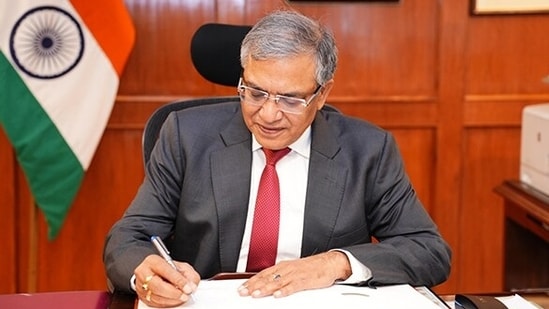
A bench, comprising Chief Justice of India Surya Kant and justices Joymalya Bagchi and V Mohana, issued notice to the Election Commission of India, the Union government, the CEC and two ECs, on a petition filed by social activist Rakesh Kumar Singh, while making it clear that any decision found to have been taken contrary to the statutory requirement governing the functioning of the poll panel could subsequently be injuncted.
Social activist pushes for Kumar's suspension
Senior advocate Vikas Singh, appearing for the petitioner, sought an immediate suspension of Kumar and alternatively urged the court to direct the Election Commission to take only unanimous decisions until the next hearing.
Singh relied on the 1993 amendments to the election law to contend that, as far as possible, decisions of the commission were required to be taken unanimously. He also referred to the Chief Election Commissioner and Other Election Commissioners Act, 2023, particularly Section 18, which provides for majority decision-making where there is a difference of opinion. “There is a distinction. The unanimity relates to transaction of business and allocation of work, while functioning can be by majority,” Singh submitted.
{{/usCountry}}Singh relied on the 1993 amendments to the election law to contend that, as far as possible, decisions of the commission were required to be taken unanimously. He also referred to the Chief Election Commissioner and Other Election Commissioners Act, 2023, particularly Section 18, which provides for majority decision-making where there is a difference of opinion. “There is a distinction. The unanimity relates to transaction of business and allocation of work, while functioning can be by majority,” Singh submitted.
{{/usCountry}}But the bench questioned him on what had changed from the 1993 legal position.
Also Read I Officer flagged by ECs Sukhbir Sandhu, Vivek Joshi to cabinet secretary oversees poll panel’s IT wing
Singh said the 2023 law had also introduced Section 16, which conferred a level of immunity on the CEC and election commissioners that was “unheard of”, including protection extending beyond their tenure. “A protection while in office is understood,” the bench observed.
Singh, however, pressed for an interim order suspending Kumar immediately, saying the credibility of EC was at stake. “We are facing a very grave situation. We have been known in the world for conducting free and fair elections but here the CEC’s working…” he said.
The bench, however, cautioned against acting on allegations before receiving EC’s response. “Let us not have an authentic information about the averments made by you,” it said.
‘Cannot pass order on basis of news report’
When Singh pressed for immediate intervention, saying “the country will burn” without an interim order, the bench responded that it could always annul a decision subsequently if it was found to be unlawful.
Singh then proposed that, until the matter was heard next, the three members of the Commission should be required to take only unanimous decisions.
The bench pointed to Section 18 of the 2023 Act and said the statutory scheme itself contemplated unanimity where possible and majority decision-making in case of disagreement.
The bench also refused to proceed merely on the basis of reports in the media. “You have come here on the basis of a news report, which can be 100% correct, partially correct or partially incorrect. We cannot pass any order on the basis of a newspaper report,” the bench said.
“If correctional requirements are there, we can issue those orders in future. We cannot pass any orders on the basis of any presumption. We are calling upon all ECs and they will present all facts before us,” it added.
The bench said EC was bound by the statutory requirements governing its functioning and warned that if the court found that the law had not been followed, it would have the power to intervene.
“There is a mandatory law and we will expect them to follow them. If we find they have not followed the law, our powers are known to everyone,” it said.
Decision-making mechanism in SIR
Singh argued that the court could not undo an election or an elected government later and therefore needed to intervene immediately.
The bench said it would first issue notice and examine whether decisions were taken in accordance with Section 18. “If we find out that some decisions were taken either unanimously or without majority, as provided under Section 18, we will injunct those decisions and say these decisions cannot be implemented,” it added.
When Singh said several of the disputed decisions related to the ongoing special intensive revision (SIR) of electoral rolls and had allegedly been taken unilaterally, the bench cautioned against assuming what the factual position was. “We cannot put the cart before the horse. You want us to assume all these decisions were unilateral. We are issuing notices and they will respond. We expect them to respond to the notice and respond fairly,” it said.
The court identified the central issue in the petition as the interpretation of Section 18 of the 2023 Act and whether its requirements were followed in the decisions under challenge.
Also Read I Confusion over status of 2.2mn West Bengal voters in Election Commission's special drive
The petition was based substantially on allegations contained in an investigation by The Indian Express, which reported that ECs Sukhbir Singh Sandhu and Vivek Joshi recorded objections to aspects of the functioning of EC between October last year and August this year. The report had also raised questions about changes in the digital systems used for electoral rolls and the information sought from prospective voters through Form 6, besides decisions relating to the SIR exercise.
EC has disputed the allegations, maintaining that the decisions were unanimous and that the communications from the two election commissioners concerned administrative issues relating to an officer deputed to the poll body and not policy decisions. It has also maintained that there was no change to the statutory Form 6 itself and that additional information was sought through an addendum.
Form 6 allegations
In a separate but related matter listed before the same bench, the Supreme Court also issued notice on a petition filed by advocate Shailendra Mani Tripathi challenging alleged modifications to Form 6 on the ECINet/ERONet portal, including requirements relating to ancestry and declarations concerning the last SIR.
Senior advocate Menaka Guruswamy, appearing for Tripathi, referred to the manner in which SIR was conducted in Delhi and alleged that two new conditions had been added to the voter-registration process.
The bench, however, made an important clarification: “Any modified Form 6 has not been approved by us. Let’s be clear. When record will be produced, we would like to see who has modified,” the bench said.
Guruswamy said the alleged changes had wider implications, pointing to the number of electors affected during the SIR in Delhi and West Bengal and claiming that 16 lakh appeals were pending before appellate tribunals.
The bench, however, said the prayers in Tripathi’s petition appeared to be “jumbled up” and asked counsel to examine them.
Guruswamy said she stood by the prayers in the petition, while adding that the plea had also challenged the manner in which the Election Commission was functioning as a national constitutional institution. She sought that the matter be tagged with Singh’s petition.
The court then directed that Tripathi’s petition be tagged with the matter concerning Singh.
The two proceedings therefore bring before the Supreme Court, in separate forms, questions over the functioning of the Election Commission, the decision-making framework under the 2023 law and alleged changes to the electoral-roll machinery, at a time when the SIR exercise has triggered intense scrutiny over the inclusion and exclusion of voters.