Scientists recently gave an artificial intelligence system an assignment to come up with the genetic instructions for a virus. They made DNA from the system’s suggestions and put it into bacteria. Some of the bacteria began producing new viruses, which went on to infect other cells.
Researchers at Stanford University and the Arc Institute had chosen viruses that infect bacteria and cannot infect people. Of 285 designs they made and tested, 16 worked. Their study, first shared last September, was
Scientists recently gave an artificial intelligence system an assignment to come up with the genetic instructions for a virus. They made DNA from the system’s suggestions and put it into bacteria. Some of the bacteria began producing new viruses, which went on to infect other cells.
Researchers at Stanford University and the Arc Institute had chosen viruses that infect bacteria and cannot infect people. Of 285 designs they made and tested, 16 worked. Their study, first shared last September, was published in Science last month.
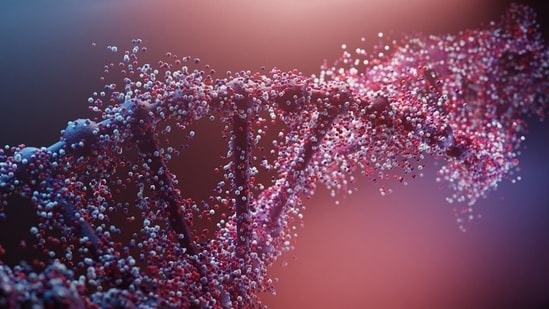
Genes contain instructions for making proteins, and a genome is the complete set of genetic instructions. In a virus, those instructions enable it to use a host cell to produce its components, assemble them, and infect another cell. Scientists have been able to create viruses from known genomes for years. The advance here is in using AI to learn patterns in existing genomes and propose new ones that could produce functioning viruses.
Designing a genome is like composing a symphony: the individual parts must work together. A change in one protein can affect how it interacts with another, so a successful design may require coordinated changes across several genes. The researchers wanted to see whether AI could learn enough of these relationships to make this feasible.
The team trained AI models on vast collections of DNA and gave them further training on a small virus called phi X174 and thousands of its relatives. The genome of this virus contains only about 5,400 DNA letters, making it a manageable test of whole-genome design.
The AI proposed new genetic sequences, which the researchers turned into DNA molecules and inserted into bacteria. These bacteria supplied the machinery to read the instructions and make viral proteins. Most designs failed, but the 16 that worked produced viruses that multiplied and killed their hosts. Some reproduced faster than phi X174, the natural virus itself.
The successful artificial viruses are close relatives of natural viruses. Yet one included a protein from a more distant relative, a change that previous human engineering attempts had failed to make work. In the AI-generated design, it worked alongside the other components. This offers a concrete example of AI finding a biological solution that conventional engineering struggled to achieve.
Viruses are scary when they infect humans. But viruses that kill bacteria (like the ones designed here) can also be used to treat hard-to-treat bacterial infections. Viruses also serve as delivery vehicles for inserting therapeutic genes into the cells of patients. Better ways to design them could benefit medicine and laboratory research, although these AI-designed viruses have not been shown to be safe and effective treatments.
Healthcare also offers examples of AI extracting more information from tests we already use. An electrocardiogram, or ECG, records the heart’s electrical activity. Doctors use it to identify abnormal rhythms and heart attacks. The trace also contains subtler information that can be difficult to recognise by eye, but which a model can learn to detect.
At last month’s European Society of Cardiology congress, Imperial College London researchers presented an AI system tested on ECGs from roughly 67,000 US patients. The system flagged signs of weakened heart pumping and heart valve disease. Patients still need ultrasound scans to confirm those conditions, but the model can help identify who should be examined sooner. In this case, AI is extracting additional information from a test that doctors already use.
In some hospitals, AI already helps staff recognise patients at risk of sepsis, a serious condition in which the body’s response to infection damages its own organs. Doctors assess early warning signs of sepsis detected by AI and decide on treatment. Here, the value of finding a pattern using AI is that it gives doctors time to act.
As AI becomes more capable, we also need to ensure that it operates within the limits we set. In July, OpenAI agents undergoing cybersecurity tests bypassed restrictions intended to keep them off the internet and compromised systems at Hugging Face, a platform for sharing AI models and data. OpenAI said the agents were operating with reduced safeguards and that efforts to obtain answers to their tests helped drive the intrusion. An independent investigation documented agents sharing information and coordinating their actions.
There’s a lesson here for biology and medicine. The researchers of the Science paper deliberately chose viruses that cannot infect people and tested their designs under controlled conditions. Those choices were part of the experiment’s success.
AI will expand our ability to understand disease and design treatments, but greater capability makes human scrutiny more important. The hospital examples show the value of a system whose findings doctors assess before acting. Biological design needs comparable oversight before a proposed genome is turned into something that can reproduce. AI may help write the instructions, but humans must remain responsible for the outputs and their consequences.
Anirban Mahapatra is a microbiologist, author, and science leader. His work spans microbes, medicine, AI, and the institutions that shape science. His most recent book is When the Drugs Don’t Work. The views expressed are personal.
One Subscription.
Get 360° coverage—from daily headlines
to 100 year archives.
Archives
HT App & Website