
 E-Paper



Scientifically Speaking: Could speaking more languages be the secret to youth?
New study of over 86,000 people across 27 European countries found that those who spoke only 1 language were twice as likely to show signs of accelerated aging

 Prefer HTon Google


In India, speaking more than one language is rather commonplace. Many of us move between Hindi and English (and a jumble of the two) when we’re outside, switch to our mother tongue at home, and adjust our words depending on who we talk to. Earlier, studies showed that speaking more than one language is associated with a lower risk of dementia. This constant mental juggling is now being linked to slowing the pace of aging itself.
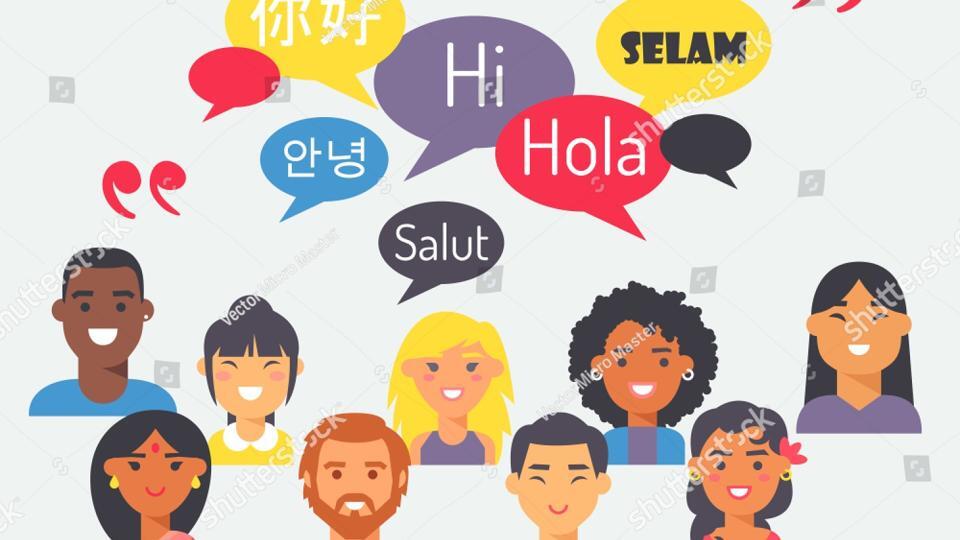
A new study in Nature Aging looked at more than 86,000 people from 27 European countries and found that those who spoke only one language were about twice as likely to show signs of accelerated aging. Multilingual speakers were roughly half as likely. The more languages people spoke, the stronger the protection from aging.
Also Read: Scientifically Speaking: When machines become poets
The researchers looked at what they call a “biobehavioral age gap,” a measure of how fast people were aging based on their health and lifestyle. Just as some 50-year-olds seem younger than their age and others seem older, people age at different rates compared to their biological ages. In this study, those who spoke multiple languages had a tendency to age more slowly. Their overall health seemed younger than expected for their years.
Here’s a plausible explanation for this effect. Every time someone speaks in a multilingual setting, their brain does more than produce words—it turns one language on while keeping others in check. This mental switching exercises brain networks responsible for attention, memory, and control.
That constant workout of switching between languages is thought to keep the brain resilient. People who speak multiple languages show a greater ability to focus, filter out distractions, and shift between tasks. The stimulation that comes from managing several languages appears connected to lower inflammation and better stress regulation, both of which have been shown to slow aging across multiple body systems.
The obvious question worth asking is whether this benefit is related to other factors. People who need to speak many languages might be benefiting from overall better access to education, resources, and healthcare. But here, the analysis controlled for many other influences—such as education, income, physical activity, and social engagement—and still found a meaningful relationship between multilingualism and slower aging.
Since the study relied on national-level data, it shows a population pattern rather than a cause-and-effect link for individuals. Of course, correlation isn’t causation, so there’s no direct proof that it’s the languages themselves that are causing the delayed aging, but there’s still a strong connection. The consistency across 27 countries suggests that language use could be a component of healthy aging.
Also Read: Scientifically Speaking: Science is accessible now, and kids should be encouraged to take it up
While the study was conducted solely on Europeans, I find its conclusions quite appealing for India (if future research can also show them here, as I’d predict). If multilingualism slows the pace of aging, we may have a health advantage that requires no gym membership, gadget, or supplement.
Scientists have been learning for years that mental fitness and physical health are deeply connected. Activities that challenge the brain—including reading, social connection, and conversation—protect against mental decline and influence how the body ages. Language might be one of the most powerful and sustained forms of that engagement.
Of course, this does not mean every bilingual person will live longer or stay younger. Aging is shaped by genes, environment, and countless habits. But the idea that how we speak and think could influence how we age captures the ancient notion that the mind and body are not separate machines. They age together—and keeping one active helps preserve the other.
(Anirban Mahapatra is a scientist and author, most recently of the popular science book, When The Drugs Don’t Work: The Hidden Pandemic That Could End Medicine. The views expressed are personal)


