Traditional fishermen in Goa, who ventured into sea for the first time as the monsoon rain and wind subsided, were in for a rude shock when they netted more plastic than fish.
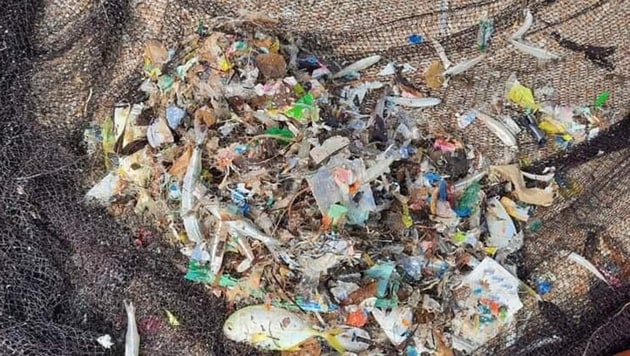
It also underlined how loads of trash is polluting the seas.
According to a recent publication of International Union for Conservation of Nature (IUCN), out of the 300 million tonne of plastic produced in the world every year, around 8 million tonne end up in oceans and make up for 80% of the marine debris from surface water to deep sea sediments,
Strong winds and currents bring the marine trash close to coasts, where the traditional fishermen fish and that is the reason that fishermen from villages from Benaulim to Cavelossim beaches in South Goa have returned with the huge quantity of marine trash.
“I have been a fisherman for 47 years and never in my life have I seen the kind of garbage being drawn up in the nets as we have seen this year. It is as if someone is deliberately dumping truckloads of garbage into the rivers or the sea,” Pele Fernandes, a traditional fisherman, said.
The traditional fishermen, or raponkar as they are called locally, use wooden canoes to venture out to sea either manually rowing them or using an outboard motor.
{{/usCountry}}The traditional fishermen, or raponkar as they are called locally, use wooden canoes to venture out to sea either manually rowing them or using an outboard motor.
{{/usCountry}}“It is an occurrence now every other day. At this rate the fishermen will go hungry,” Fernandes added.
Unlike previous years, this year, more youth because of loss of employment due to the Covid-19 pandemic and closure of the booming tourism industry, have opted for the traditional occupation to tide over the financial crisis. However, they are staring at losses owing to the plastic as well as the big trawlers encroaching on waters that are traditionally reserved for the traditional fishermen.
“The trawlers that are by law banned from fishing within 5-kms from the shore are coming as close as 100 metres close to the shore. No action is being taken,” Fernandes said.
Dixon Vaz the chairman of the biodiversity committee of the Cavelossim village, where the fishermen have also been drawing up more plastic than fish said it was the sea currents that were throwing back all the plastic that was discarded in the sea.
“The government agencies tasked with cleaning up are not doing their job,” Vaz said.
“The fish catch has been reducing every year and the plastic in catch is increasing,” he said.
Scientists have explained that the sea throws back a lot of flotsam generally composed of organic material like twigs and seaweed but with increasing plastic in the ocean an increasing amount of plastic is finding its way back to the shore.
With rivers emptying into the sea with greater force during the monsoon months the currents bring back to the shore all that floats with it.
“This problem is only going to amplify in the years to come. It is noticed this time of the year because the winds blow perpendicular to the coast and the waves bring with it whatever floats. On days when the winds are strong and the waves are high, they will find a lot of garbage on the coast,” Dr Antonio Mascarenhas a former scientist with the National Institute of Oceanography.
“This is only a small sample of what is actually in the sea. The real problem is much bigger and is only going to get worse,” he warned.