Health officials will launch a sero survey covering 20,000 people across Delhi’s 11 districts over the weekend to determine the spread of the coronavirus disease amidst a rising number of cases, according to a plan for the national capital.
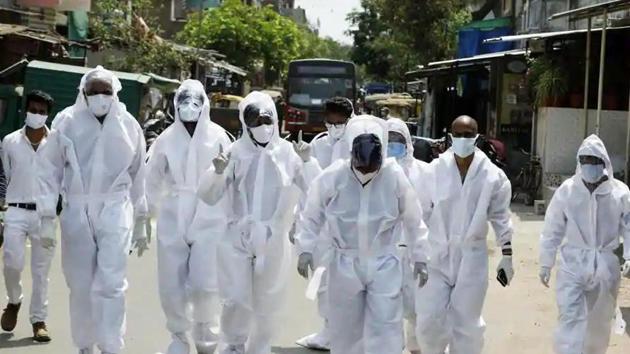
The National Centre for Disease Control, which functions under the Union health ministry, and the Delhi government will jointly conduct the survey that will focus on antibody-based blood tests to find out residents’ past exposure to the Sars-Cov-2 virus, which causes Covid-19.
The sero surveillance is one of the five aspects of Delhi’s revised Covid-19 response plan that was developed after a meeting between Union home minister Amit Shah and Delhi government officials on Sunday. HT has reviewed a copy of the document, and a Delhi government official has earlier confirmed that the survey will start over the weekend.
Antibody tests began in Delhi in April but were put on hold after allegations over the quality of Chinese kits used at that time.
The National Institute of Virology (NIV) in Pune has developed an improved ELISA (enzyme-linked immunosorbent assay)-based antibody kit that yielded good results in a pilot sero survey, an official of the Indian Council of Medical Research (ICMR) said.
{{/usCountry}}The National Institute of Virology (NIV) in Pune has developed an improved ELISA (enzyme-linked immunosorbent assay)-based antibody kit that yielded good results in a pilot sero survey, an official of the Indian Council of Medical Research (ICMR) said.
{{/usCountry}}Also read | Door-to-door survey in Delhi to map coronavirus spread
“...we advise people to use these kits for serological testing, apart from other ones that are approved by USFDA (US Food and Drug Administration) and CLIA (Chemiluminescence Enzyme Immunoassays) kits,” the official said.
A serological test is meant to detect antibodies in blood. The presence of antibodies suggests a past exposure to the coronavirus. During outbreaks, health authorities conduct serosurveys to find out the prevalence of the infection in a community.
In May, ICMR conducted a pilot sero survey across 83 districts in 21 states. The results showed that the percentage of general population to have been infected in the past was 0.73%, with urban areas having shown higher Covid-19 prevalence of about 1.09%.
“Depending upon the level of sero prevalence of infection, appropriate public health interventions can be planned and implemented for prevention and control of the disease. Periodic sero surveys are useful to guide policymakers,” said the ICMR official.
Delhi recorded 3,390 new cases on Thursday, ending the day with a total of 73,780 cases (26,586 of them active).
The NIV-validated kit is called “Covid Kavach ELISA”, a test kit for the detection of Covid-19 Immunoglobulin G (IgG) antibody, which is the most common antibody in blood and other body fluids that immune system makes. It takes about two weeks to develop and is indicative of a past infection.
The kit’s specificity is 97.9% and sensitivity is 92.37%, according to ICMR. The higher the sensitivity, the fewer false negatives a test will give. Tests with high specificity have fewer false positives.
Also read | 182 people covered under Covid-19 sero-survey, 32 found to have developed antibodies
“Antibody test sensitivity [to detect true negatives] and specificity [to detect true positives] is usually low,” Dr Ekta Gupta, a senior virologist at Delhi government-run Institute of Liver and Biliary Sciences (ILBS), said.
ICMR has partnered with Zydus Cadila, a leading Indian Pharmaceutical company, for the mass-scale production of these test kits. “Our pilot sero survey results conducted from across India were near accurate. The kit is working fine,” said the ICMR official quoted above.
Apart from ELISA, experts said the technologically advanced CLIA-based antibody tests were giving better results.
“CLIA tests are a step ahead of ELISA assays in terms of technology. Therefore, the results will be more accurate. We are seeing them work better,” said Dr Gupta.
Many laboratories in India are using CLIA-based antibody tests, and some private players vouched for CLIA kits. “The CLIA kits that we are using are showing 100% sensitivity and 99.83% specificity — which is very good. An additional plus is that these kits are designed to exclude influenza A and B viruses, so the results are quite accurate,” Gauri Aggarwal, director, Genestrings laboratory, said.
Dr Chand Wattal, chairman, clinical microbiology and immunology, Ganga Ram Hospital, said: “CLIA-based tests are proving to be better. Now that we are using these, we can see the difference in accuracy.”
Since CLIA kit is new, the consistency will become apparent after at least one week, according to experts conducting covis-19 tests.
“We will have to wait for at least a week or so to see whether the performance in terms of both sensitivity and specificity is the same as it is now. It’s a new test and sometimes performance varies batch to batch that needs to be seen before we can really say that these antibody kits are better,” Aggarwal said.