
People of the country should hang their heads “in shame” for not being able to stop the persecution of Dalits, former Union minister P Chidambaram said on Tuesday.
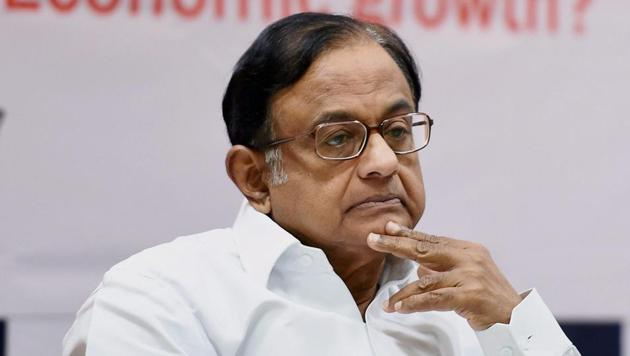
The Congress leader was referring to the suicide of Hyderabad University research scholar Rohith Vemula and the assault against Dalits in Gujarat’s Una in making his point.
“All of us should hang our heads in shame that we have not been able to put an end to the persecution of Dalits. Exclusion and expulsion are used to exclude students from participating in legitimate university activities,” Chidambaram said.
His comments assume significance against the backdrop of the alleged suicide of JNU Dalit scholar Muthukrishnan, who was associated with the students movement that followed Rohith’s death in January last year.
Chidambaram was speaking at the launch of ‘The Essential Ambedkar’, an anthology of Babasaheb Ambedkar’s writings, edited by former Rajya Sabha member Bhalchandra Mungekar at the Constitution Club in New Delhi.
The event was attended by former Prime Minister Manmohan Singh, NCP supremo Sharad Pawar and CPI(M) general secretary Sitaram Yechury among others.
Yechury said Ambedkar’s most essential contribution was envisioning an inclusive nationhood and “Indian nationalism”, which include various shades of divergences, as opposed to “Hindutva nationalism”.
{{/usCountry}}Yechury said Ambedkar’s most essential contribution was envisioning an inclusive nationhood and “Indian nationalism”, which include various shades of divergences, as opposed to “Hindutva nationalism”.
{{/usCountry}}Chidambaram hailed Ambedkar, saying his IQ would have matched to that of Albert Einstein.
His (Ambedkar’s) works hold a mirror to India and should make us ponder whether we have made any progress or not. “My sense is, not much. My sadness is, not much.”
ABOUT THE AUTHOR
Follow the latest breaking news, major developments and agenda-setting stories from India and around the world with the newsdesk at Hindustan Times. Operating round the clock, the desk brings together experienced editors, reporters and correspondents to deliver fast, accurate and contextual reporting across subjects that influence public policy, governance, business, society and international affairs. The HT News Desk covers politics, elections, government policies, the economy, business and markets, science and technology, the environment, law and order, infrastructure, education, climate issues and geopolitics, while closely tracking developments across states, institutions and global capitals. The team also leads coverage of major breaking news events, policy announcements, court proceedings, natural disasters, public emergencies and significant international developments. Reports published by the newsdesk are based on information gathered from reporters on the ground, official statements, government agencies, court records, regulatory filings, recognised institutions and other authoritative sources. Stories undergo editorial scrutiny and verification processes to ensure accuracy, fairness and relevance, and are updated as events evolve and additional information becomes available. Whether covering a key political decision in New Delhi, an economic policy shift affecting millions, a landmark court ruling or a major global event, the HT News Desk aims to provide readers with reliable, fact-based journalism that delivers not only the latest developments but also the context and analysis needed to understand their wider implications.