
 E-Paper



Sharp drop in basic reading ability of children amid pandemic: ASER report
The ASER reading test assesses whether a child can read letters, words, a simple paragraph class first level of difficulty, or a “story” class second level of difficulty.

 Prefer HTon Google


The basic reading ability of children in age group 5–16-year-olds enrolled in both government and private schools across the country have sharply dropped amid Covid-19 pandemic, “reversing” the slow improvement achieved in the intervening years, according to the latest annual status of education report (ASER) survey released on Wednesday.
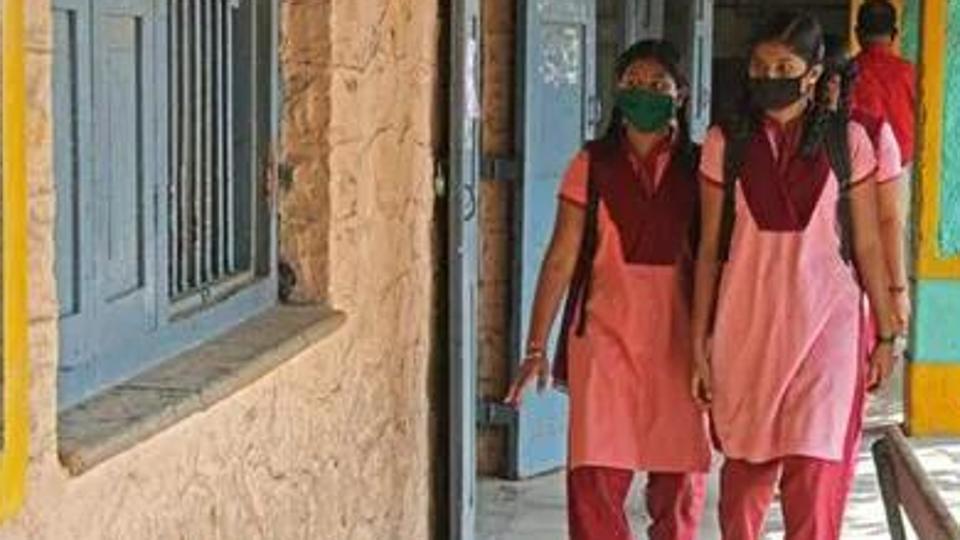
The ASER 2022 report, led by Pratham Foundation, highlighted that despite the prolonged closure of schools, the overall enrollment in schools across the country has increased at all levels, with 98.4% in the age group of 6-14 years currently enrolled in schools. The figure stood at 97.2% in 2018.
The report also highlighted a decrease in the percentage of out-of-school girls across the country, and a sharp increase of 7.1 percentage points in the number of children enrolled in pre-primary age groups in 2022.
Also Read: PMC to purchase sports equipment worth ₹85 lakh for municipal school students
The ASER 2022 resumed its survey nationwide after a gap of four years, reaching 19,060 villages across 616 districts.
As many as 3,74,544 households and 6,99,597 children in the age group 3-16 were surveyed.
Amid the pandemic, ASER 2021 was conducted on the basis of telephonic surveys, with a special focus on digital inequality and enrolment levels in schools.
The last ASER report based on the physical household surveys was released in 2018.
Hence, the present report draws a comparison from it.
According to the report, the percentage of class third students in government and private schools who can read at class second level dropped from 27.3% in 2018 to 20.5% in 2022.
This decline was visible in every state.
States showing a decline of more than 10 percentage points from 2018 levels include those that had higher reading levels in 2018 namely Kerala (from 52.1% in 2018 to 38.7% in 2022), Himachal Pradesh (from 47.7% to 28.4%), and Haryana (from 46.4% to 31.5%).
Large drops are also visible in Andhra Pradesh (from 22.6% to 10.3%) and Telangana (from 18.1% to 5.2%), the report highlighted.
The ASER reading test assesses whether a child can read letters, words, a simple paragraph class first level of difficulty, or a “story” class second level of difficulty.
In the case of class fifth students, the proportion of children who could read at least class 2-level text fell from 50.5% in 2018 to 42.8% in 2022, the report stated.
States where this indicator held steady or improved marginally include Bihar, Odisha, Manipur, and Jharkhand. However, states showing a decrease of 15 percentage points or more include Andhra Pradesh (from 59.7% in 2018 to 36.3% in 2022), Gujarat (from 53.8% to 34.2%), and Himachal Pradesh (from 76.9% to 61.3%).
Besides, a decline of more than 10 percentage points was visible in Uttarakhand, Rajasthan, Haryana, Karnataka, and Maharashtra.
Among class 8 students, the drop in basic reading ability was less as compared to observed trends in classes 3 and 5.
“Nationally, 69.6% of children enrolled in class 8 in government or private schools can read at least basic text in 2022, falling from 73% in 2018,” the report stated.
The report further highlighted a nationwide decline in children’s basic arithmetic levels in comparison to 2018 levels for most grades. But the decline was less steep than in the case of basic reading.
For instance, children in class 3 who are able to at least do subtraction dropped from 28.2% in 2018 to 25.9% in 2022.
Similarly, the number of children in class 5 across India who can do division has also fallen slightly, from 27.9% in 2018 to 25.6% in 2022.
The ASER 2022 report also highlighted an increase in enrollment in government schools amid the Covid-19 pandemic.
“The proportion of children (age 6 to 14) enrolled in government schools increased sharply from 65.6% in 2018 to 72.9% in 2022. Increase in government school enrollment is visible in almost every state in the country,” the report stated.
Highlighting the increase in enrollment of girls in schools, the report stated that the all-India figure for the percentage of girls aged 11-14 years who were out of school stood at 2% in 2022, a sharp improvement from 2018 when the figure was 4.1%.
“This figure is around 4% only in Uttar Pradesh and is lower in all other states,” the report started.
The decrease in the proportion of girls not enrolled in school is even sharper among older girls in the 15-16 age group.
“In 2008, nationally, more than 20% of girls in the 15–16-year age group were not enrolled in school. Ten years later, in 2018, this figure had decreased to 13.5%. The proportion of 15-16-year-old girls not enrolled has continued to drop, standing at 7.9% in 2022,” it added.
Only three states have more than 10% of girls in this age group out of school including Madhya Pradesh (17%), Uttar Pradesh (15%), and Chhattisgarh (11.2%).
The report further highlighted the increase in the proportion of children in classes 1-5 taking paid private tuition classes from 26.4% in 2018 to 30.5% in 2022.
“In Uttar Pradesh, Bihar, and Jharkhand, the proportion of children taking paid private tuition increased by 8 percentage points or more over 2018 levels,” it said.


